


It is the tropical winter in South India now. The winter here is not as harsh, but provides a welcome relief from bitter summer days and grey monsoon days. With a bit of luck, you also experience a few haze-free days. I was travelling through a few parts of the mountain country of Karnataka, Malnad, and a few parts of the plain country, Bayaluseeme. In this article, I will walk you through the stories of the travel.
To the Plains
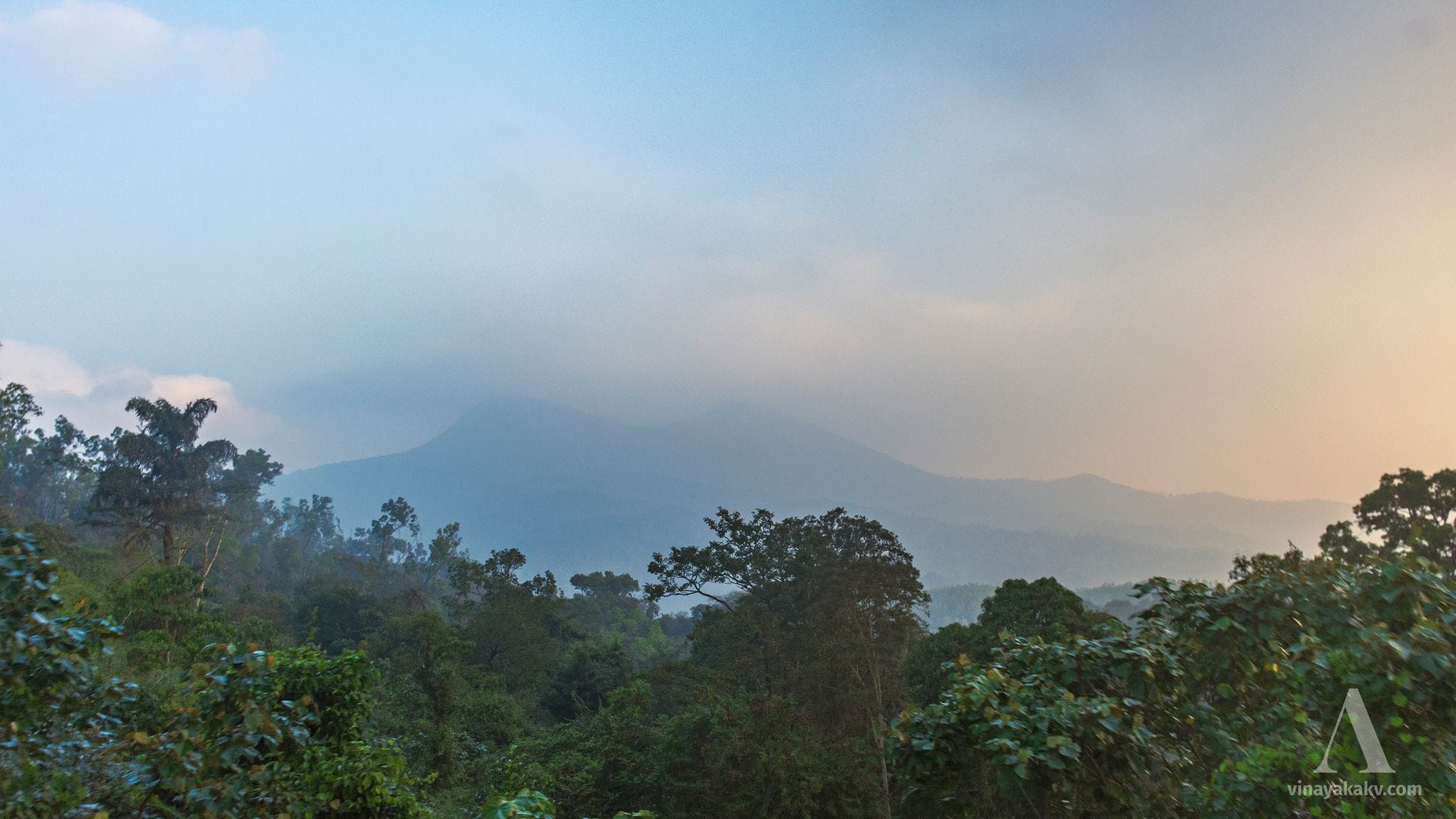
My journey started early in the morning, and the morning mist had not lifted completely yet. Most pollution particles are trapped under the inversion layer around this time of day, causing the mountains to appear dull and hazy.
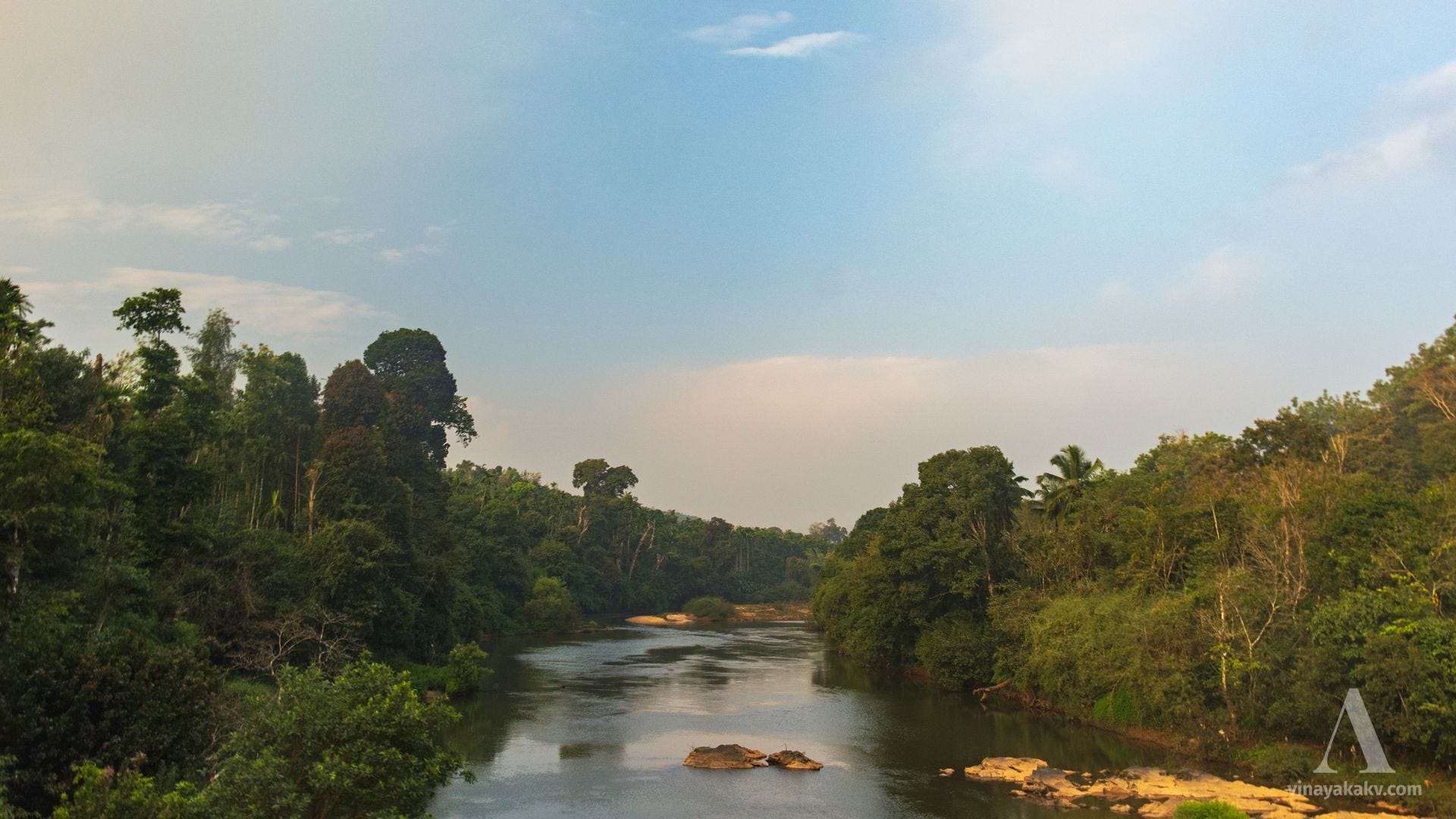
We soon cross the river Bhadra, still close to its origin and still having a narrow channel.
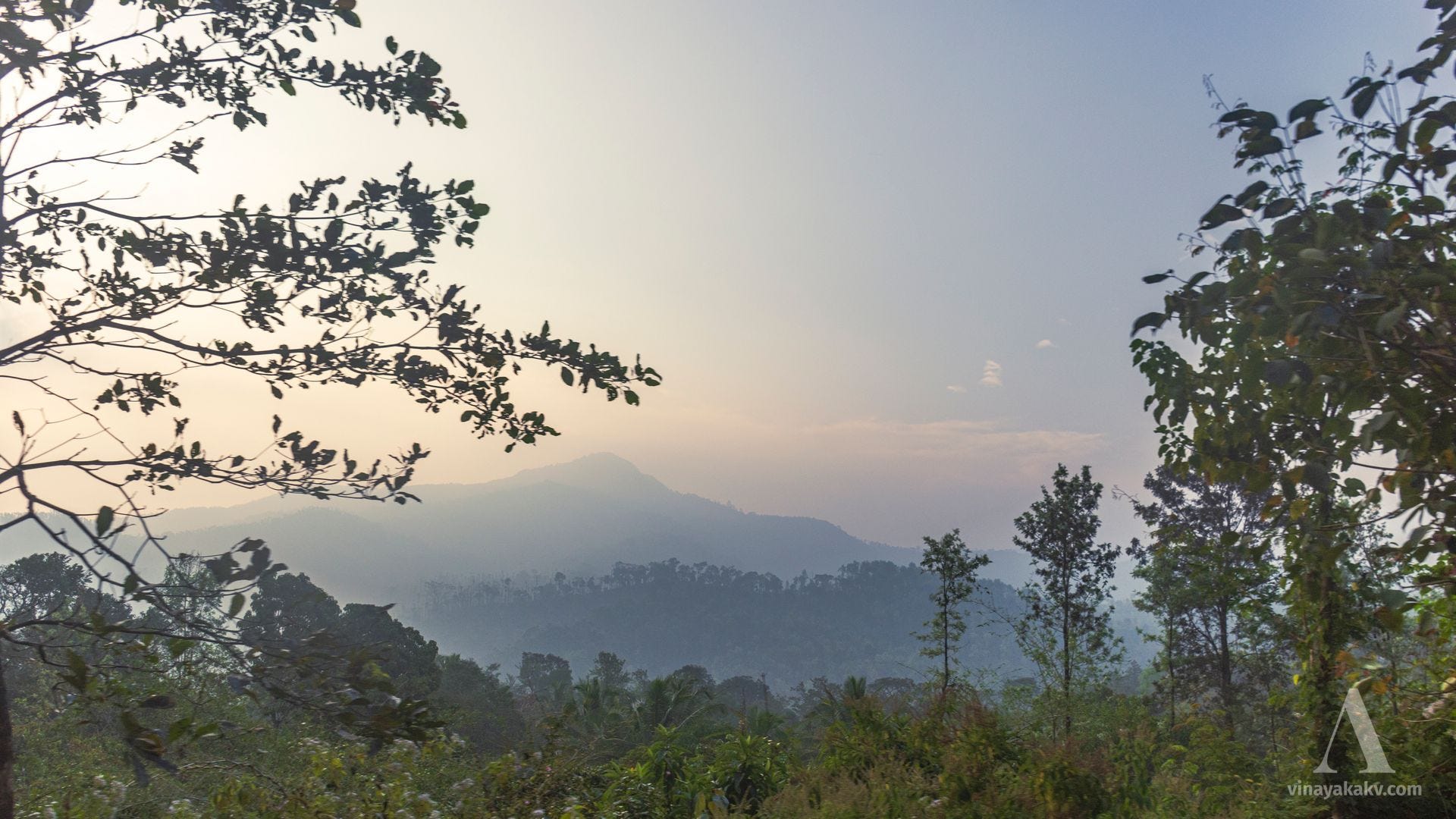
The route takes us through mountains and valleys, still hazy, but all evergreen.
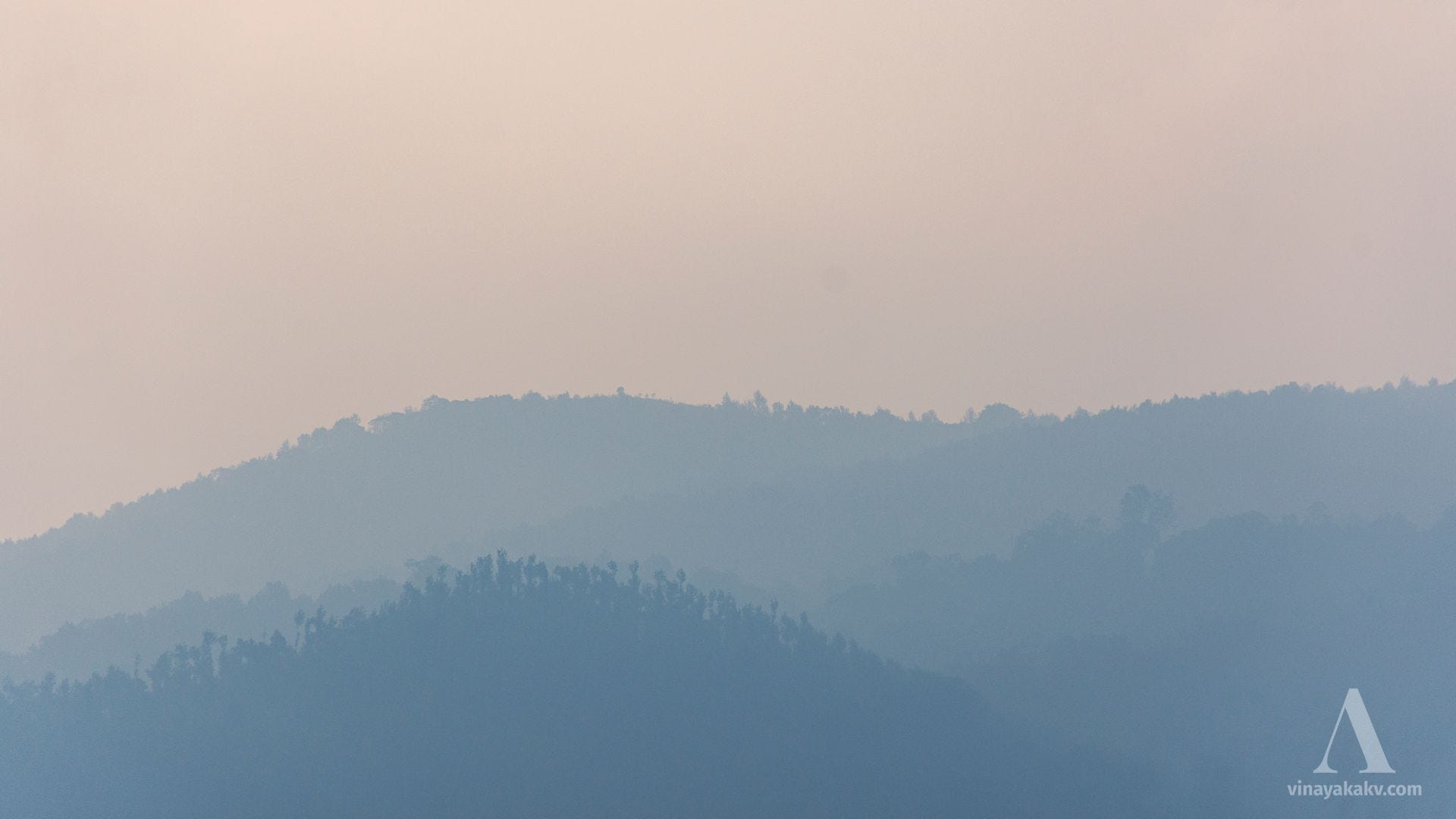
The haze and morning mist create beautiful layering effects on the mountains.
Soon, we enter the back of the “Top Mountain”. The usual route does not take us through this mountain, but I stepped on another bus by mistake. That mistake was fruitful, as I could record the timelapse of easterly winds and clouds passing through the Top Mountain.
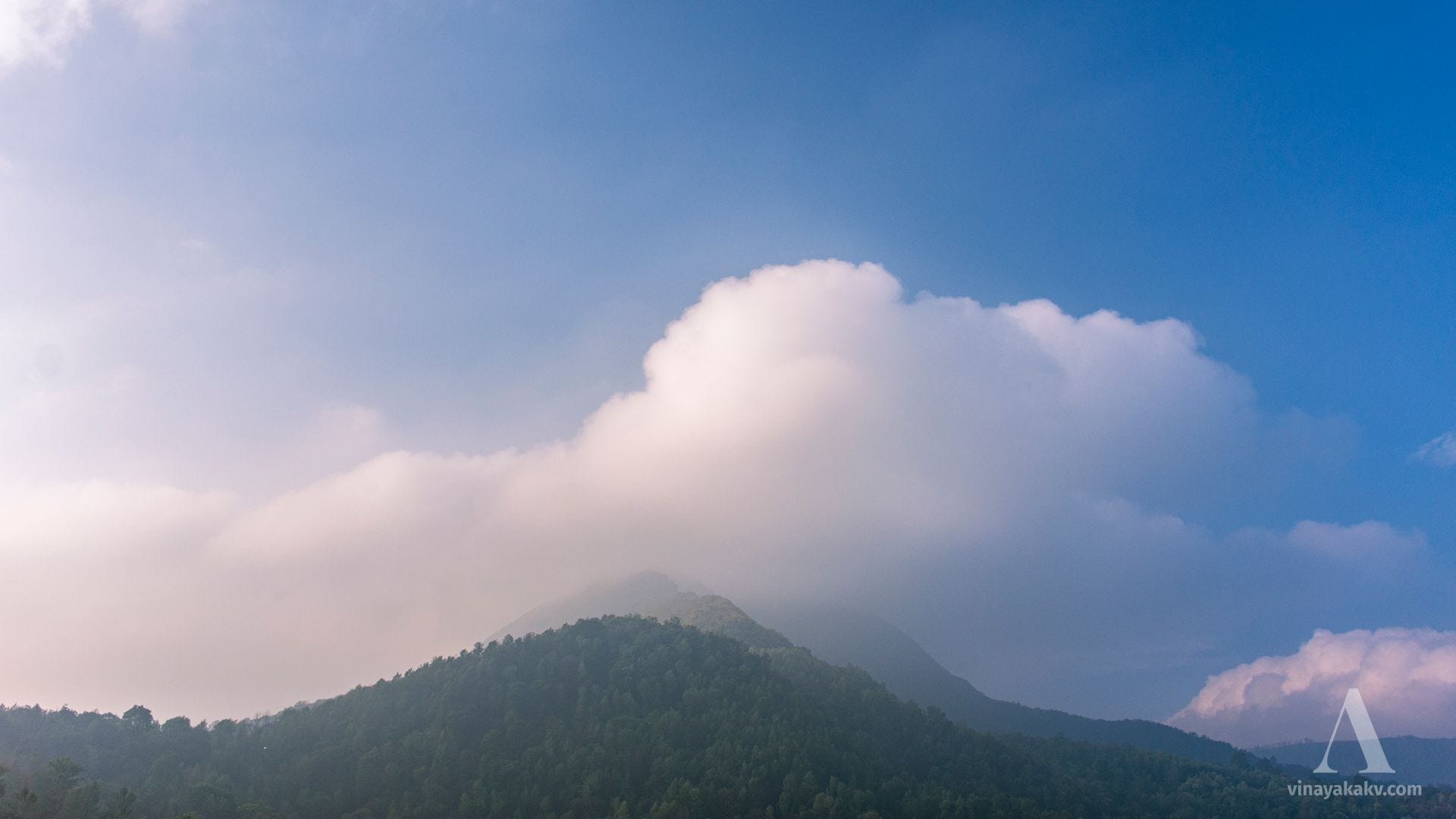
After the Top Mountain, we head north to the lower hills of the Western Ghats. The hills here are forest-clad, and the nature of the country starts becoming more open, hosting vast rice fields.
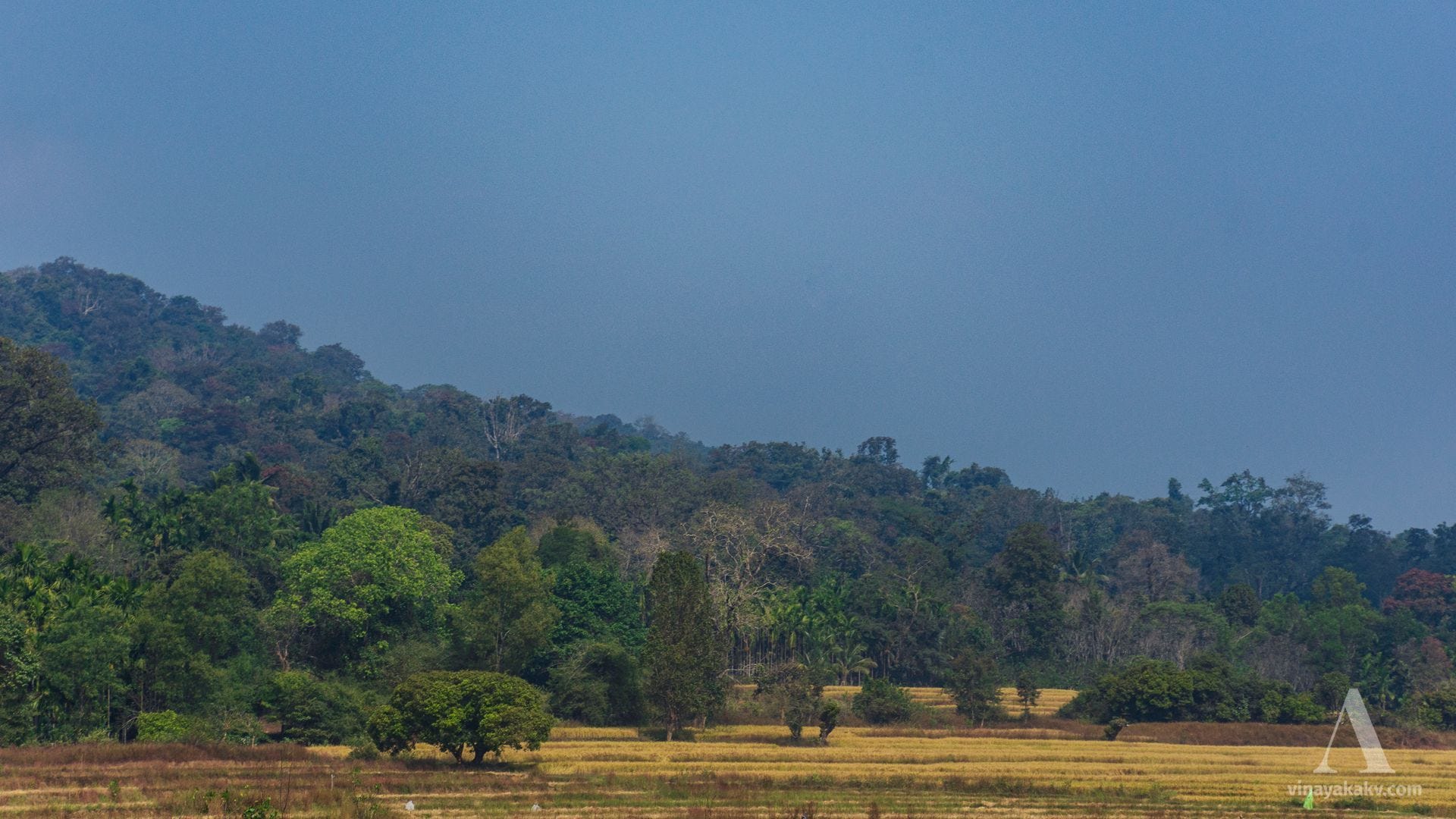
Slowly, the transition makes the hills disappear; now we are in endless rolling plains, dominated by rice fields and lakes.


Hills of the Plains
The plains of Karnataka are dotted with several granite hills and a few small ranges that mark the joining of ancient landmasses. Due to the lack of rains, these hills do not support evergreen forests; rather, the hills are either grassland or scrubby. The valleys are often covered with the remaining stands of deciduous forests. The hill formations near Malebennur (lit. the village at the back of the hills) are remarkable in this aspect, with the exposed bedrock greeting us at roadcuts.
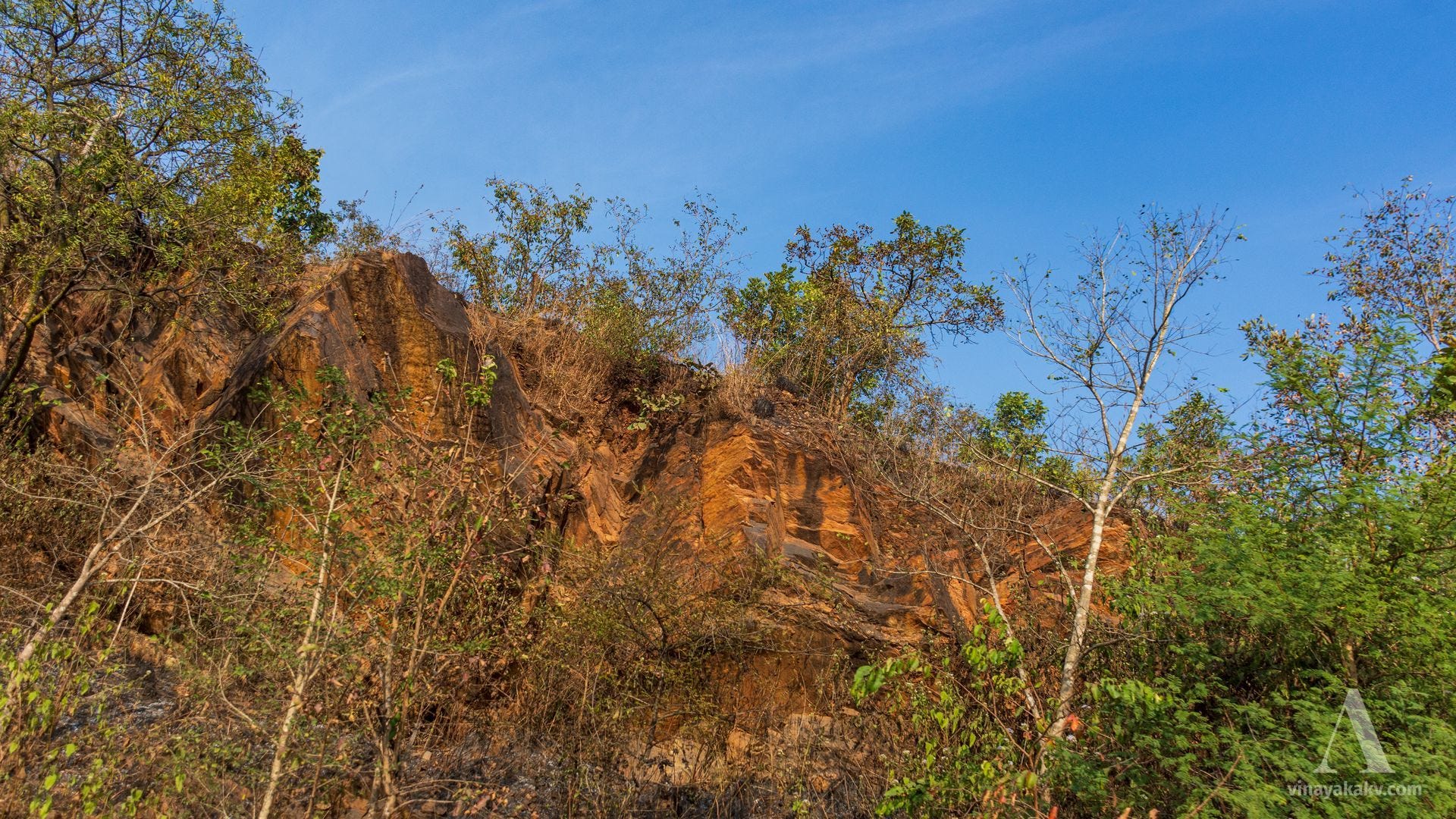
These hills force the rice fields to be terraced, bringing memories of the Malnad.
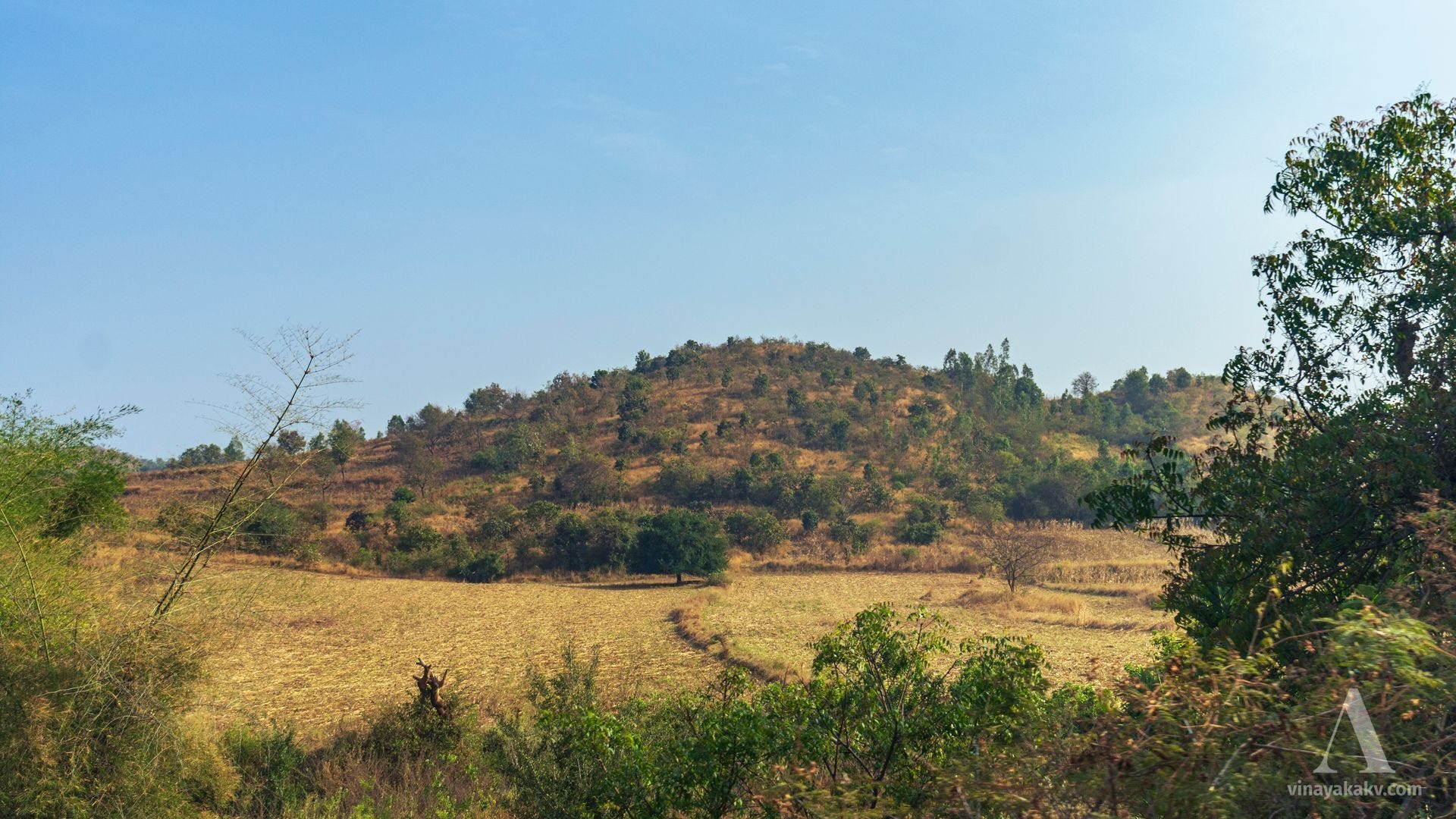
Crops like corn do not require the land to be flat; hence, they are cultivated on moderate slopes, now harvested and dry.
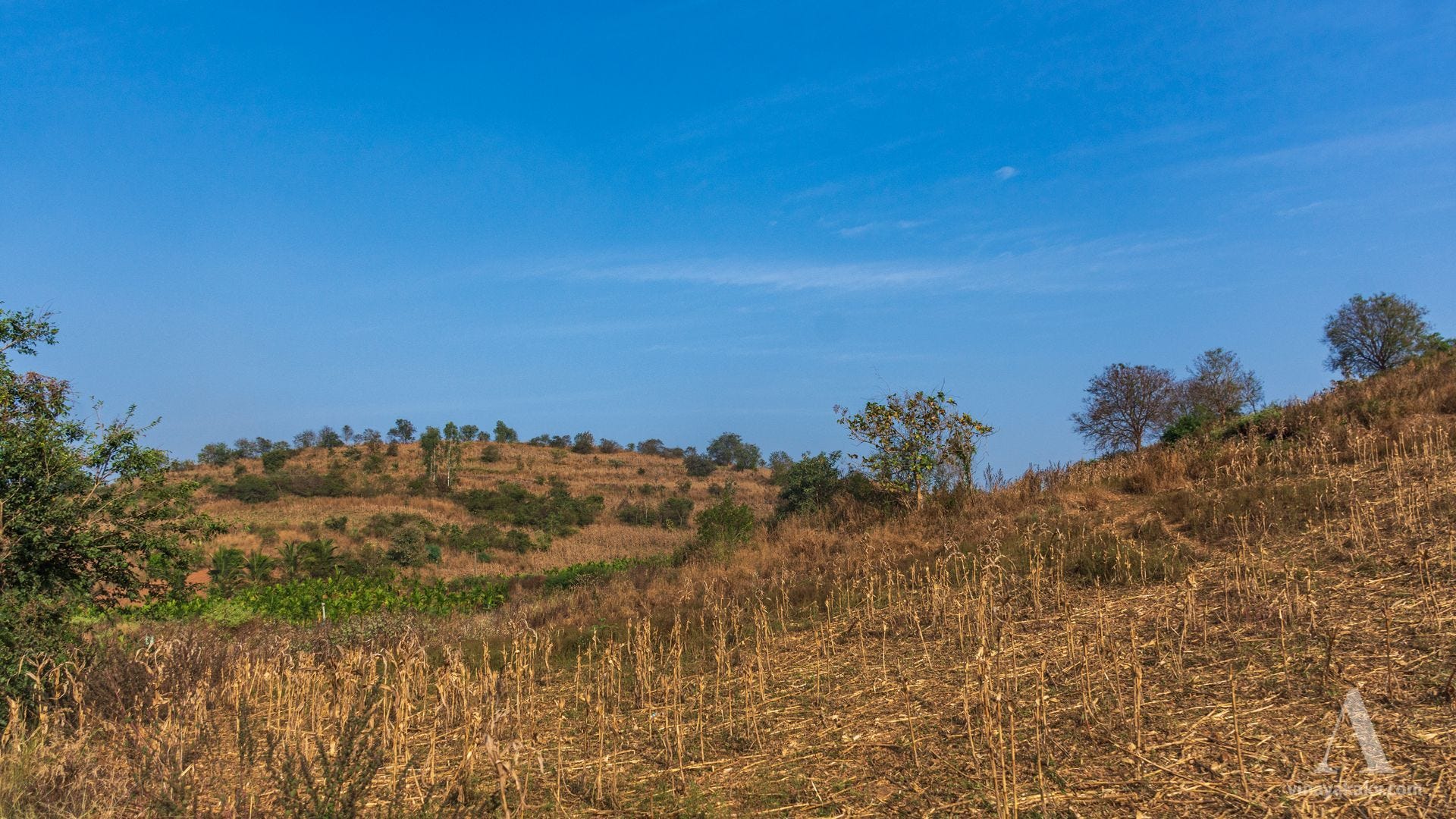
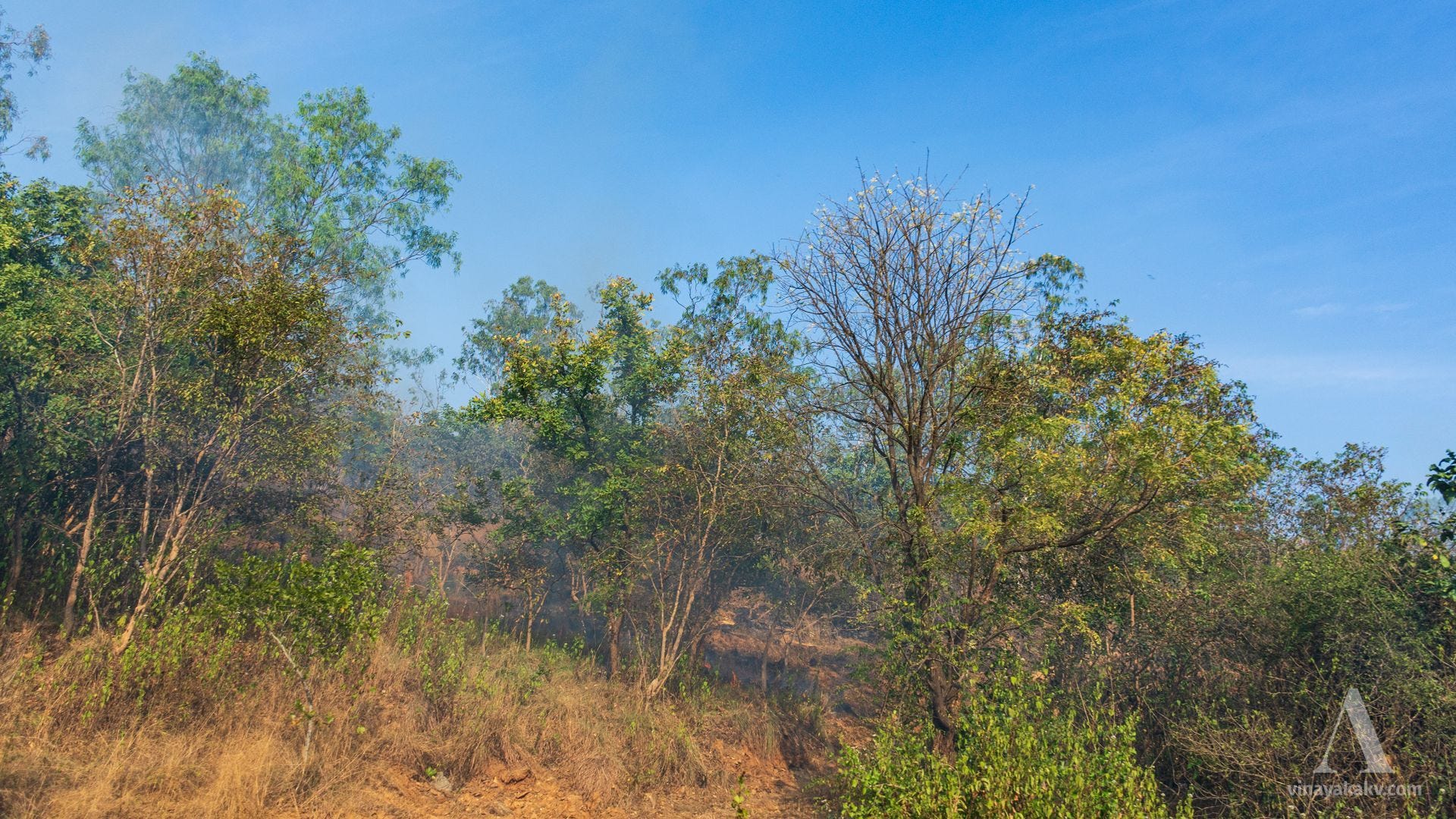
There was a hint of smoke in the air, and it was due to a small fire inside a dried patch of forest. The cause of most such fires tends to be man-made.
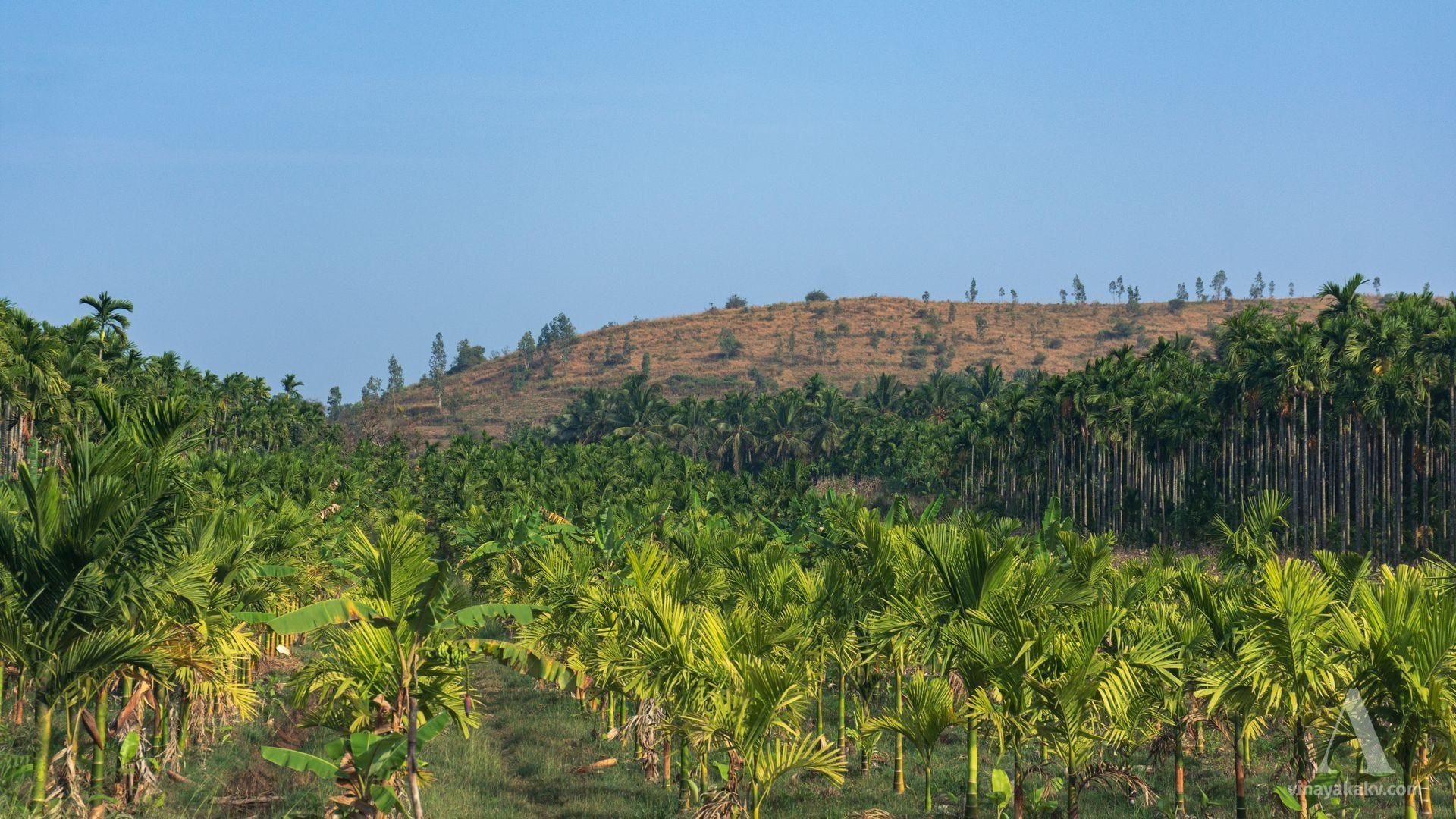
With the advent of irrigation projects, people in the plains are exploring water-demanding cash crops, mainly areca nut. We can see areca nut plantations popping up everywhere.
Back to the Mountains
As we prepare to depart from the plains, we are greeted by Bhadra’s twin river, which we met earlier in the journey — the Tunga. The rivers Bhadra and Tunga originate in the middle of the shola grassland–forest complex of Kuduremukha National Park. Since the Tunga is now flowing in the plains and far from its origin, we get to see a wide river, with a backdrop of a small hill range. A few kilometers from this place, the Tunga and Bhadra rivers meet to form the river Tungabhadra.
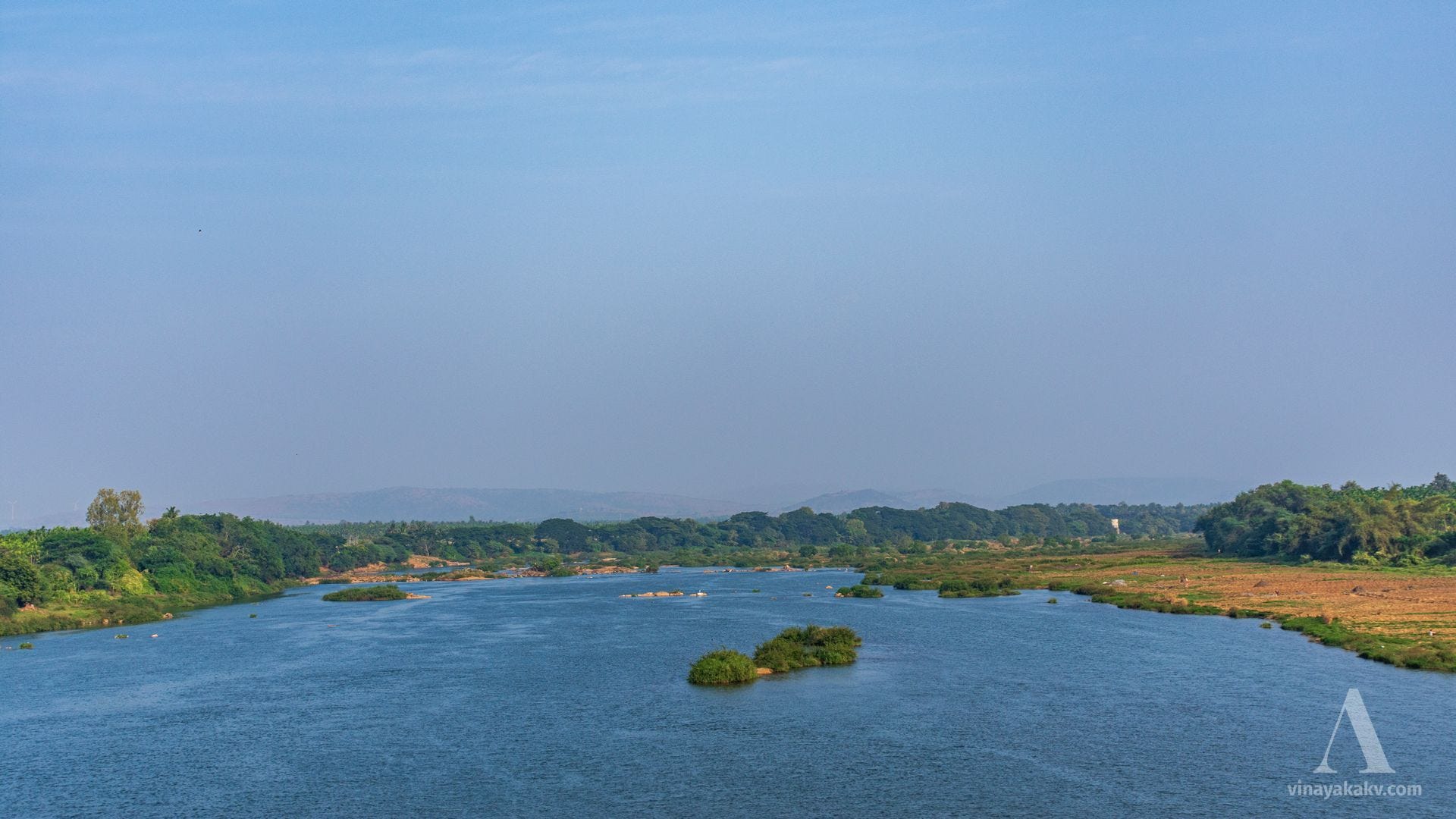
The transition from the plains to the mountains is smooth, as described earlier. With areca nut plantations blooming everywhere, the transition is even more seamless. The discernible difference lies in the types of forest — from deciduous scrub to evergreen forests.
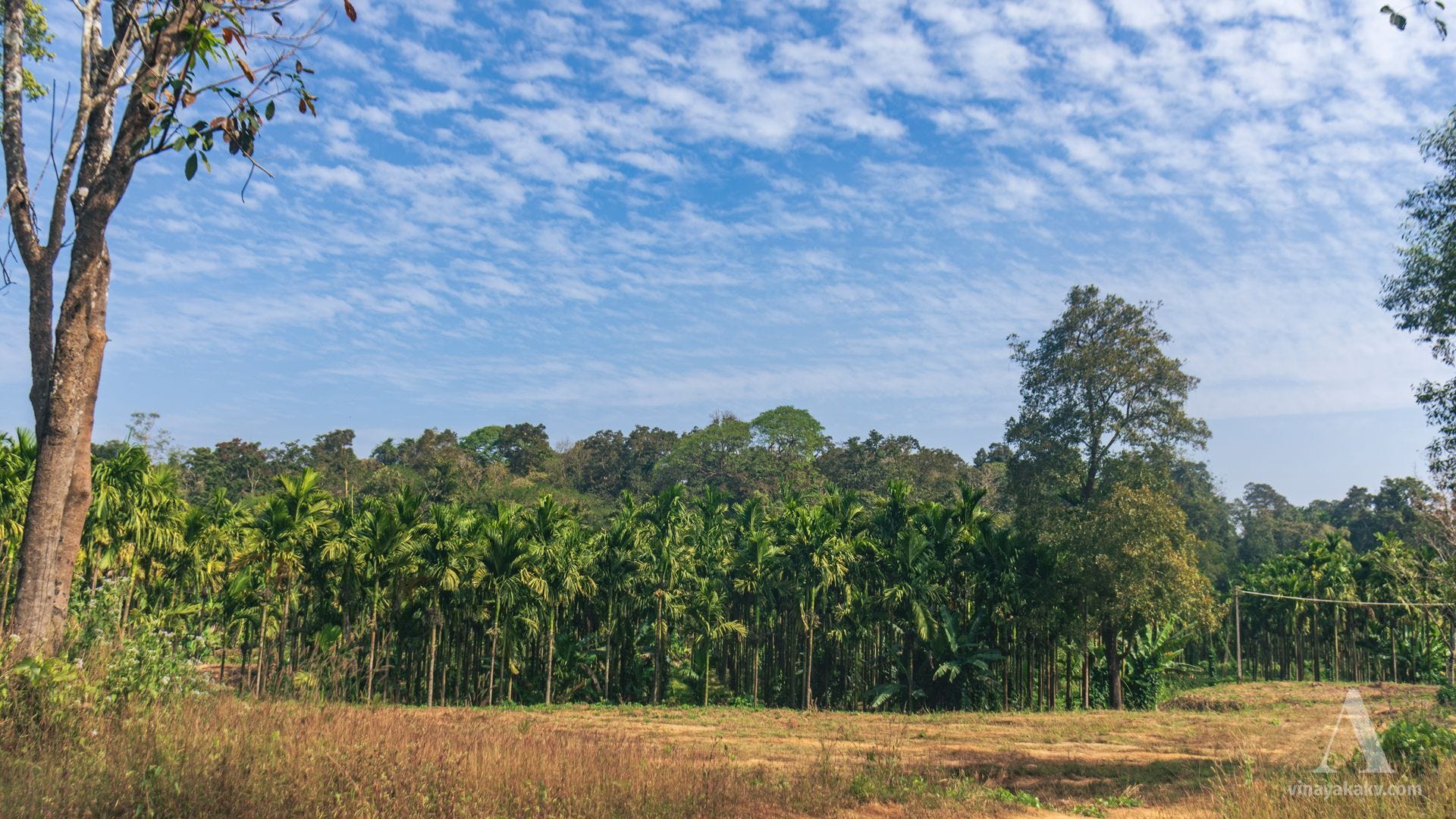
The rice fields look much different too, now not as big, with the backdrop dominated by the hill ranges.
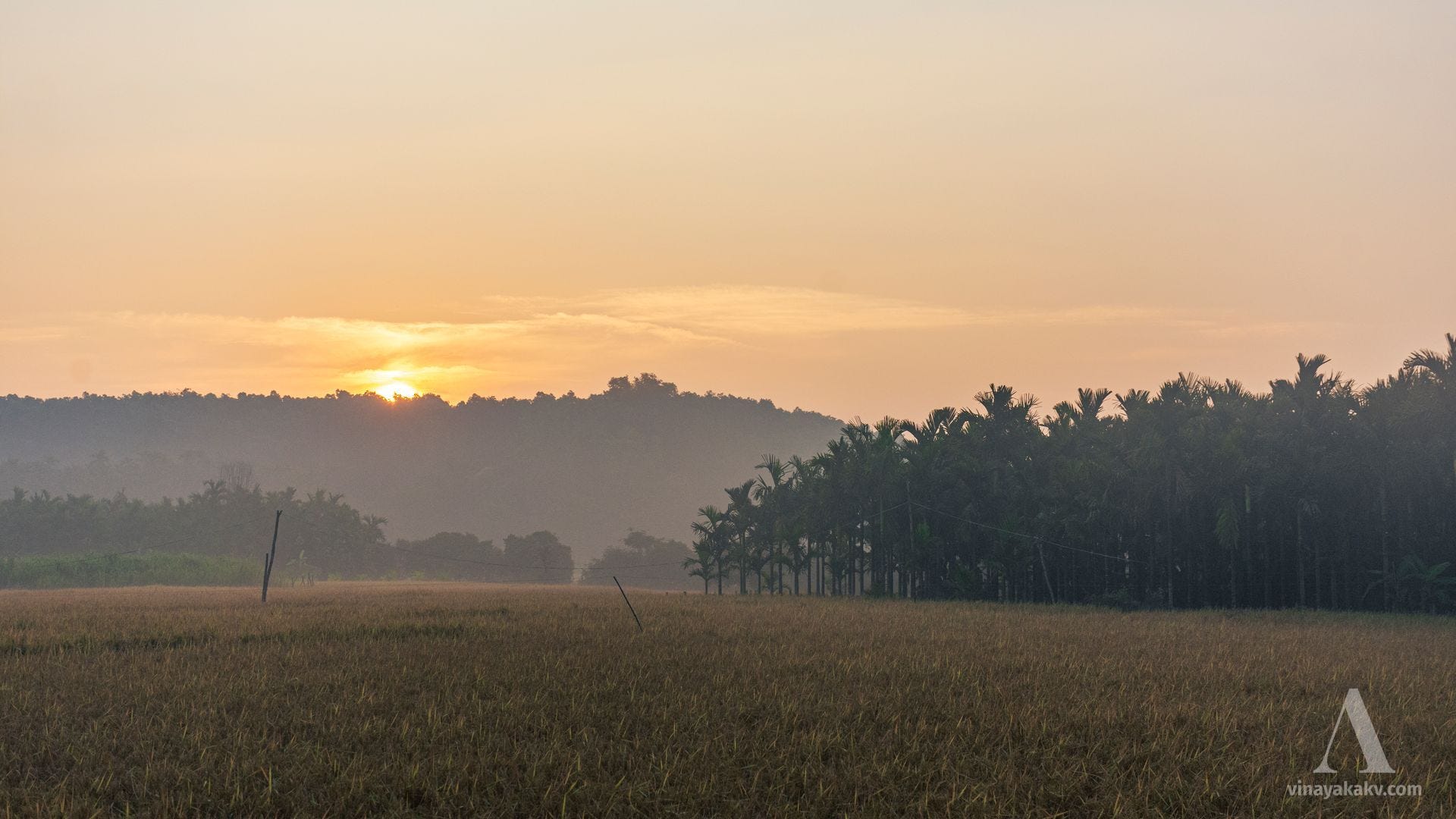
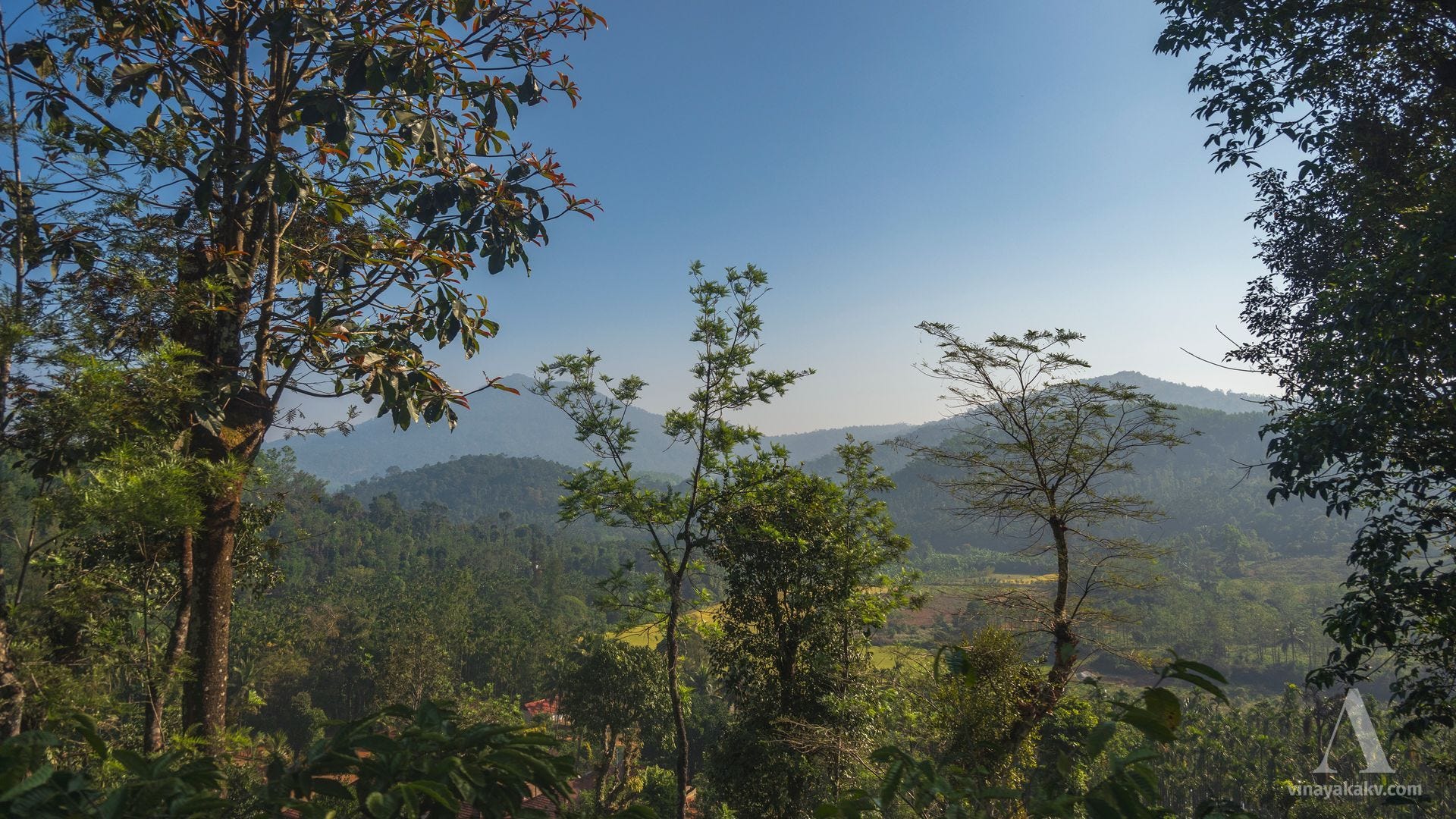
Gaining some more elevation, the once forest floors are now covered with extensive coffee plantations.
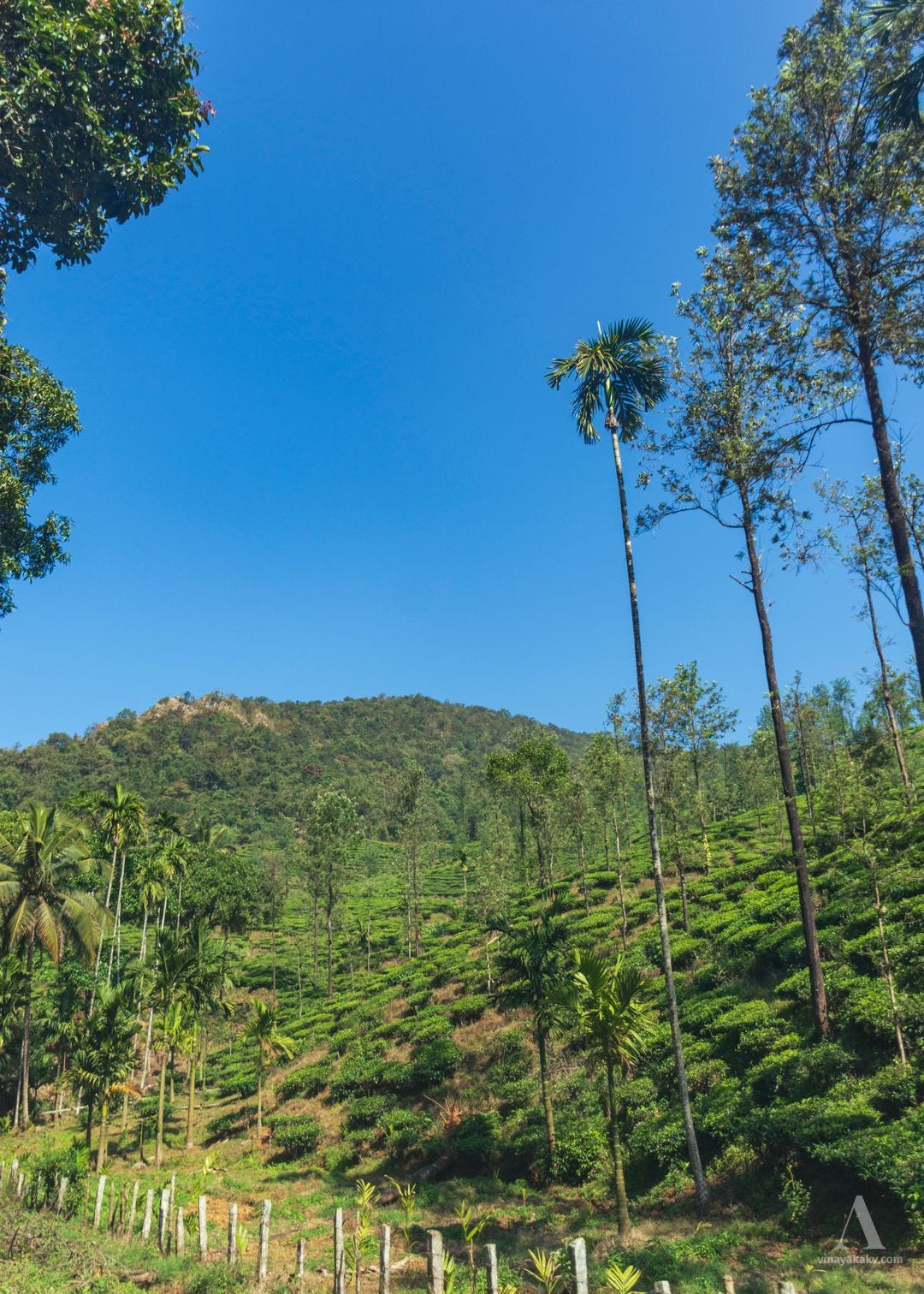
There are also a handful of large tea plantations, which do not conserve as many trees as coffee plantations do.
Evening Colors
The presence of moderate haze creates beautiful colors in the evening sky, with shadowed mountains creating sharp contrast with the sky.
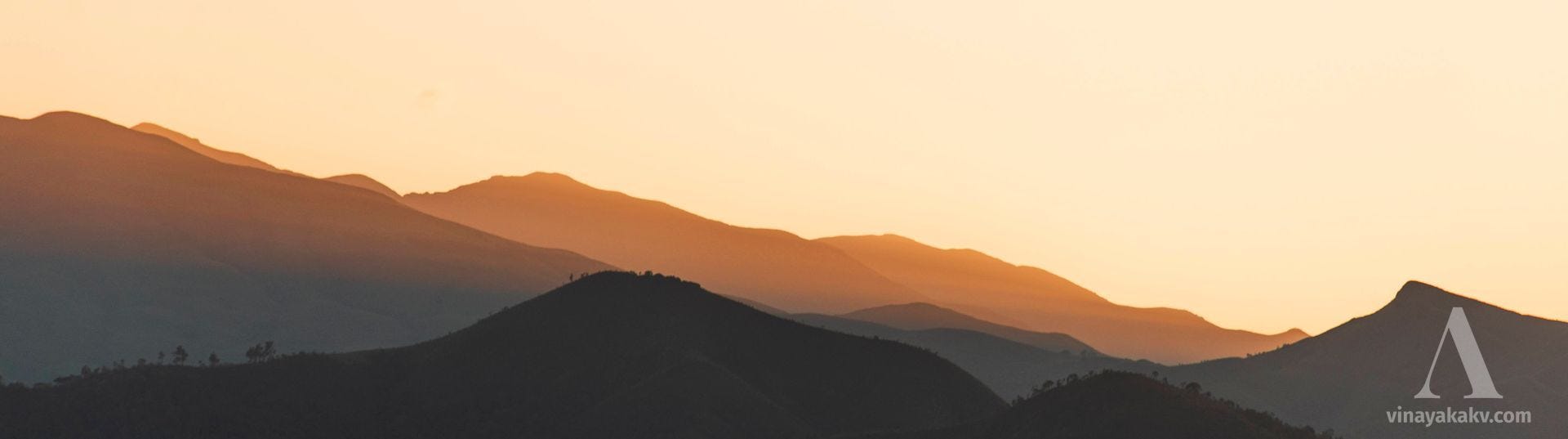
Even the same place can look noticeably different under the influence of evening colors.


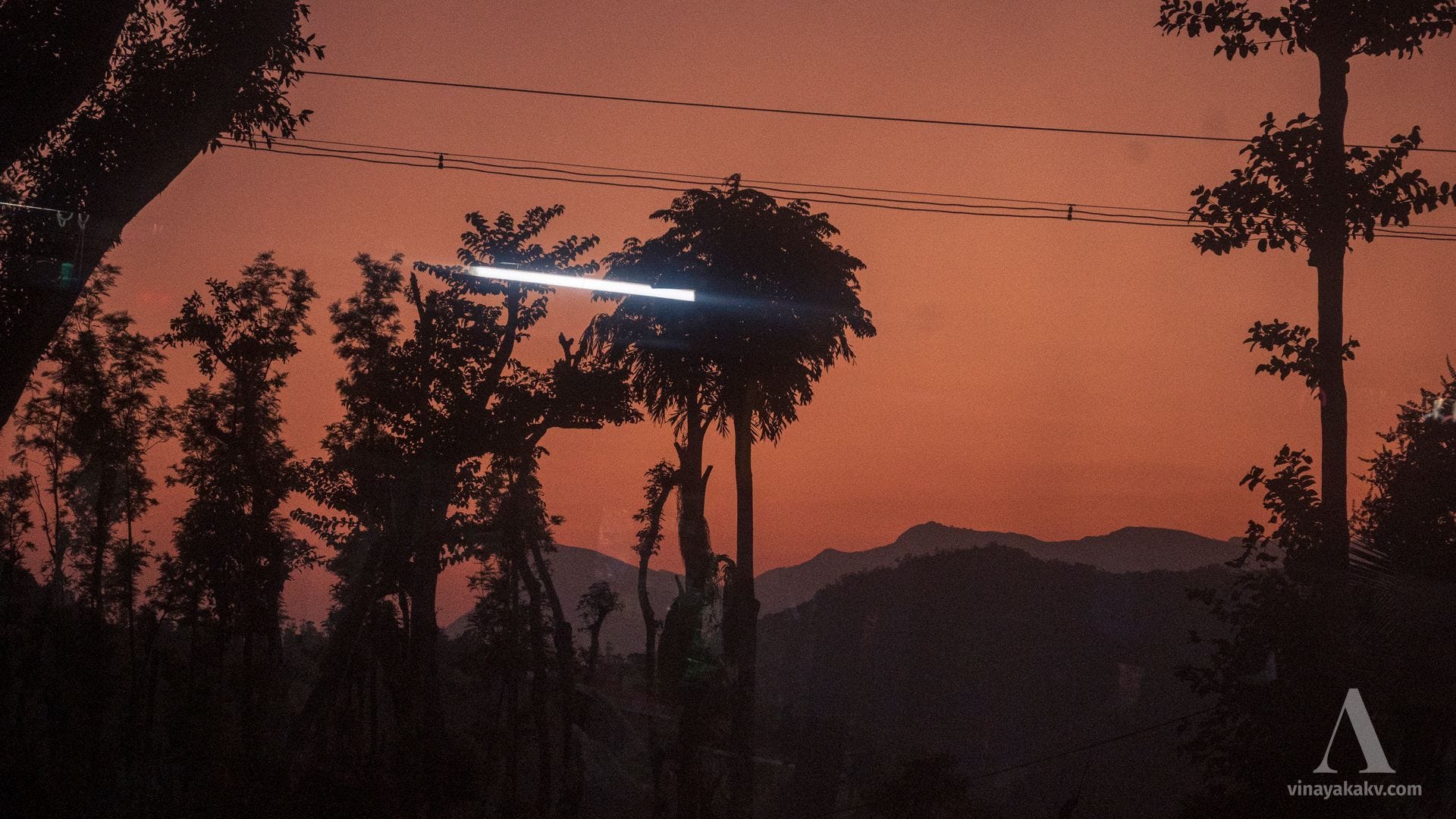
I could not resist capturing the evening colors and took a fun picture of the mountain through the back glass of the bus.
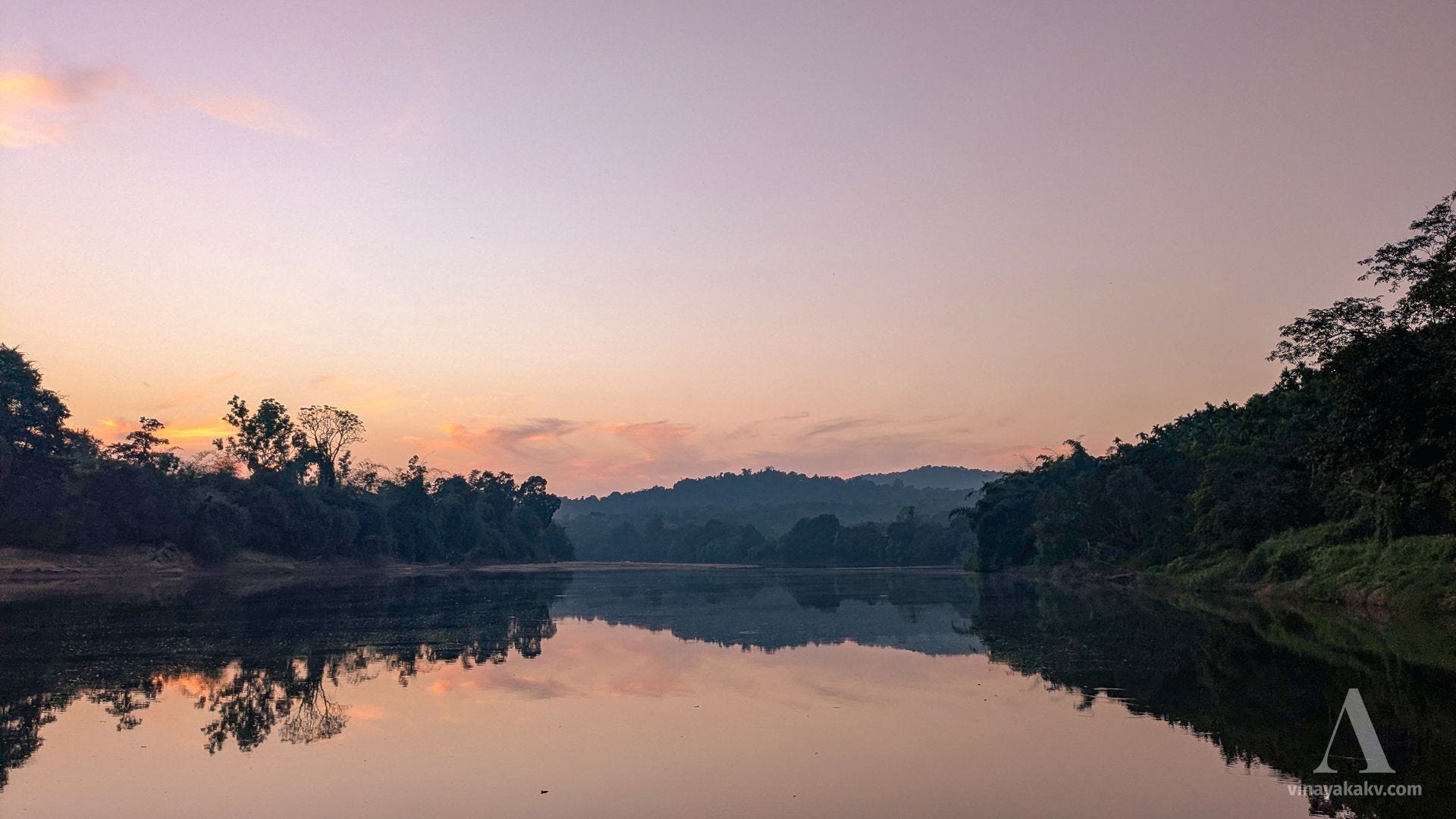
If you are near a river with a hilly backdrop, the reflections and the colors take the sunset to the next level.
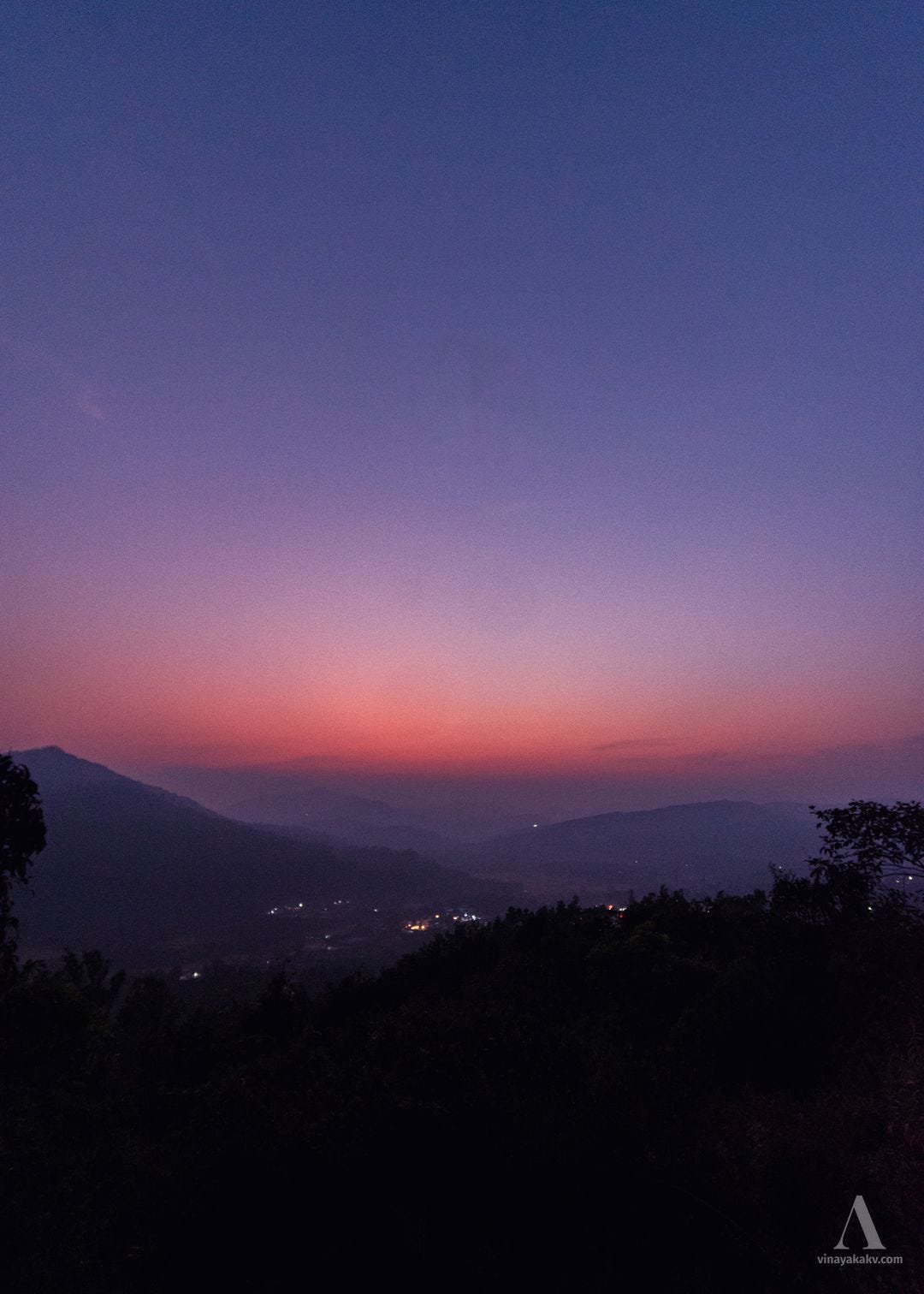
In the evening, the haze line starts to become clearly visible, masking the western sky.
To the “Top Mountain” again
I got a chance to visit the “Top Mountain” again with my friends on a hazy evening. Although most of the view was lost due to the haze, the shadow of the mountain created an interesting effect on the valley floor.
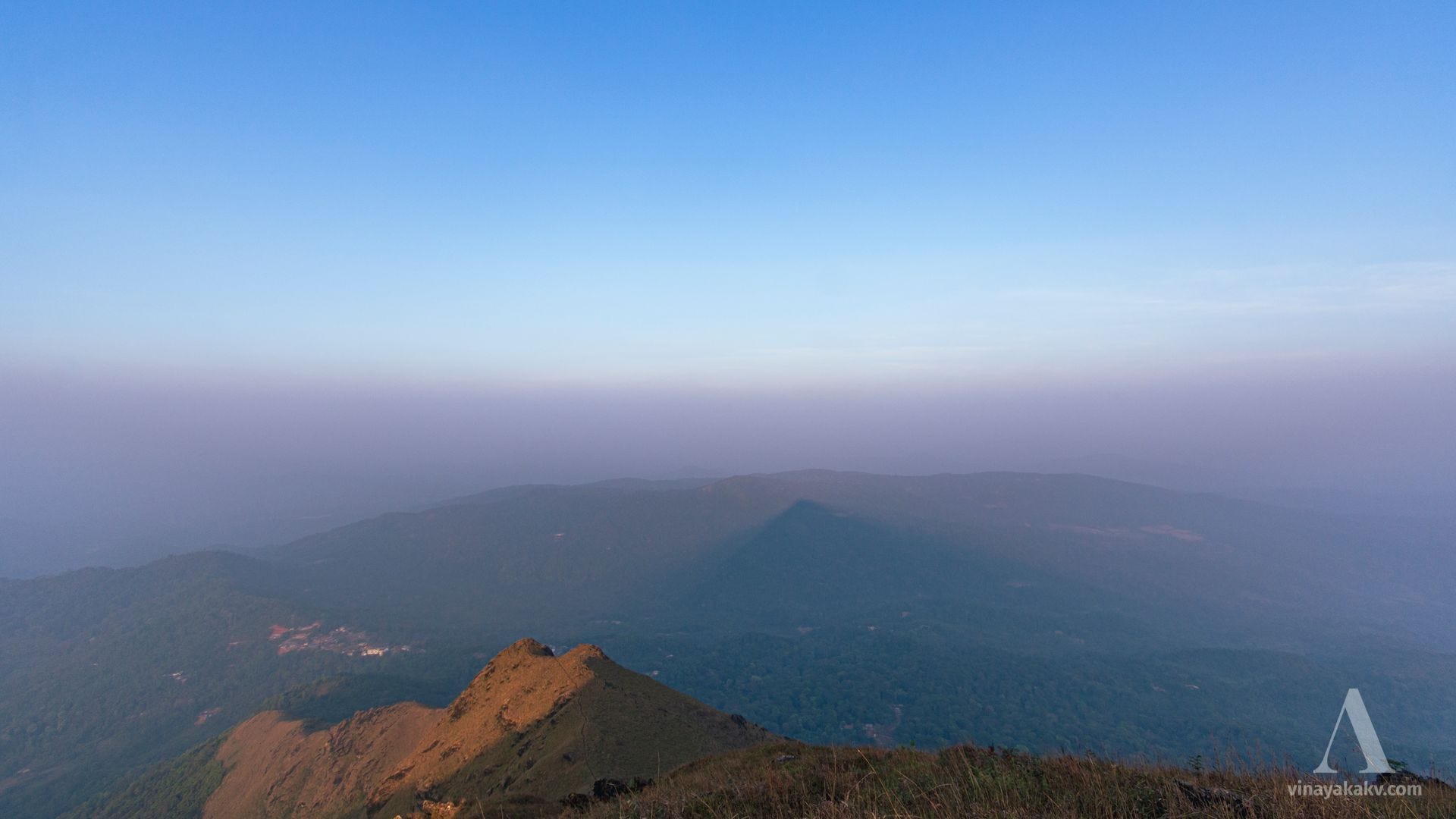
The haze also reveals the layers of mountains cleanly.
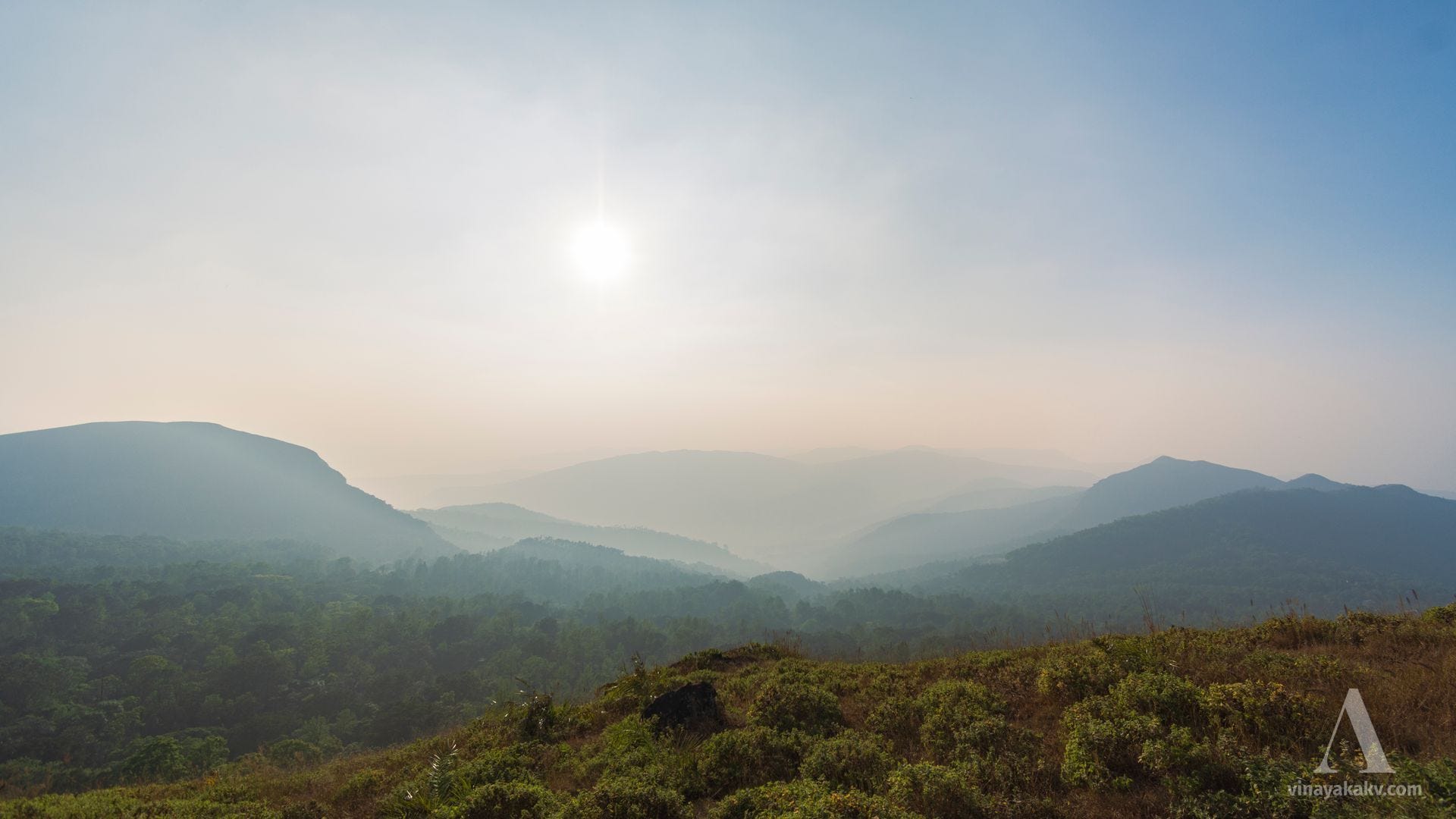
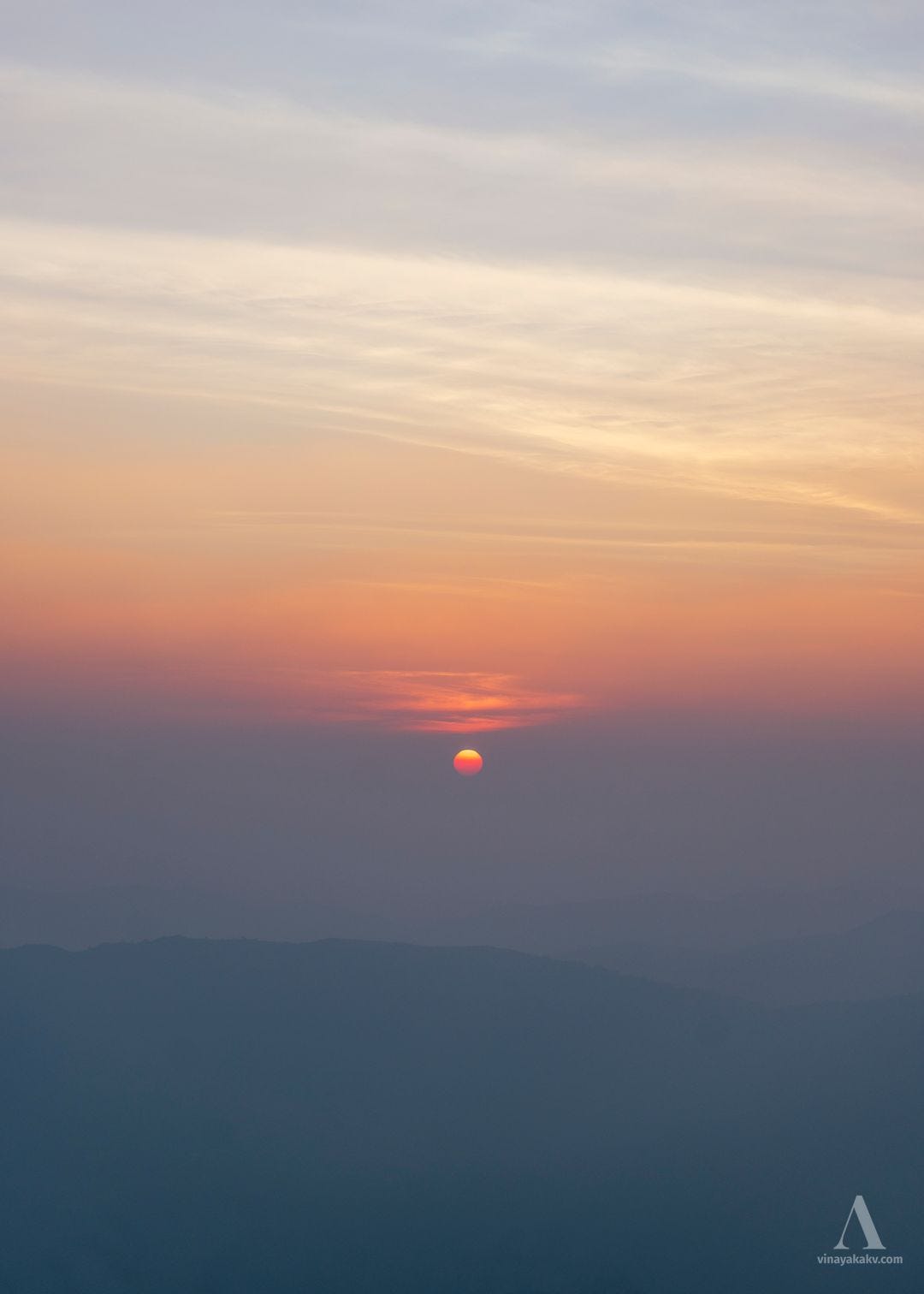
The sunset was also dull, with the sun disappearing into the haze layer before the proper sunset.
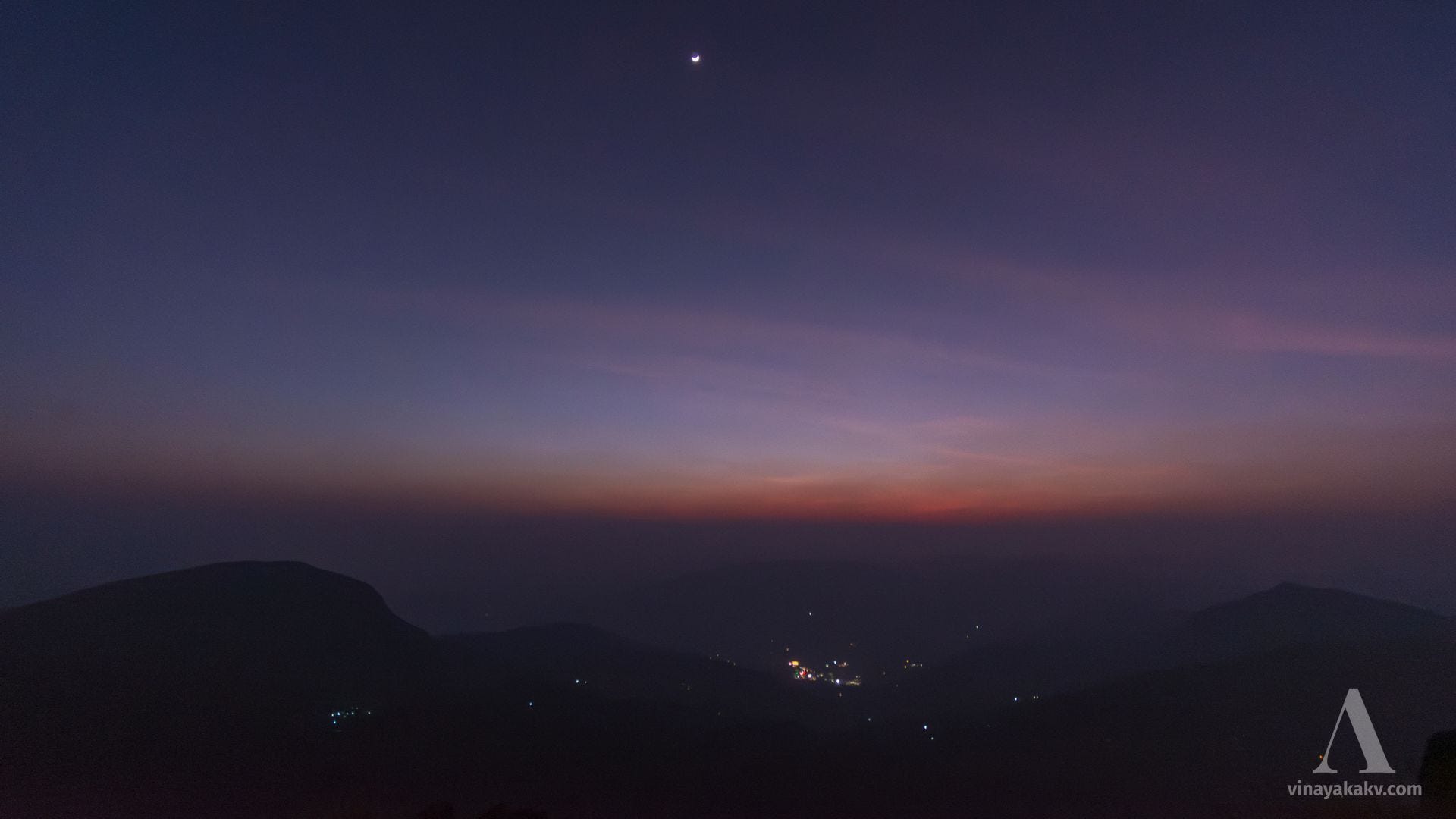
Once the sun had set, the crescent moon and nearby town lights created a serene environment.
Colors of Life
Although the core Western Ghats consists of evergreen forest, there are a handful of deciduous trees found here and there. Some evergreen trees also bloom in the winter. When they bloom, they put on a beautiful show of colors.


Also, we get to see and hear the birds, which are hard to spot during the monsoon.


A few plants put up flowers during winter, as the dry winter and sunny summer create the perfect conditions for their seeds to ripen and dry, ready to be dispersed and germinate in the next monsoon.


Some orchids tend to flower during the winter as well, putting up their unique flowers.


Moving to the next year
Winter is a perfect time to end the year, with the crops coming to harvest and the plants preparing to start a new cycle of growth. The year 2025 has lapsed in the blink of an eye, although it had a lot of packed moments. Let’s move forward to 2026 with optimism and an urge to enjoy and protect nature.
Happy New Year in advance! See you next year.