


Summer is a time of year when the scorching sun shines bright, the land dries up, and the plants in the shola grasslands set seeds, turn brown, and occasionally catch fire.
On Fire

The cloudless, warm days and moderately cool nights are the perfect recipe for drying out the montane shola grasslands of the Western Ghats. The lush green grasses slowly turn light brown and set seeds.
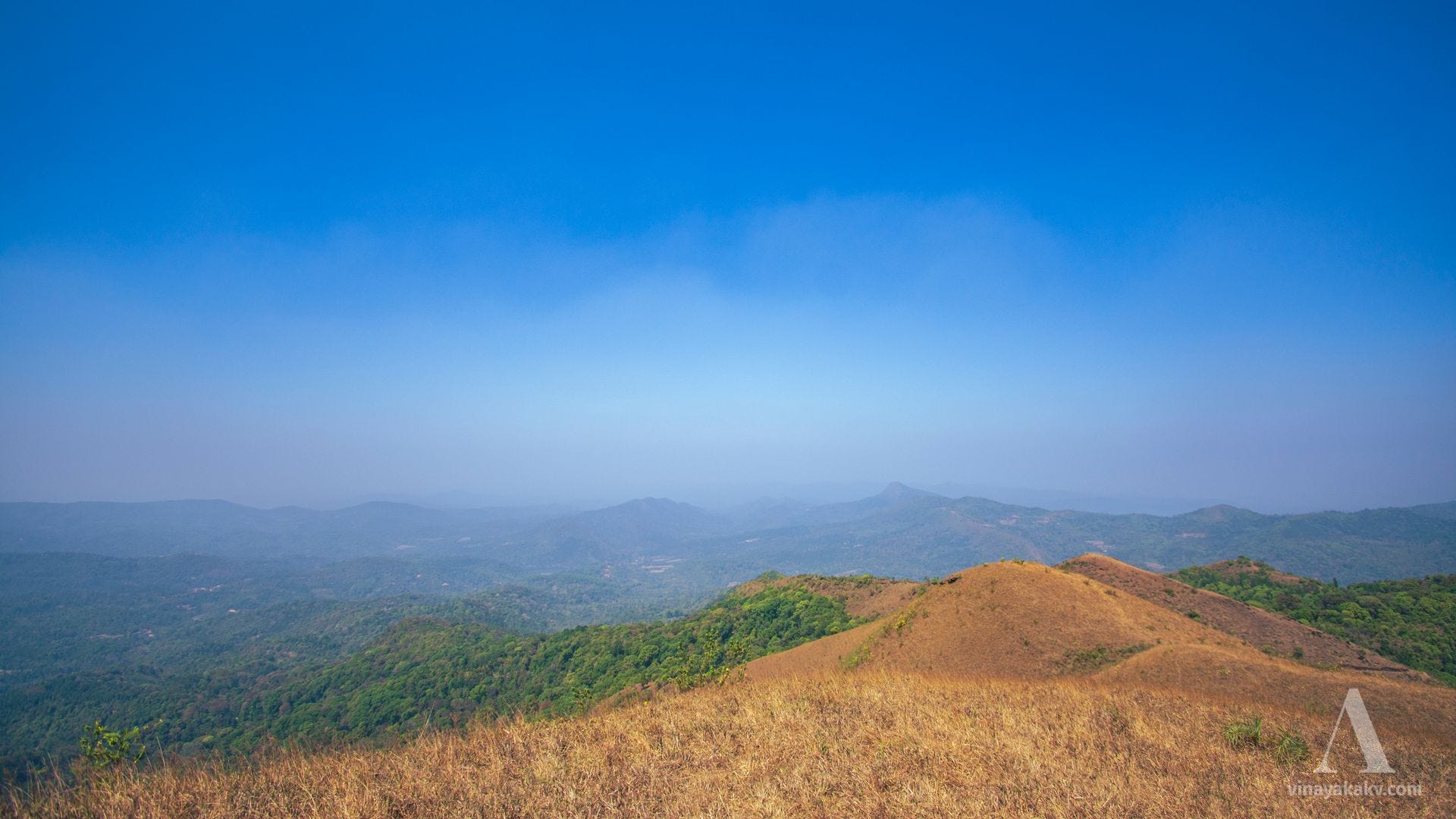
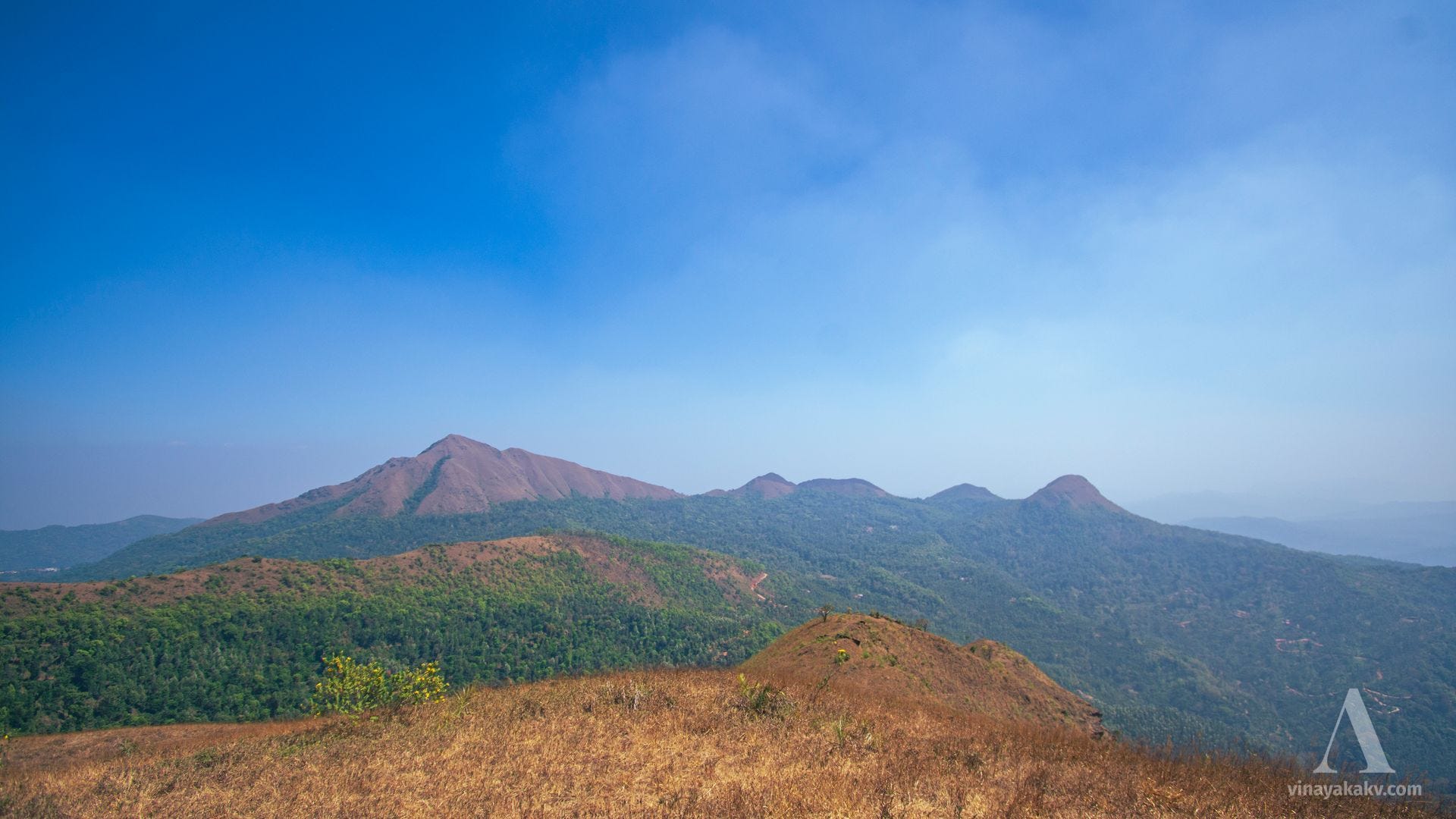
A few trees in the forests shed leaves, covering the land with a blanket of dried foliage. The dried organic matter is in perfect condition to start decomposing as soon as the first summer rains fall, supporting a variety of fungi.
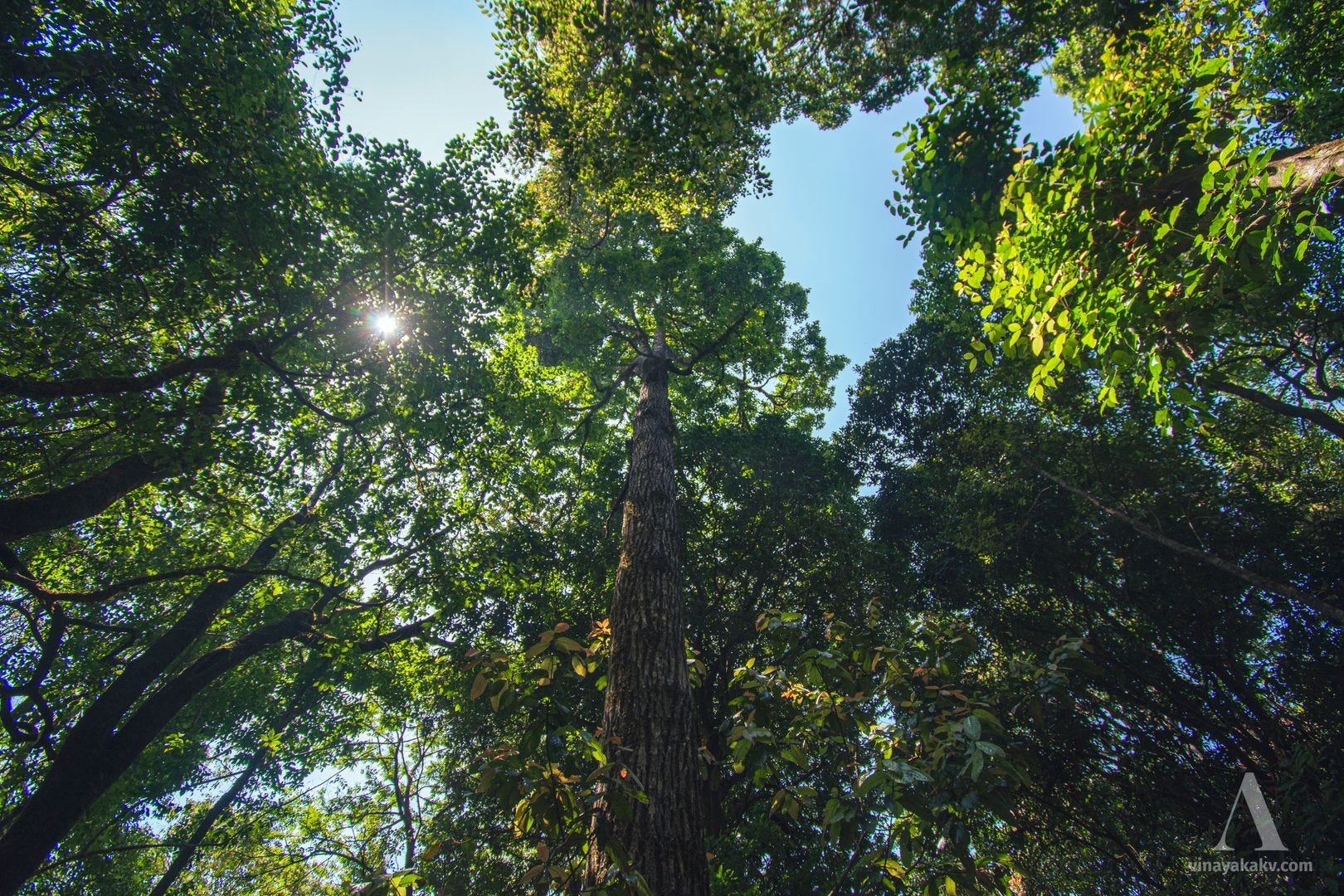
The summer rains also trigger a variety of wildflowers, including orchids. They flower at such a time of year that their seedlings have optimal growing conditions during the monsoon. This is especially the case for orchids, as their minuscule seeds need a perfectly matched fungus to begin symbiosis and germinate. For this reason, orchids can be used as a proxy for the health of the ecosystem. Orchid diversity directly correlates with fungal and pollinator diversity.
In this article, we will take a look at a few orchids that I captured flowering this summer. You can also check out a few orchids from last year’s monsoon as well.
Monsoon Orchids

During the tropical summer of the Western Ghats mountains, water becomes scarce on the hilltops. The mosses, lichens, and the orchids sheltered in the tree barks go dry and sometimes leafless. A touch of summer rains starts the life in them. Some orchids start to grow flower buds, while others start to grow new leaves. During the monsoon, they get into …
An Index into the World of Orchids
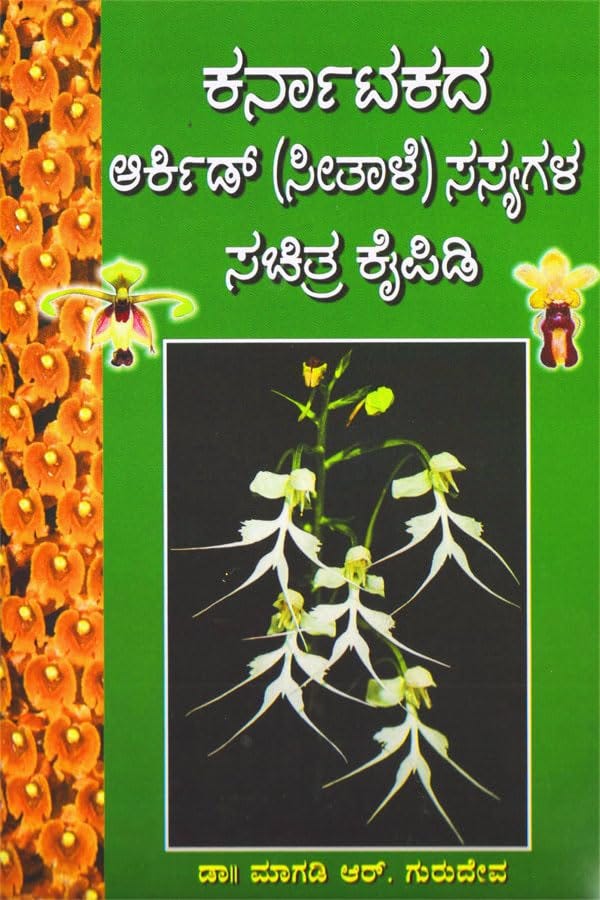
The Western Ghats host a variety of ecosystems, leading to a greater biodiversity density. Orchids are found on tree trunks (epiphytic), on the forest floor (terrestrial, saprophytic), and some even on bare rock (lithophytic). I recently got to know about a book (linked at the end of the article) that lists the orchids of Karnataka, along with excellent photographs and tips to grow them. All thanks to an Instagram post of the orchid intros by @flying_farmer_17. Out of the orchids listed in the book, I've not even come across 10% of them yet!
The White Glory
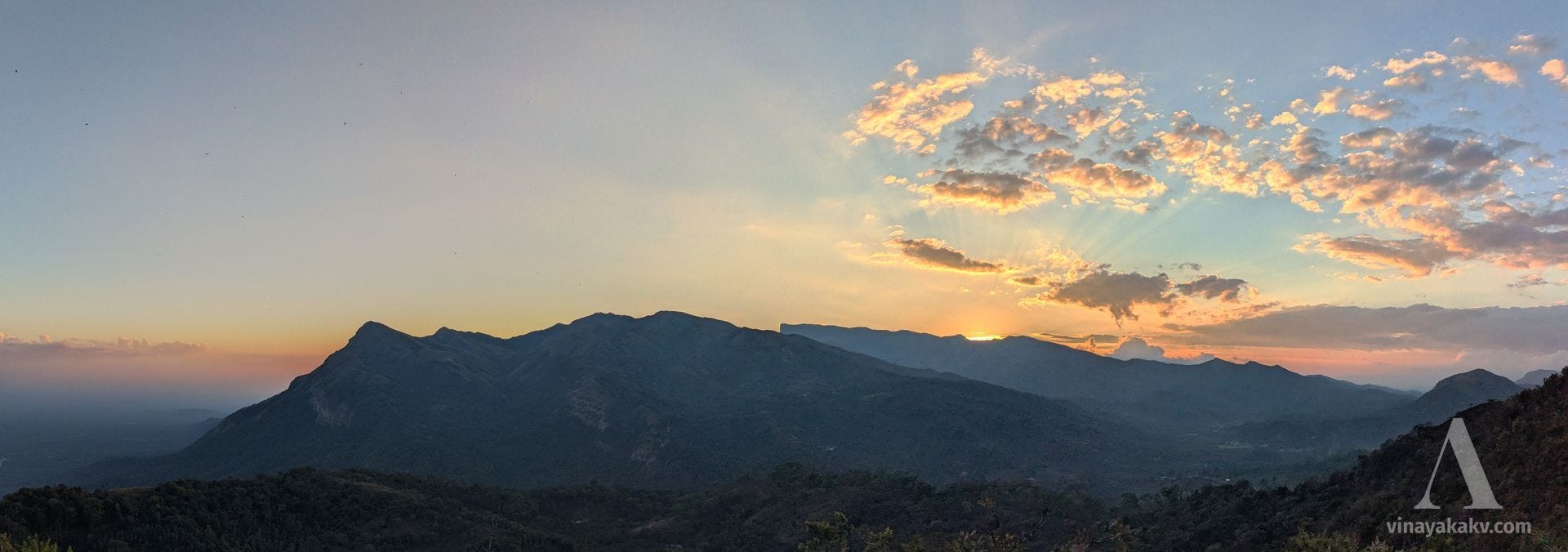
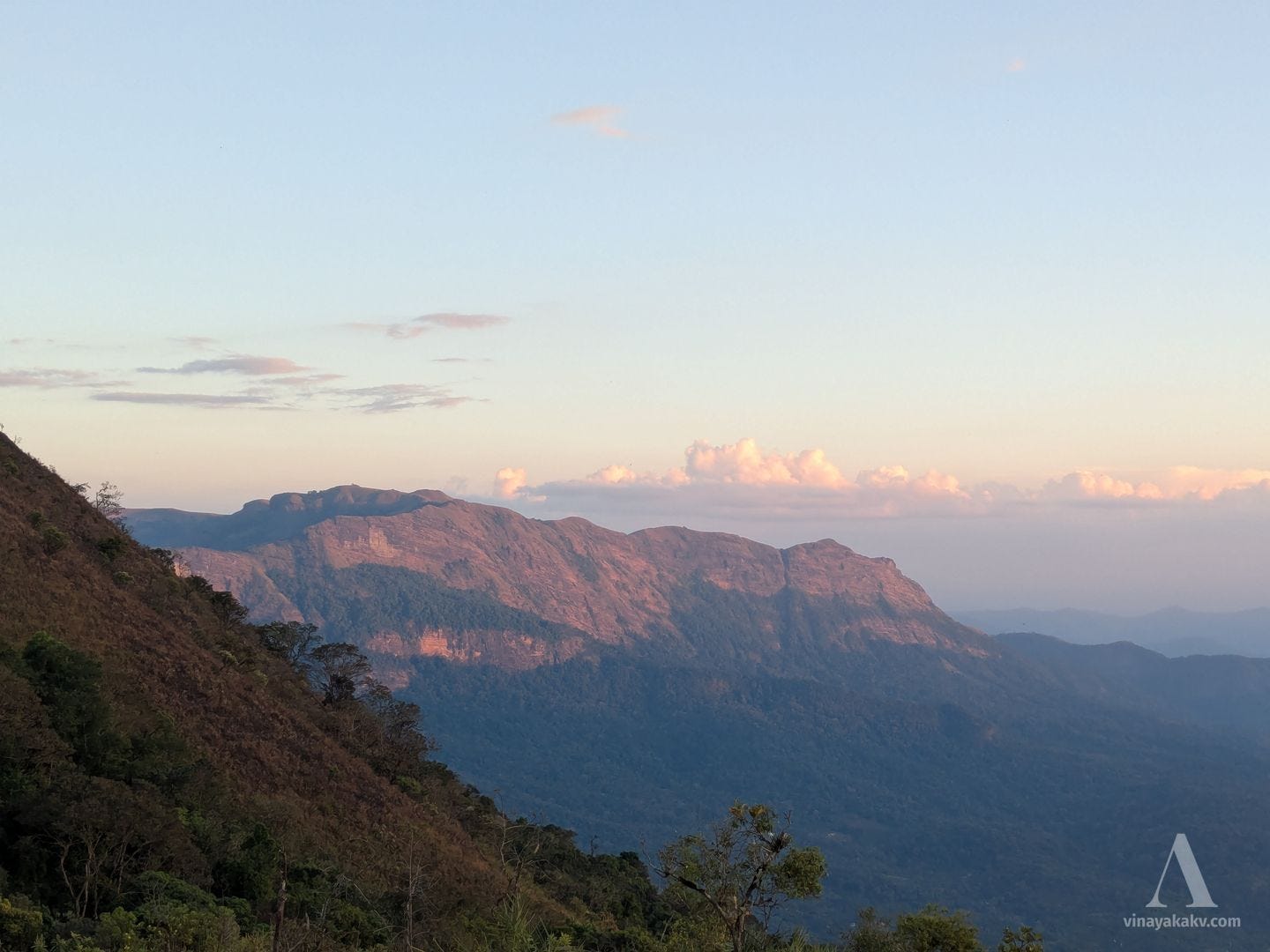
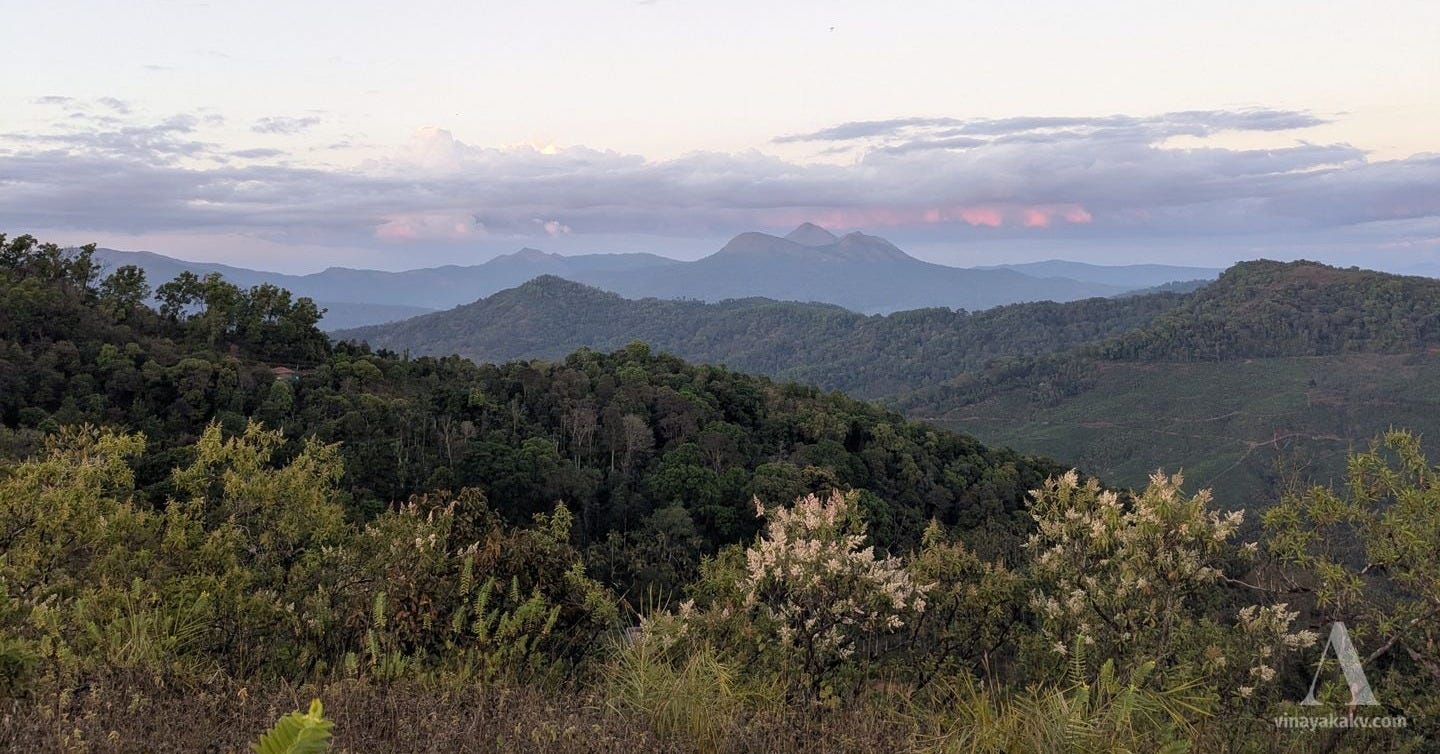
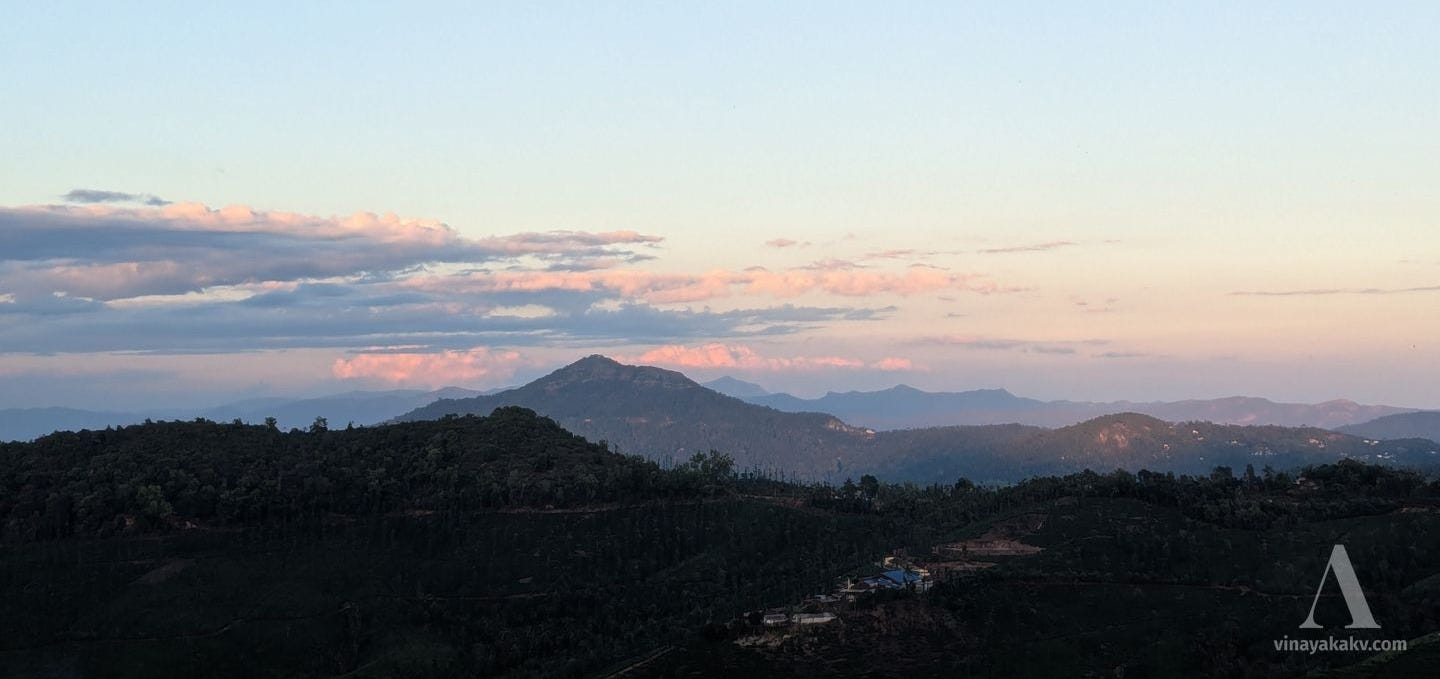
On a fine evening after a weather system swept clouds over the mountains of the Western Ghats and cleared the haze, I set out to a nearby mountain with one of my friends, hoping for a view of the nearby and faraway mountains. Since there was no plan, I could not bring my camera, missing out on some beautiful shots. While we got the view of the distant mountains that we deserved, we were also in for a sweet surprise.
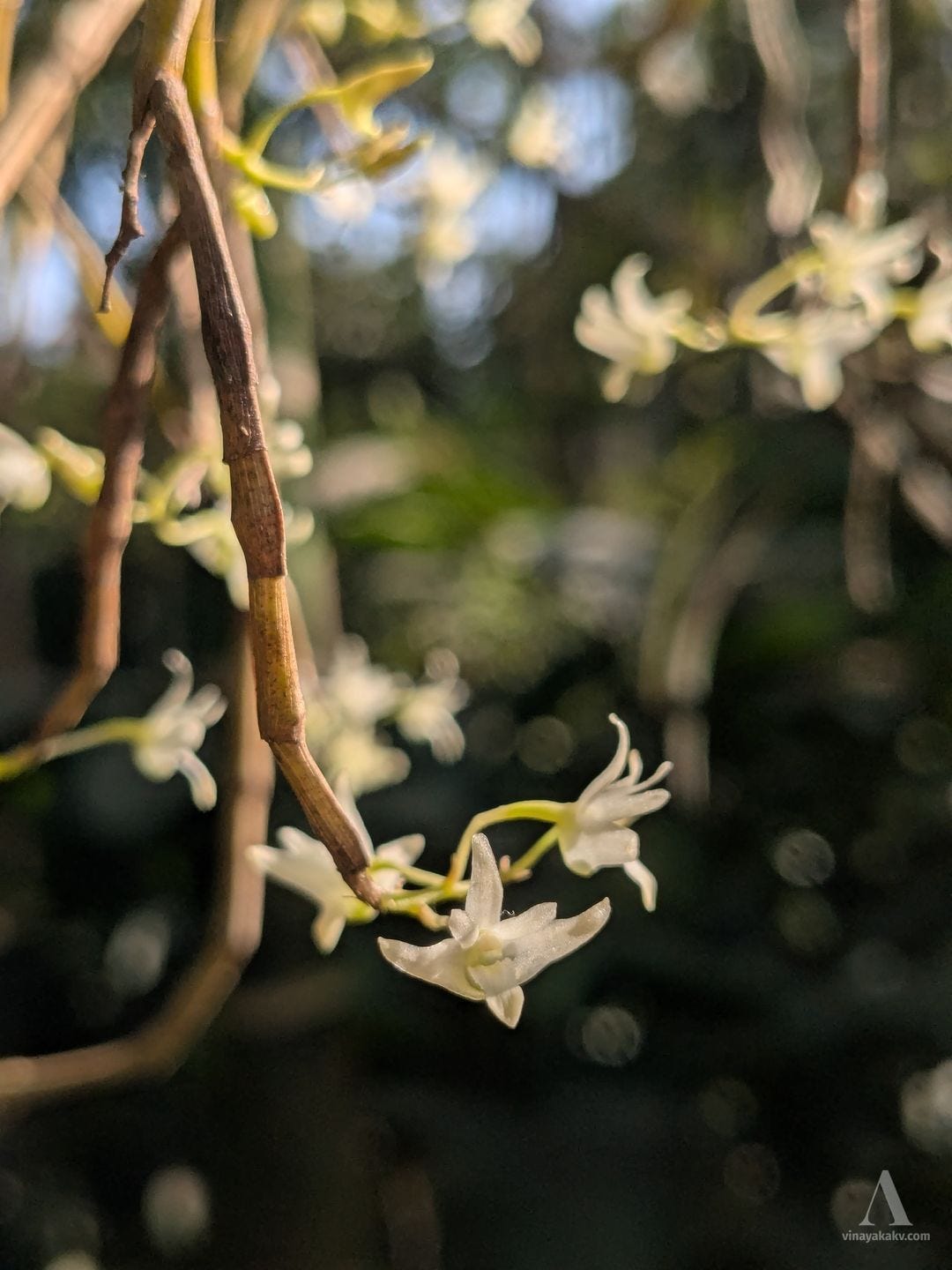
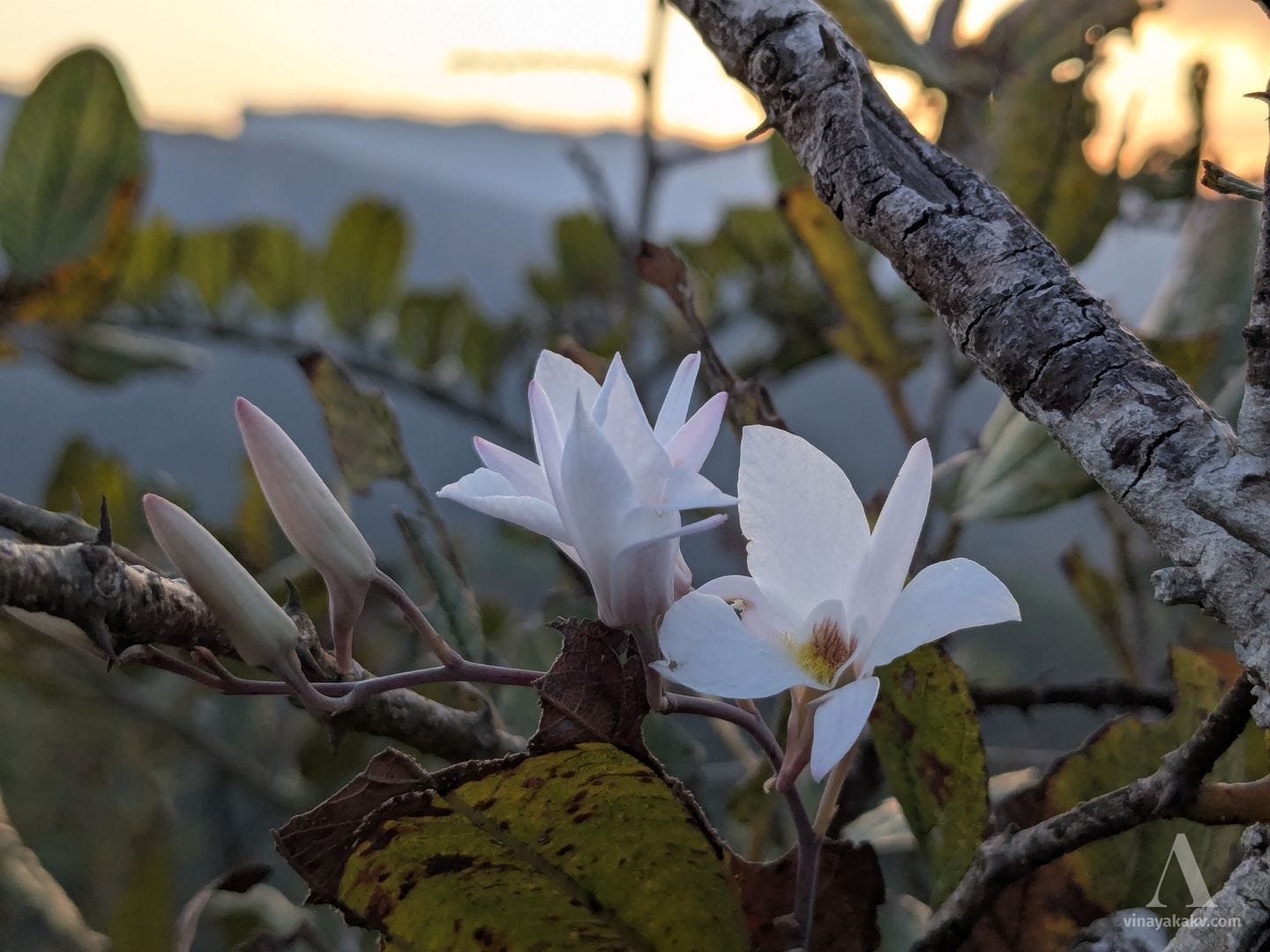
The hill that we climbed is fully covered with grassland species, with a few stunted trees scattered around. The tree was completely leafless at this time of year. There were also signs of grassland burning a few days ago. I was surprised to see a kind of flower on that tree that is unusual for the genus it belonged to. Upon careful inspection, I found out that the flowers were not of that tree, but of the orchid Dendrobium barbatulum. The leafless orchid blended in with the leafless tree, creating a perfect illusion!


I also came across this orchid on another nearby mountain, but it was a smaller specimen.
The Bug Mimic
I was on a random walk with one of my friends when I found this orchid. The place where this orchid is growing is near a stream and farmland that offered beautiful views of the nearby mountains. The day was hot, humid, and cloudy, with chances of a light rain at any time. We enjoyed the landscape and, upon returning, stumbled upon a unique orchid.


This Cottonia peduncularis orchid was an unexpected find for me. The leaves of this orchid are like any other Vanda orchid — long, bilobed leaves. I could not have known it was a different species had it not been in flower. This particular specimen was growing on a decomposing tree trunk that is still standing, exposed to the sun. The flowers were on a long stalk that was relatively far from the orchid’s roots. The flowers mimic the appearance of an insect when viewed from certain angles. This is a strategy employed by many orchids to lure insects into pollinating them.


The place where this orchid was found is under the threat of rapid urbanization, reminding us of the habitat loss that is making such species vulnerable — and the importance of conserving their habitats.
Bamboo growing on Top of Trees
The orchid Dendrobium herbaceum is a very common sight across the Western Ghats, where it sometimes inhabits rocks and often the trunks of large trees. They are completely leafless when they flower. In the leafless state, their stems are yellow and segmented, making them look like miniature bamboo. Their flowers are tiny but cute. Their leaves start appearing after their flowers have wilted, and tend to grow toward sunlight.
The Pink Dendrobium
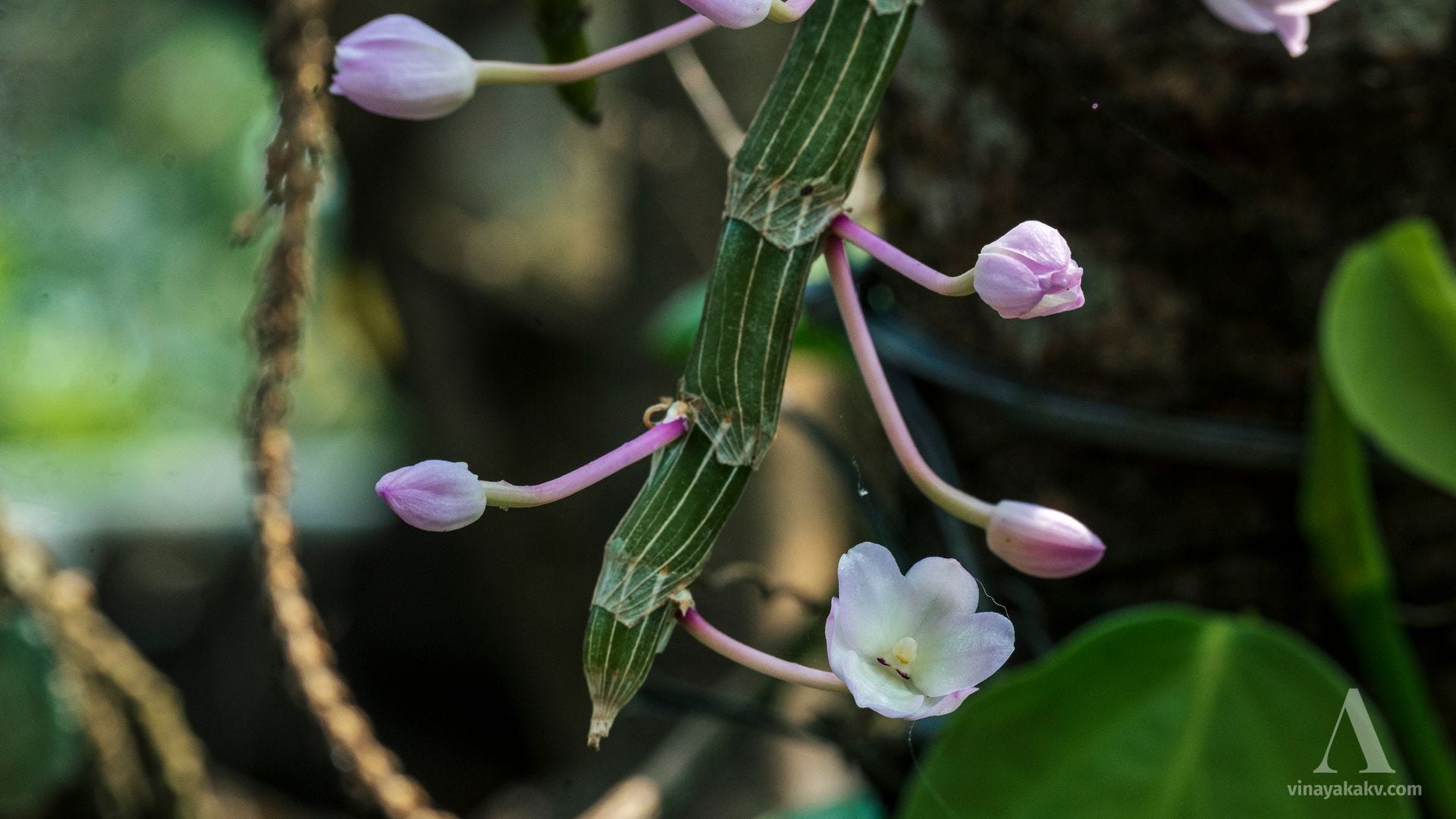
There is a lot of diversity in the flower patterns among orchids of the same family. This orchid, Dendrobium lawianum, was found in a shaded forest. Their flowers are attractive, but do not last more than a day or two. I observed that even if one of the flowers gets self-pollinated, all of the flowers turn into fruits with no seeds inside! I'm not sure whether this peculiarity is limited to this particular specimen, or is observed elsewhere. Do let me know in the comments if you know of such pollination behaviors.
I confused this orchid with Dendrobium crepidatum listed in the book. Both of these orchids have similar-looking stems, but their flowers are slightly different. This goes to illustrate the diversity among orchid species — you sometimes cannot tell species apart if they are not in flower!
The Starry Bulbophyllums
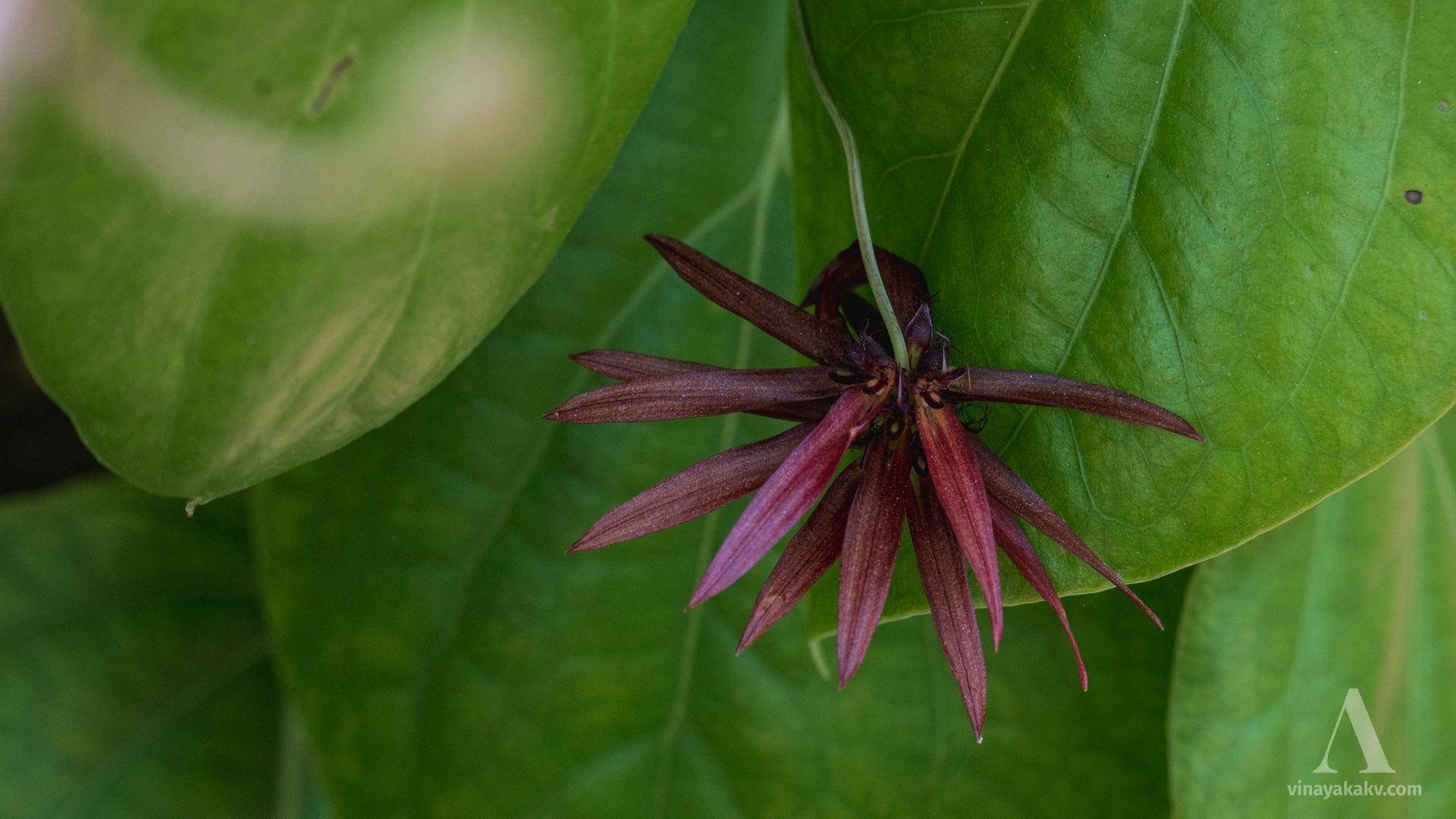
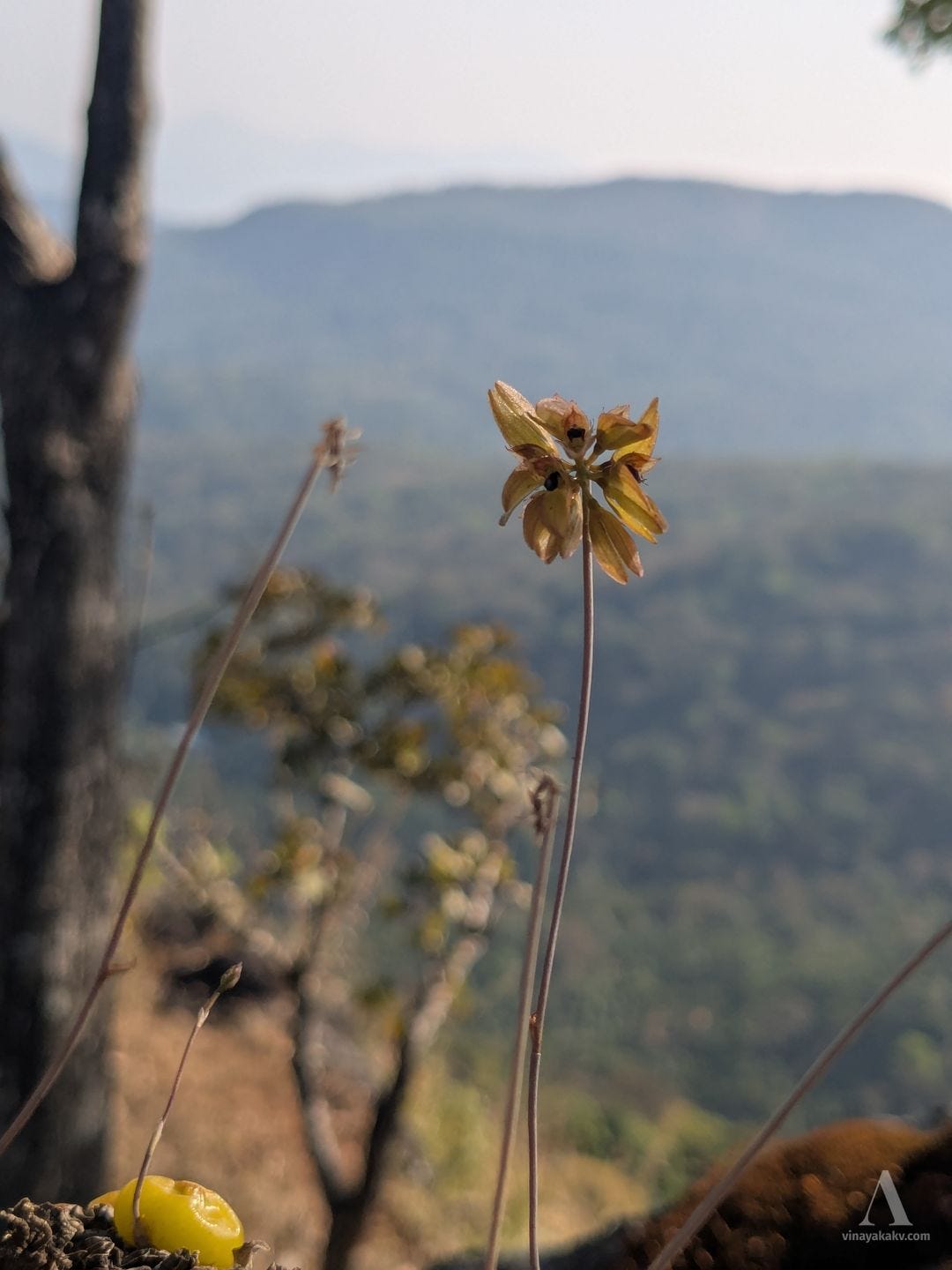
The flowers of Bulbophyllum fimbriatum are very peculiar in that they do not look like flowers at all! One of the specimens in the photographs below was growing at around 1300 m altitude amidst a shola ecosystem, and another was growing at around 1200 m altitude on a moss patch on a granitic rock at the summit of a mountain. They do not have leaves when they are in flower, but soon put up leaves once the flowers wilt and the rains arrive.
You can notice the diversity in this orchid from the photos on flowersofindia.net and below — green vs. red, circular arrangement vs. half circle. Even the two specimens I captured are vastly different.
The Ghost Orchid
This orchid was a rare find when I decided to take an unusual route up a nearby mountain with one of my friends, taking a sudden detour. We saw a flowering stalk coming out of the ground under the shade of coffee plantation trees.
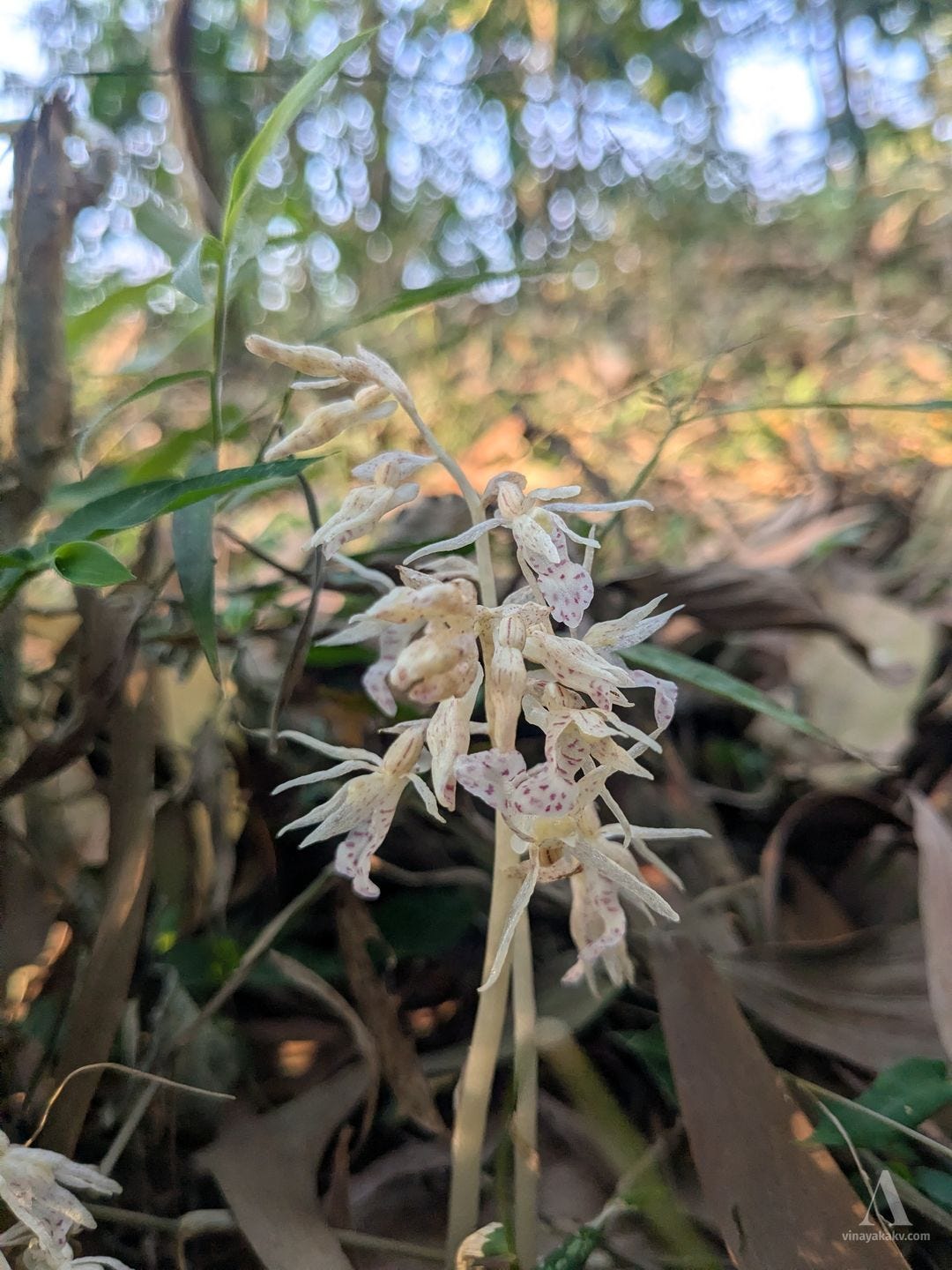
The stalk was white, and the flowers were white with patches of pinkish violet all over them. They looked similar to cardamom flowers, but there was no cardamom plant nearby! Google Lens promptly identified the flowers as belonging to the orchid Epipogium roseum, which was triggered by the first rains of the year.
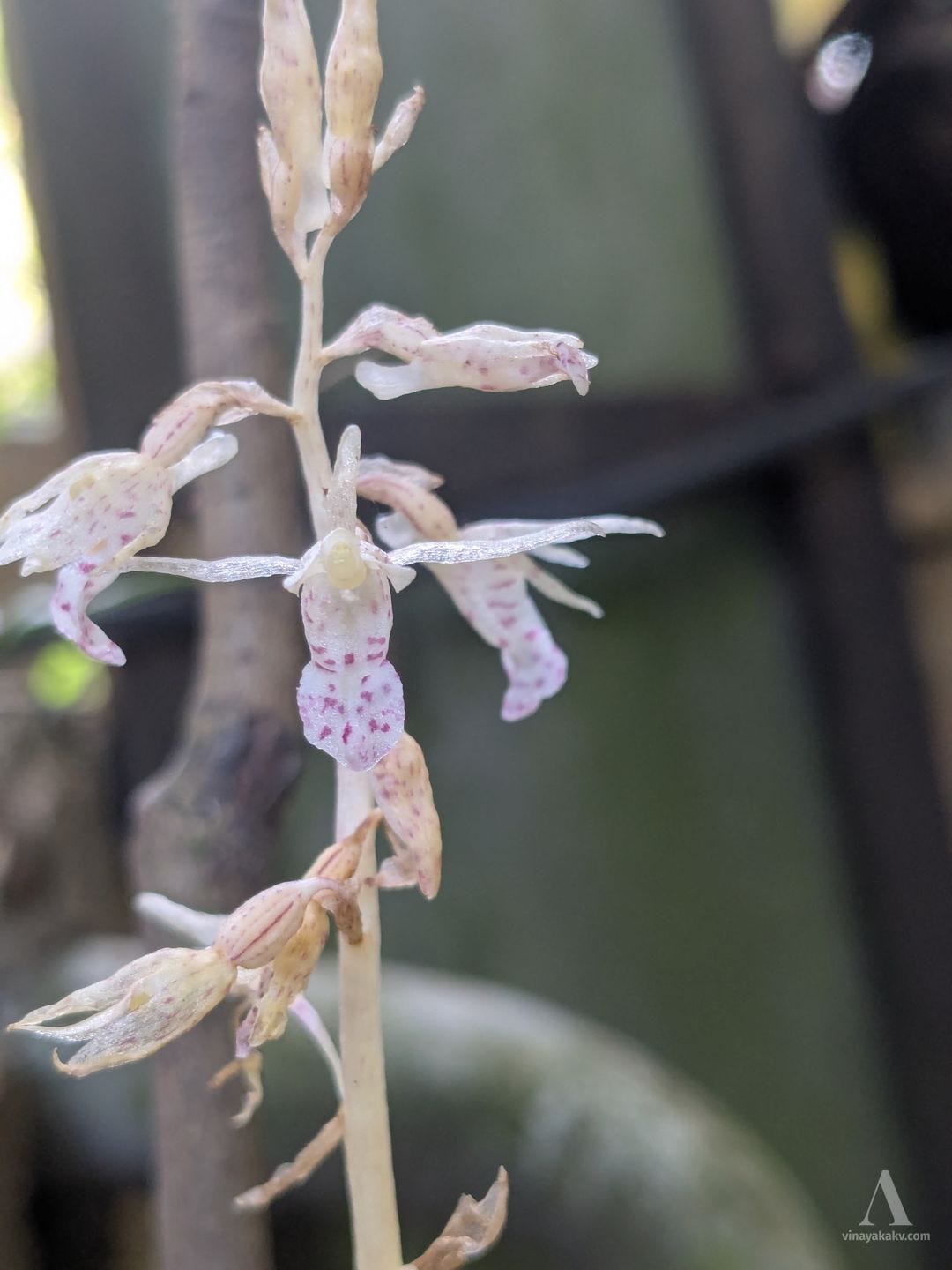
These orchids symbiose with the fungi on the ground, obtaining their nutrition from them. They have no leaves or any other photosynthetic parts. They flower, get pollinated, set seeds, and die — waiting for the next year’s rains to trigger the cycle again. Perfectly ghostly! Note that there are several such orchids with this behavior that are called ghost orchids.
Orchids on the rock
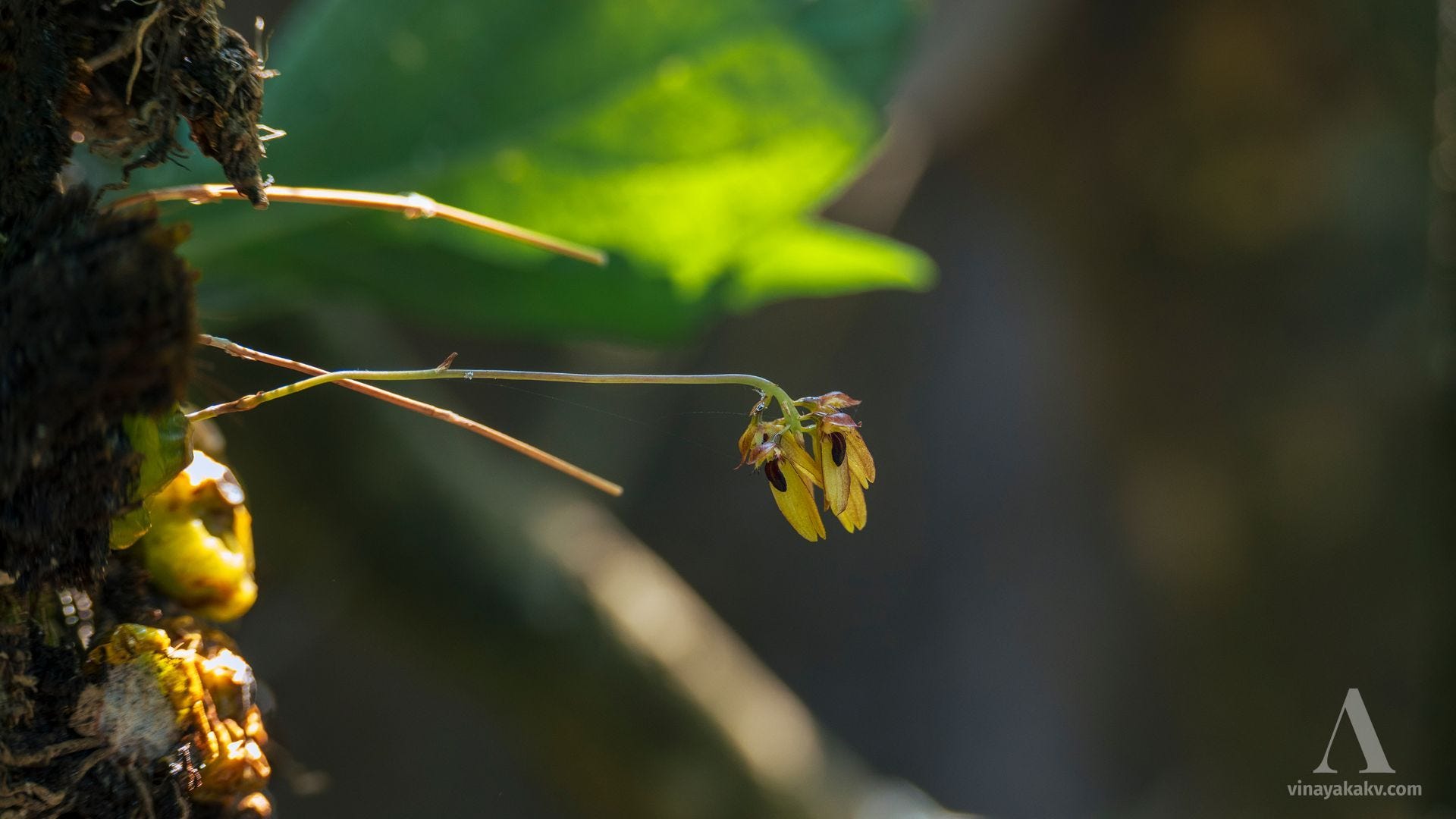
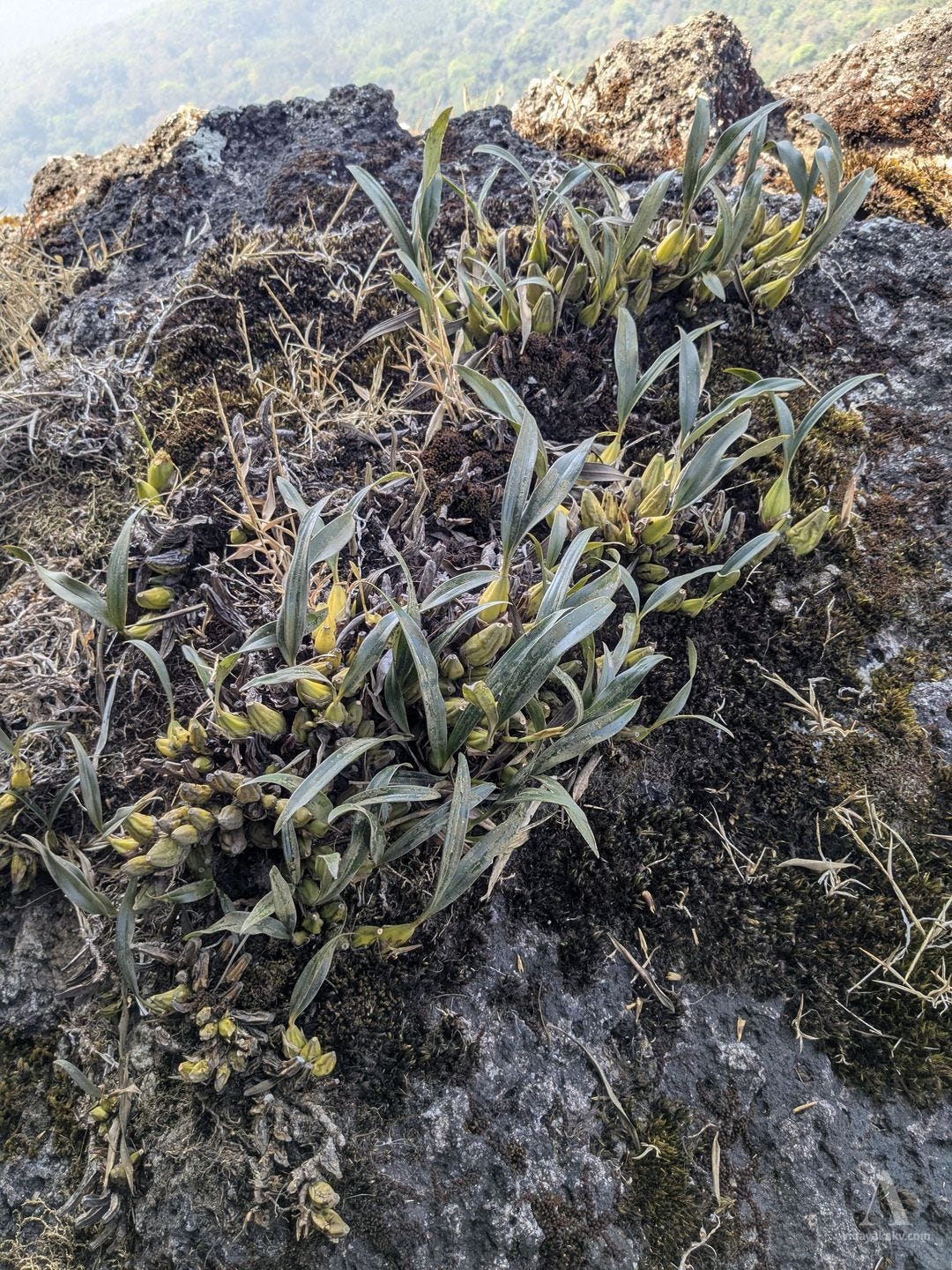
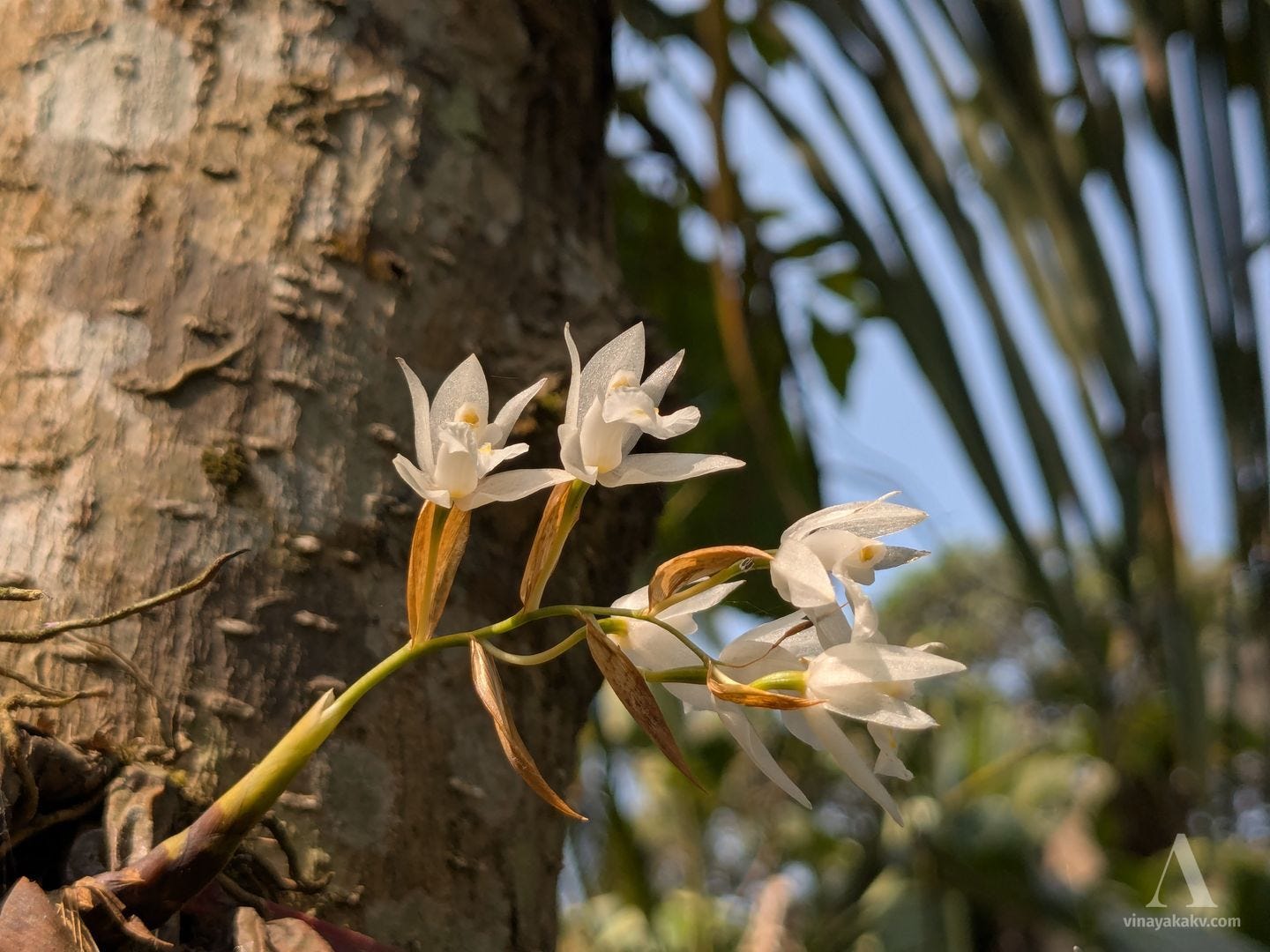
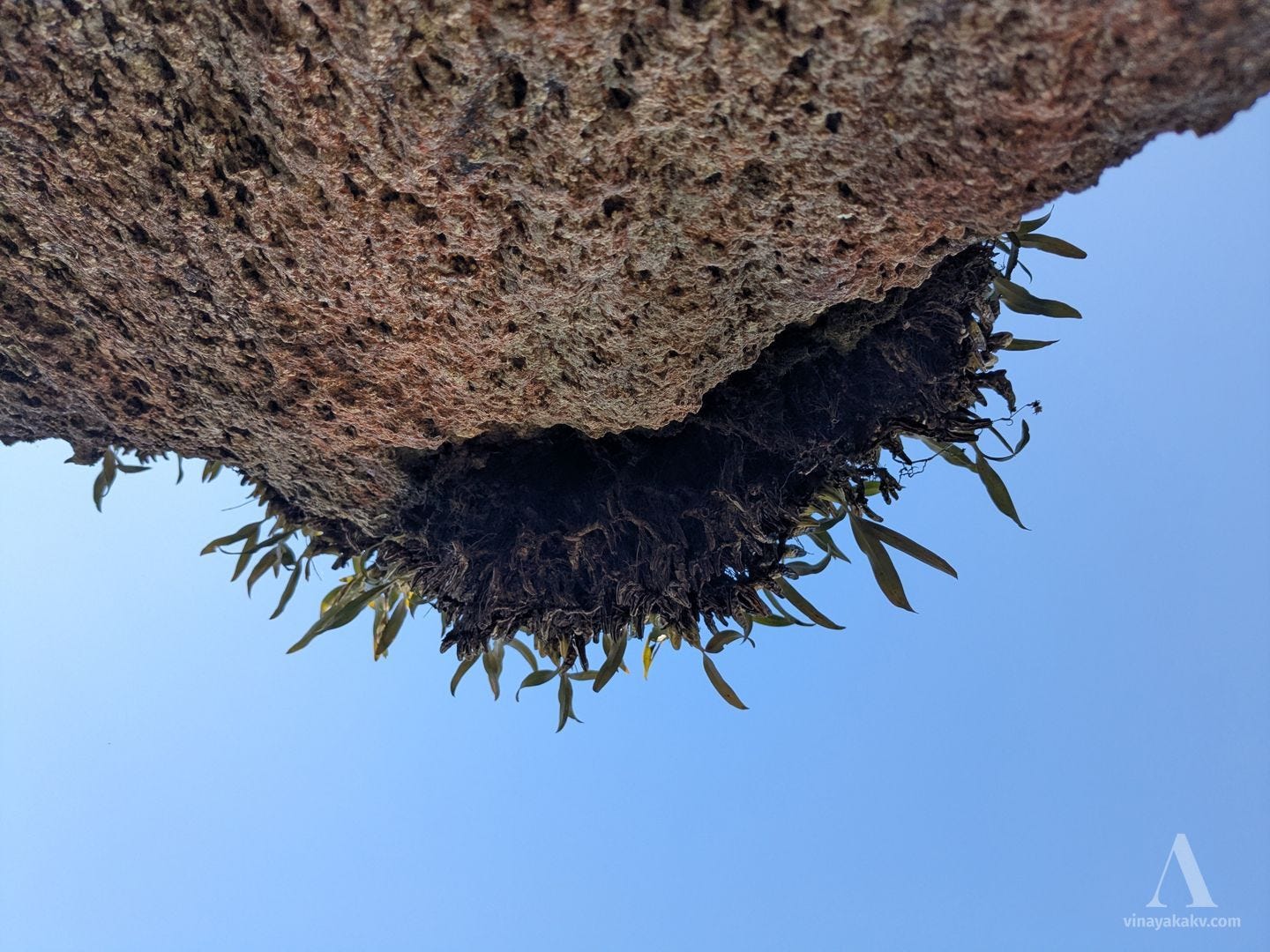
Alongside the starry Bulbophyllum that was growing on the rock, there was another orchid with pseudobulbs growing on rocks, Coelogyne breviscapa, that I found interesting. I had seen this species of orchid growing on tree trunks, but it can also grow on moss patches on rocks. This orchid produces a cluster of flowers, with bright white petals.
The Gramophone
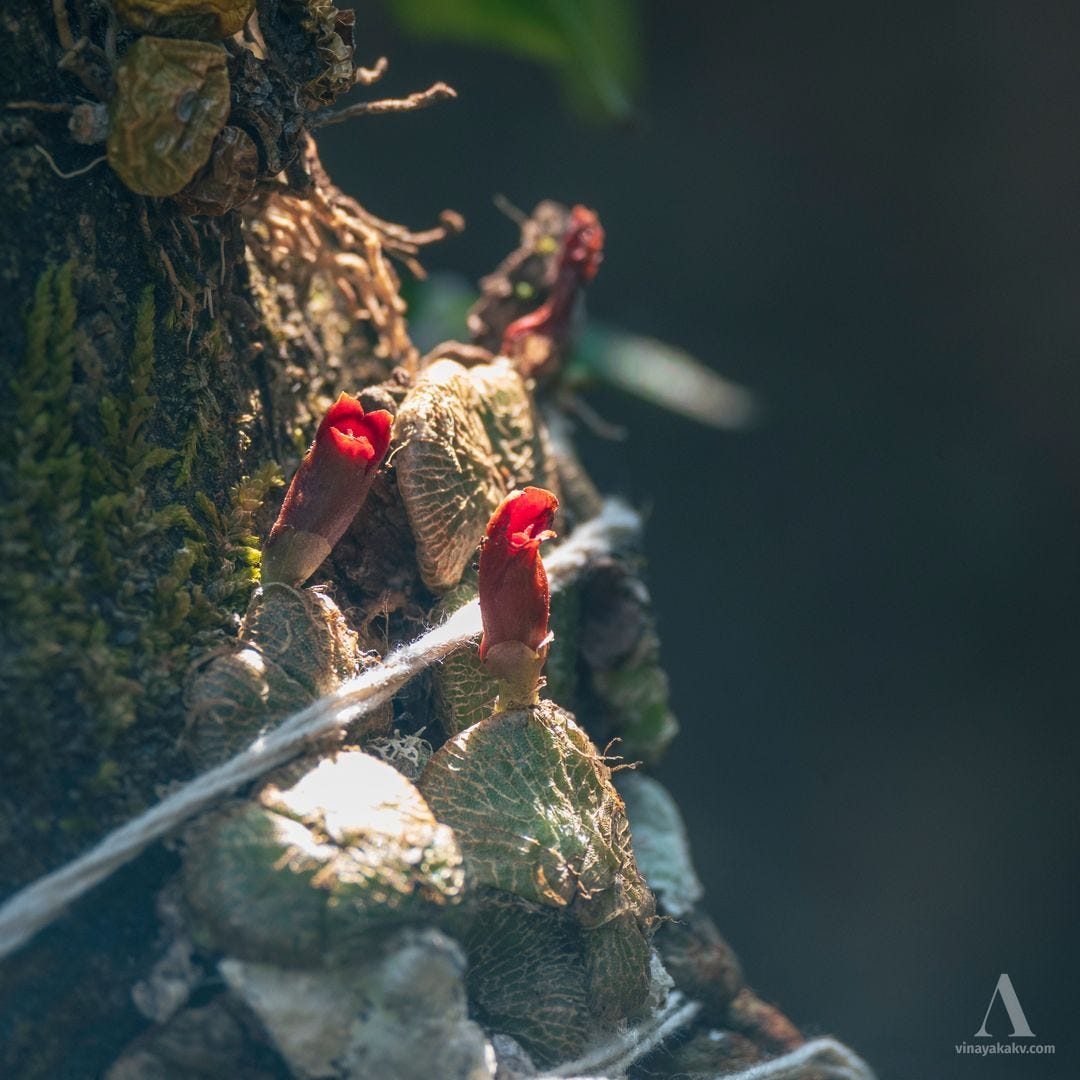
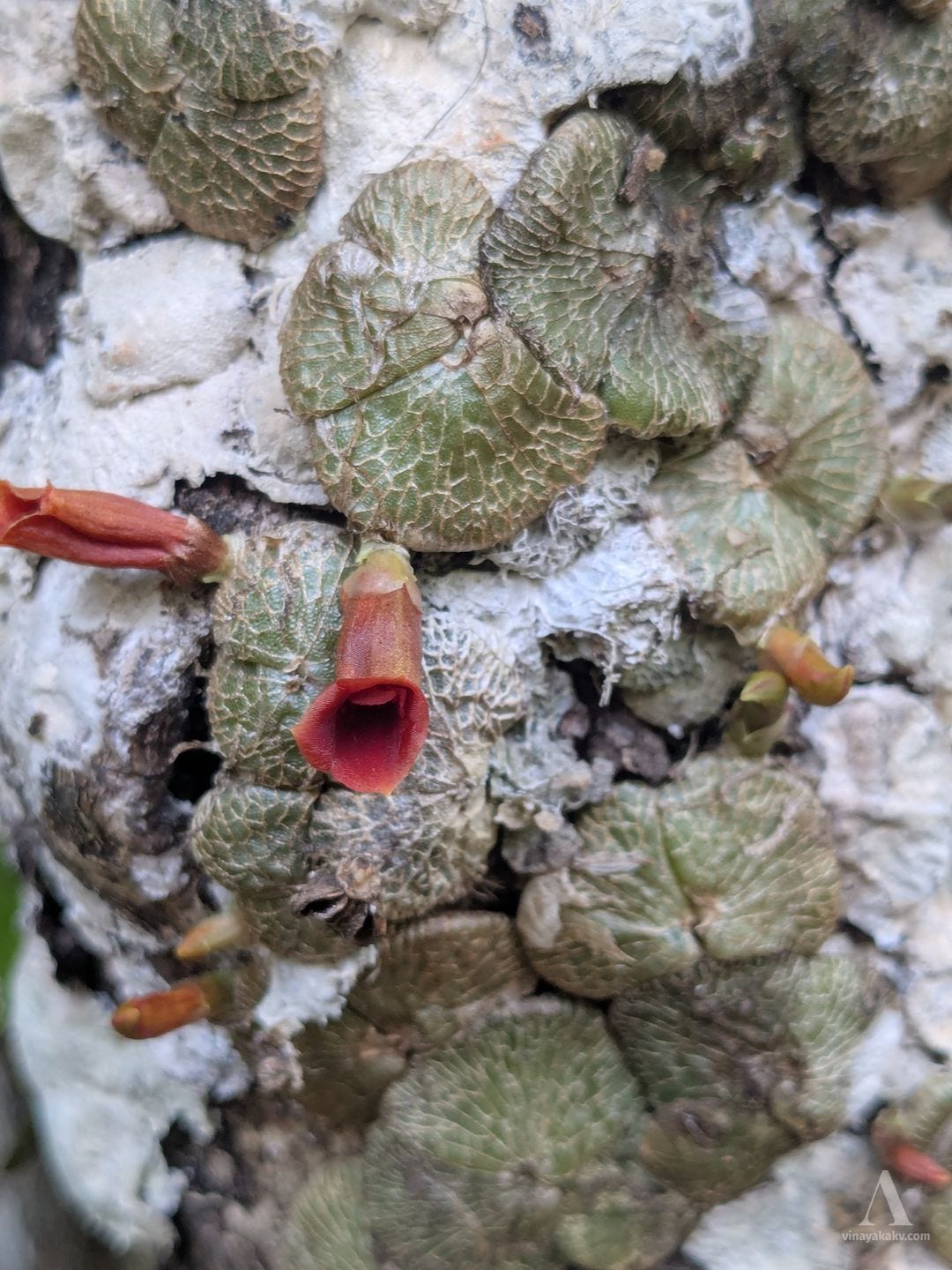
An otherwise uninteresting tree trunk alongside a walkway was full of patches of red one day. These patches turned out to be the flowers of the orchid Porpax reticulata. Their flowers are taller than they are wide, and closely resemble the horn of a gramophone.
The Long Dendrobium
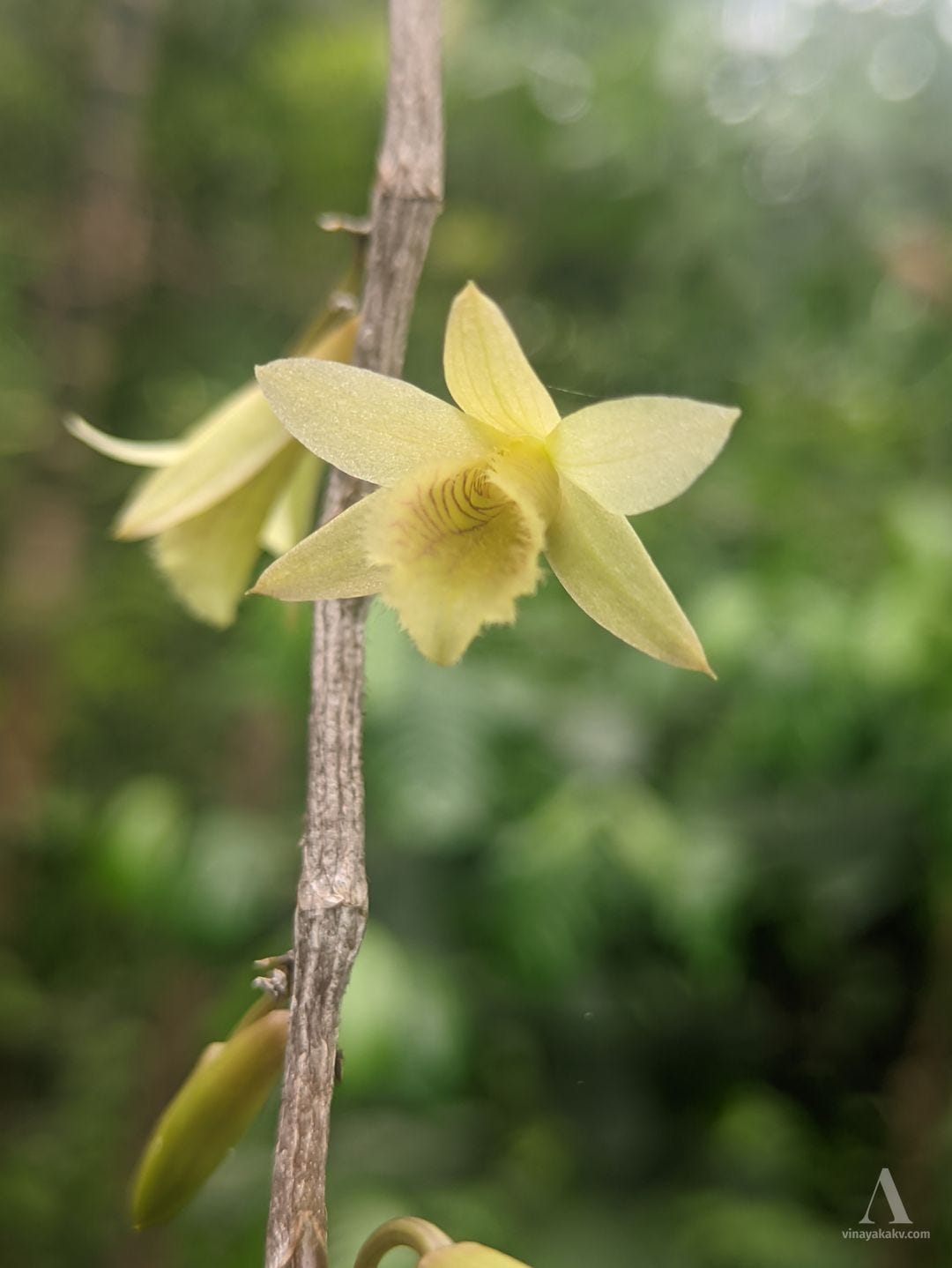
The orchid Dendrobium macrostachyum is common across the roadside trees of the Western Ghats, with slender stems that can grow very long. Its flowers are triggered by the first summer rains, while still leafless. Its long stem covered with flowers is a beautiful sight.
Until next time
I covered a few orchids in this article and plan to cover many other non-orchid wildflowers in the next article, as this article was running too long with their stories!
Orchids are quite neglected in local cultures, with few words existing in local languages to identify individual species. On the other hand, orchids are a world of their own, with their innovative flower structures to attract pollinators and an unusual germination strategy — all pointing towards a highly specialized, biodiverse environment.
Some of the orchid biodiversity is threatened by habitat loss and climate change, among other things. The specimen of the orchid Trias stocksii found in the video above no longer stands in the forest — the tree was cut down in the process of fencing the forest land. Let's remind ourselves to observe nature (who knows, you might stumble upon an unseen orchid next time you go out!), appreciate their beauty, and help conserve them.
Extended Reading
There are a few people who are doing excellent work documenting biodiversity and helping understand and conserve it. I came across the following people and initiatives that I found interesting:
Khandige Vikas Bhat — Runs a YouTube channel at https://www.youtube.com/@vidaripollen in which he explores plant species, flowers, and their backstories during his daily walks.
The Orchids of Karnataka — The book mentioned earlier in the article covers orchids belonging to 48 genera found in Karnataka. You can purchase it through Amazon or Navakarnataka (the book is out of stock at the time of writing this article, so a link to the web page is not available)
The Naturalist’s Rabbit Hole — A blog and field observation notes detailing phenomena that would go unnoticed in day-to-day life. For example — why are flowers structured the way they are? Which bees actually need conservation?
Kew Gardens — One of the largest collections of plants in the world, conserving plant diversity in their greenhouses in London. A recent video by them covers why orchids are important to the ecosystem.
Flowers of India — A great catalog of plant species in India. Most Google Lens results for wildflowers point to them!
You — The reader interested in observing, understanding, and helping preserve the natural beauty and biodiversity!