


In my last article, I was exploring the orchids that flower in summer. Due to space limitations, I could not cover other wildflowers. In this article, I will be walking through some of the non-orchid wildflowers that flower in the summer. If you are reading this article in the email, a portion of the article will be cut off. Please use the web link to read the full article.
Summer Orchids

Summer is a time of year when the scorching sun shines bright, the land dries up, and the plants in the shola grasslands set seeds, turn brown, and occasionally catch fire.
As described in the last article, the trigger for many wild flowers during the summers of the Western Ghats is usually the summer rains. Many rhizomatous plants emerge from the ground, usually accompanied by flowers. Some plants, otherwise blended into the greenery, completely cover themselves with flowers, making them distinguishable. In this article, we shall go through some of the wildflowers, and some backstories associated with them.
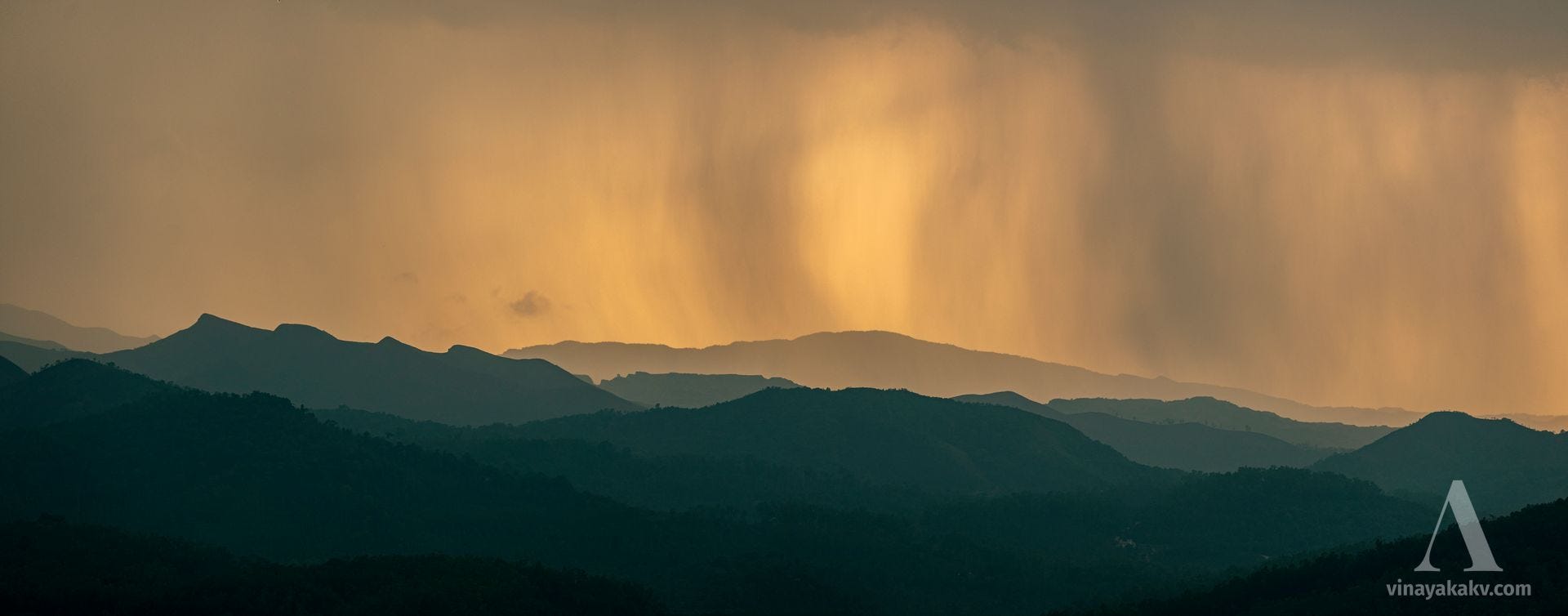
May the Rains be With You

A story of the summer rains in the Western Ghats, touching some flowers that are mentioned in the current article. Covers orchids and fungi as well.
The Curcuma
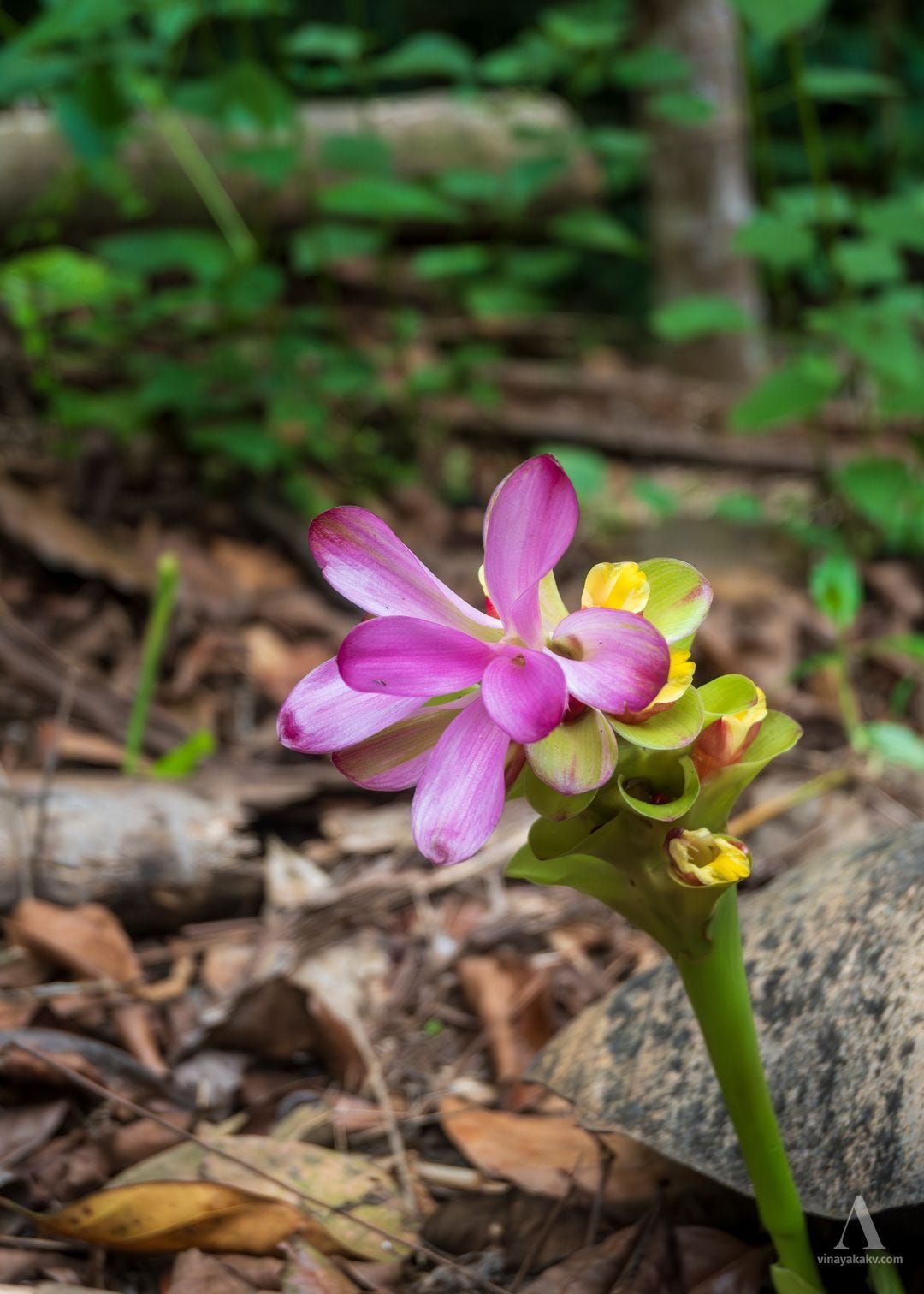
The otherwise dried, brown mountain shola grasslands are dotted with yellow and white flowers a few days after the first summer rain. These are the flowers of the Curcuma species, with yellow flowers likely belonging to Curcuma karnatakensis.
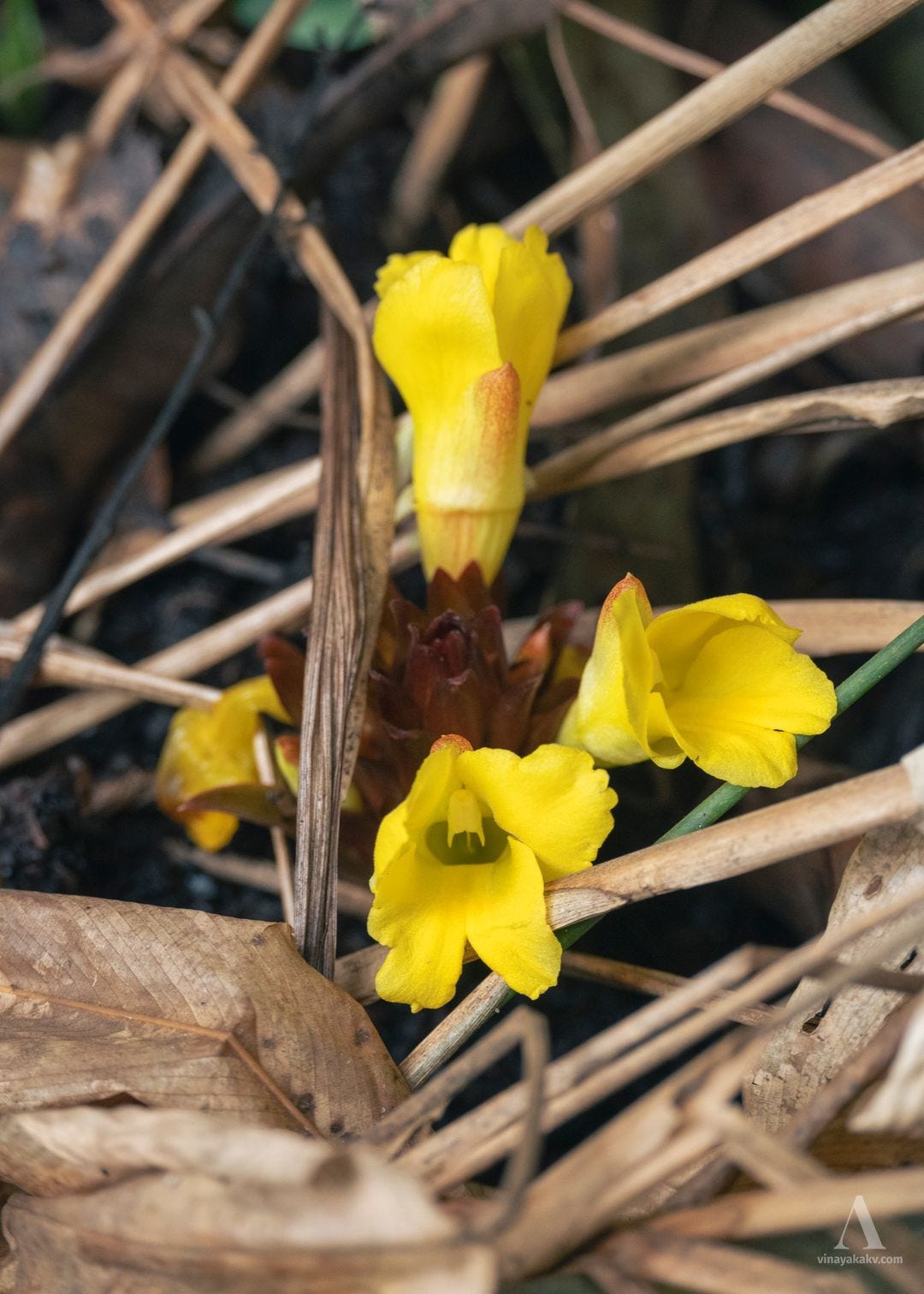
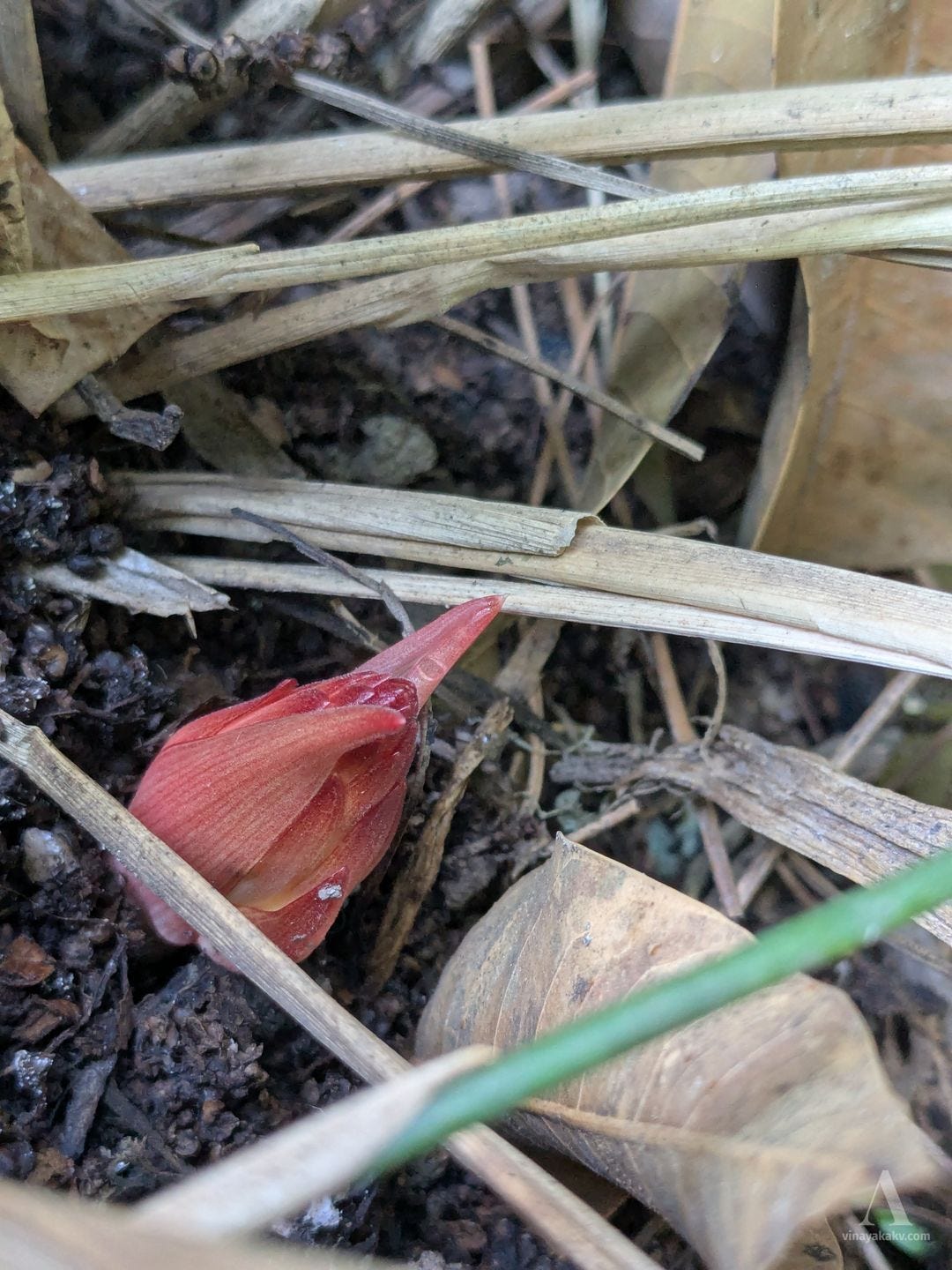
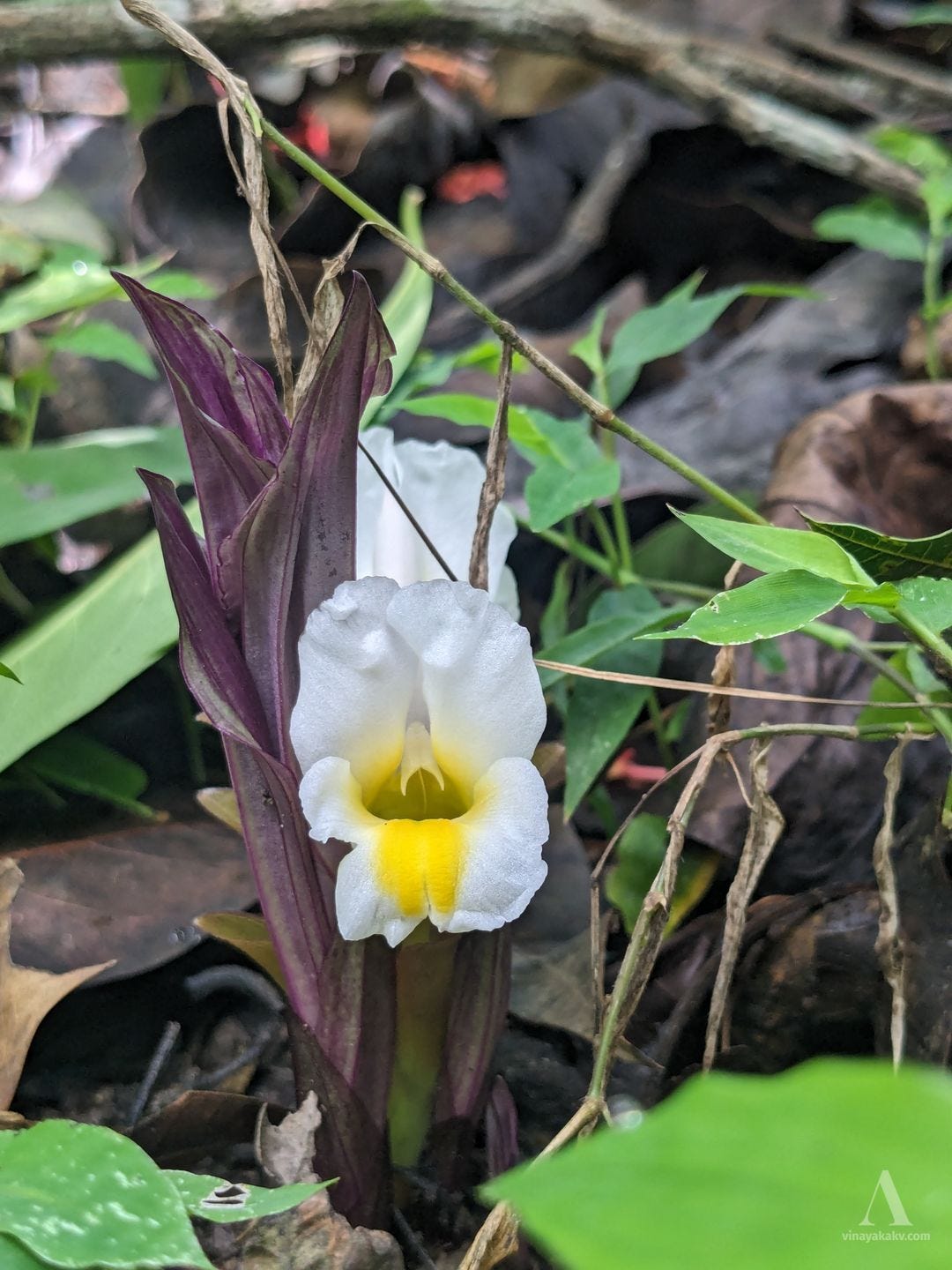
Some Curcuma species, including common turmeric (Curcuma longa) and black turmeric (Curcuma caesia) have a long flowering bract that hosts multiple flowers. The bract itself is as attractive as the flower.
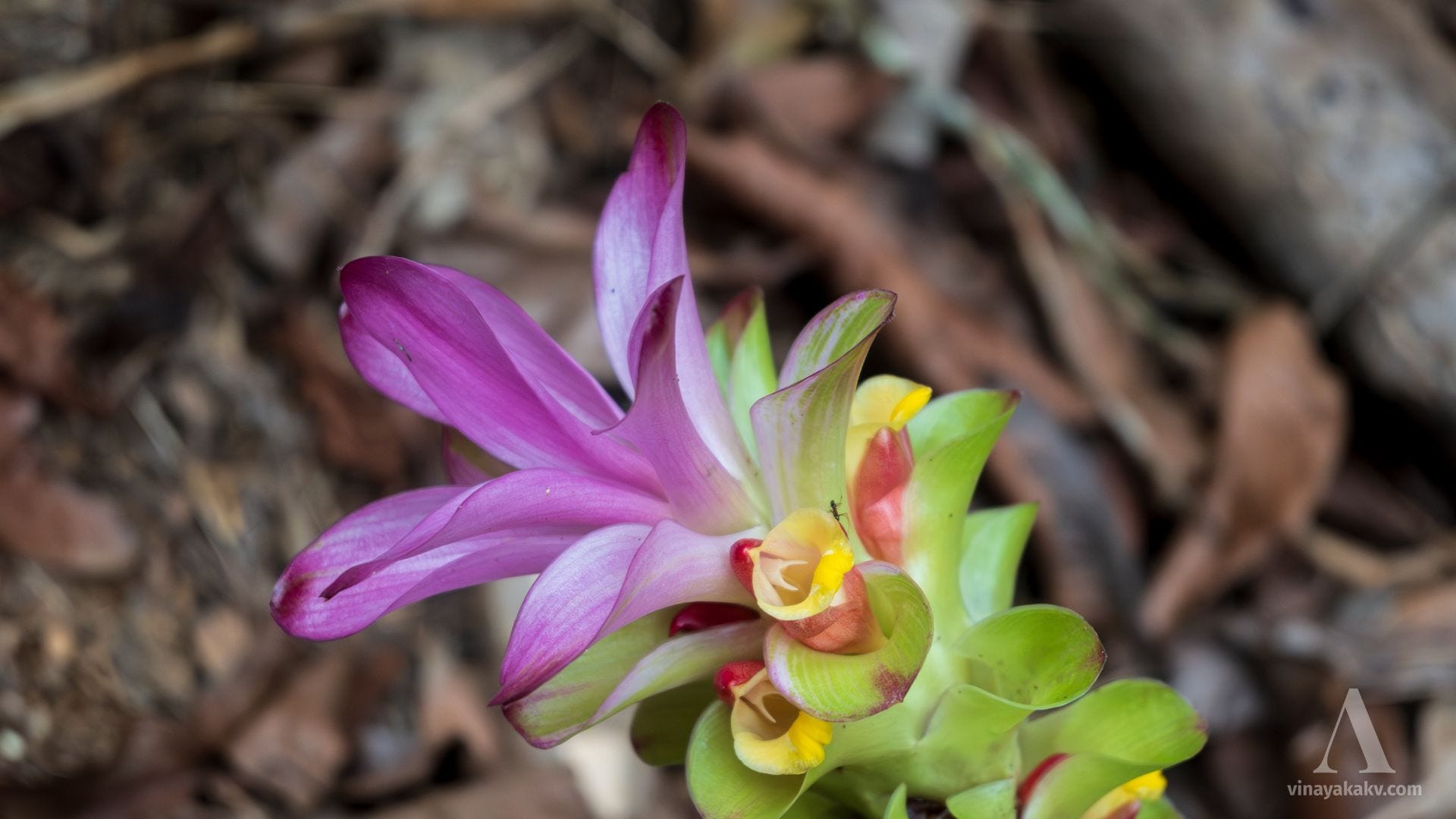
Once they flower, the leaves of the plant start to appear, in the usual style of the coiled leaves unfolding in a beautiful spiral. Due to the spiral leaves, the plant is also called “Suruli Gida” locally, meaning the coil plant.
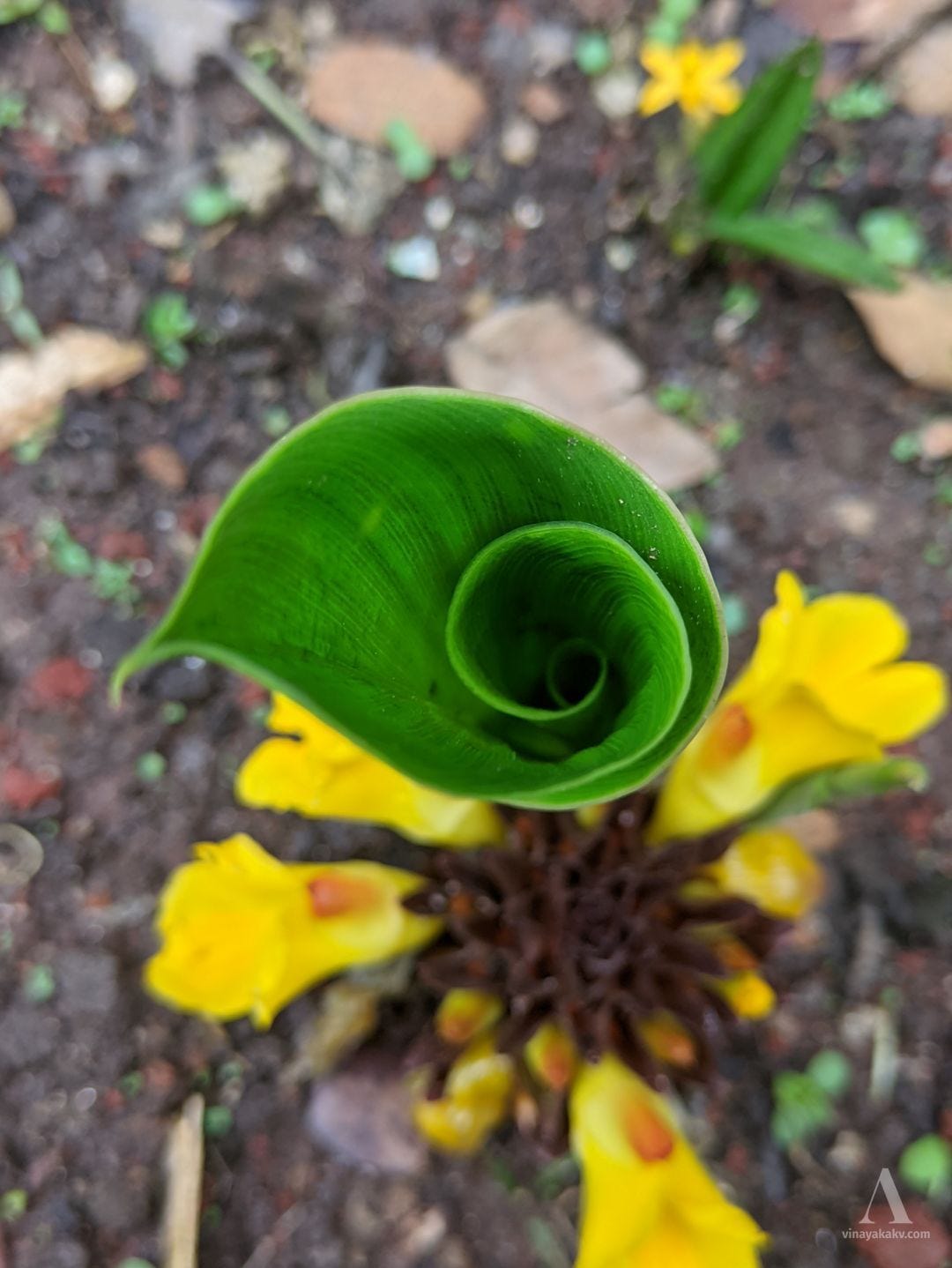
The leaves are in full force during the Monsoon, at the end of which, the plant flowers for the second round, before finally wilting down in the winter.
Ground Coconut
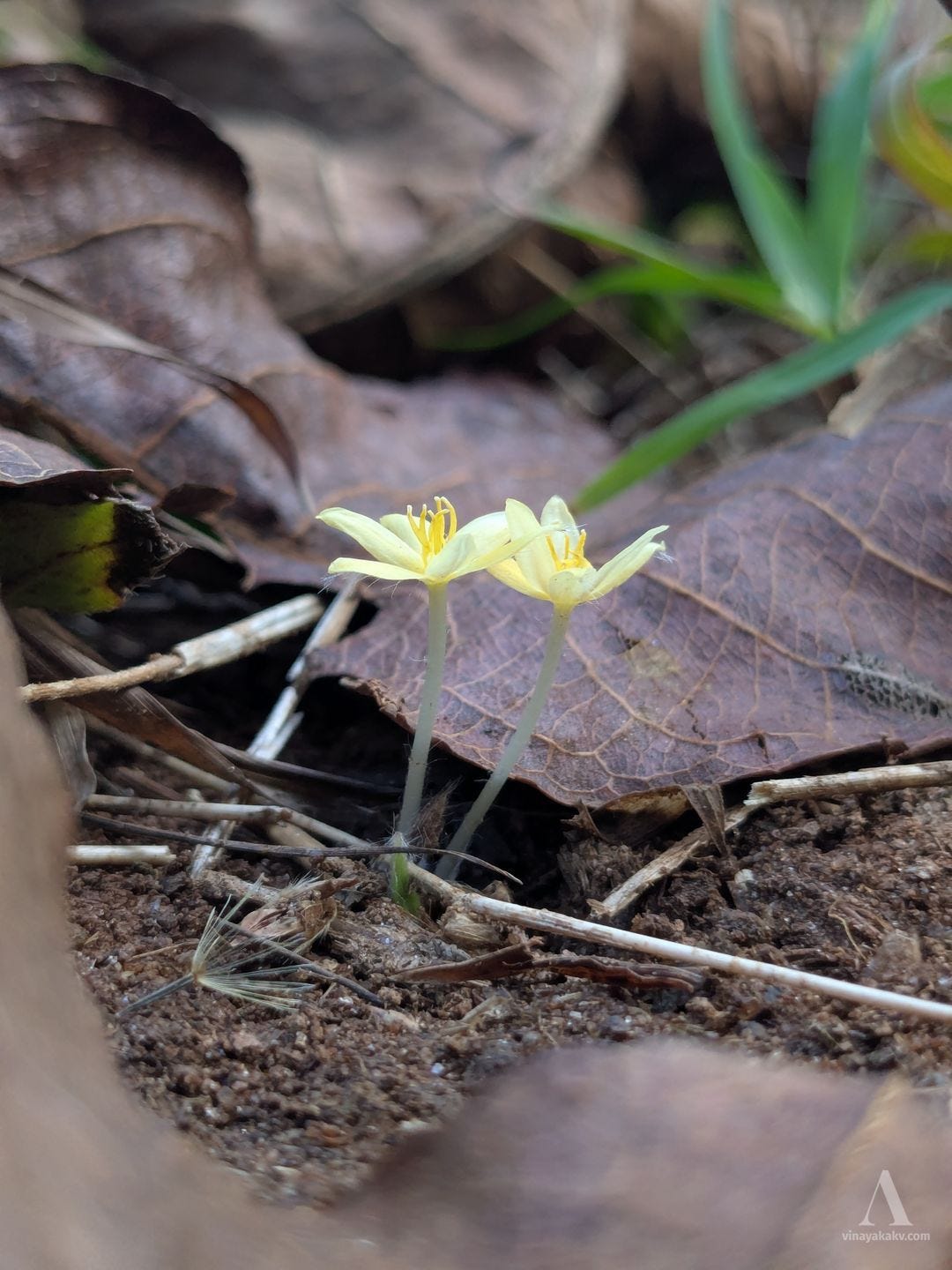
The yellow dots amongst the dried grass mentioned earlier are also contributed by the starry flowers of Curculigo orchioides. They follow a similar flowering cycle as Curcuma — flowers, leaves, and flowers again before wilting. Their leaves superficially resemble those of the coconut — hence the name “Ground coconut”.
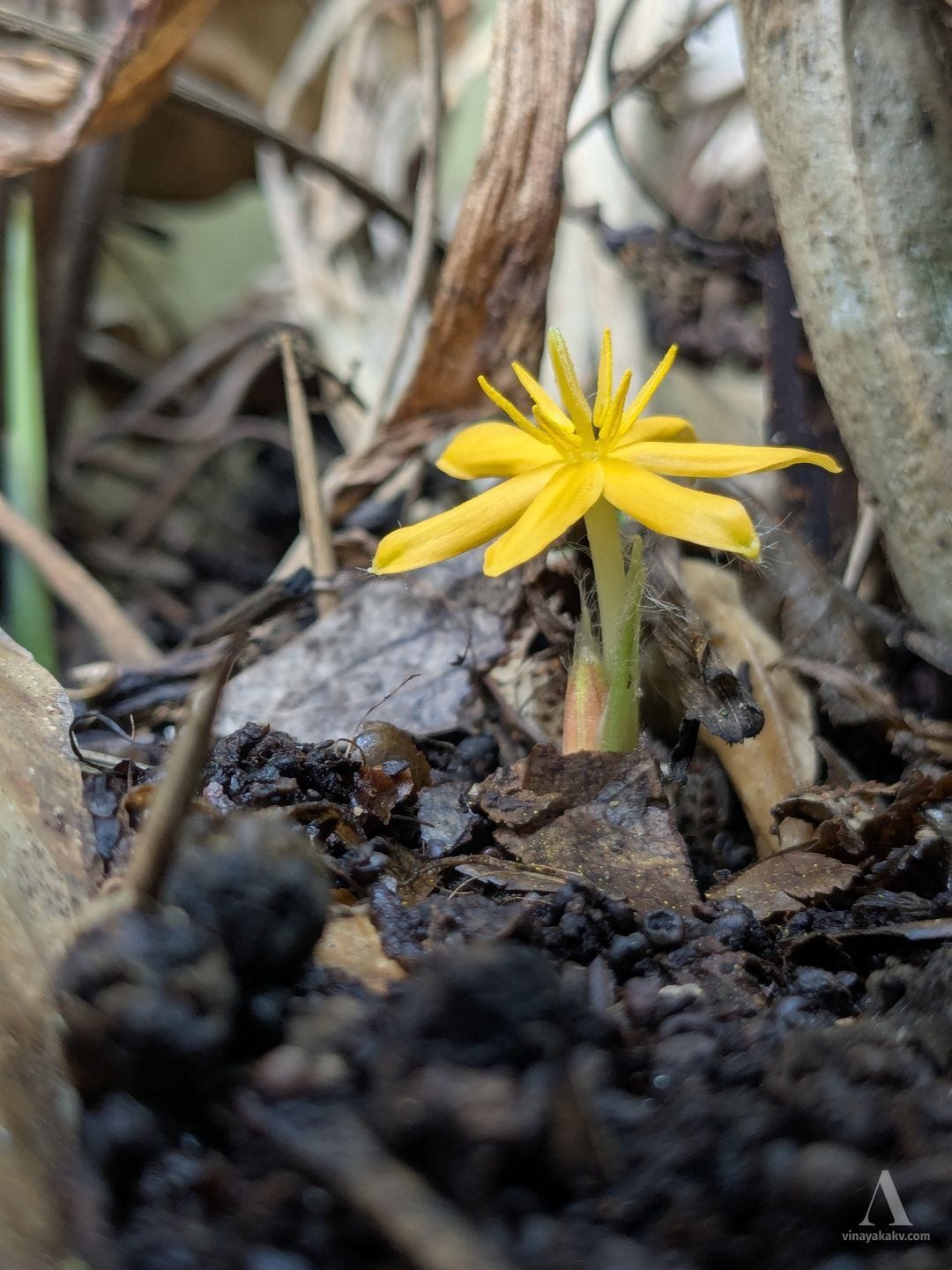
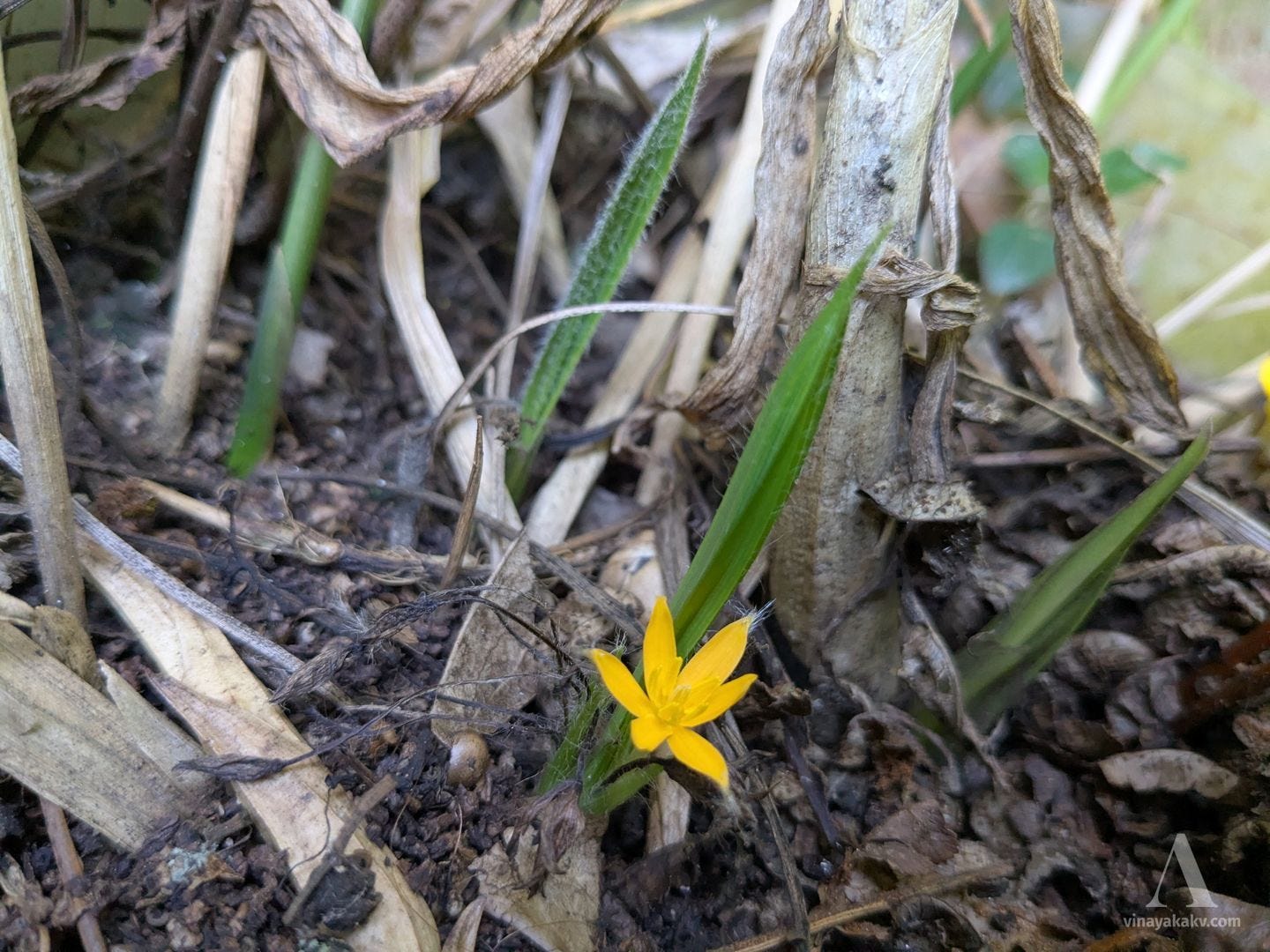
I’ve seen a few varieties of this species, one with hairy leaves and flowers, another with pale-yellow flowers.
Members of Melastomataceae
Some grassland hills of the Western Ghats were subject to afforestation with the introduced Acacia mangium trees — due to the colonial-era mindset of grasslands being wasteland, and to harvest these trees for timber later.
CORONA - A time-travel into the past

The land transformation, caught in film during the cold-war era spy programs!
The introduced trees have gained a foothold and are now spreading naturally. As a side-effect, these trees changed the soil composition, allowing some native forest trees to grow under their shade.
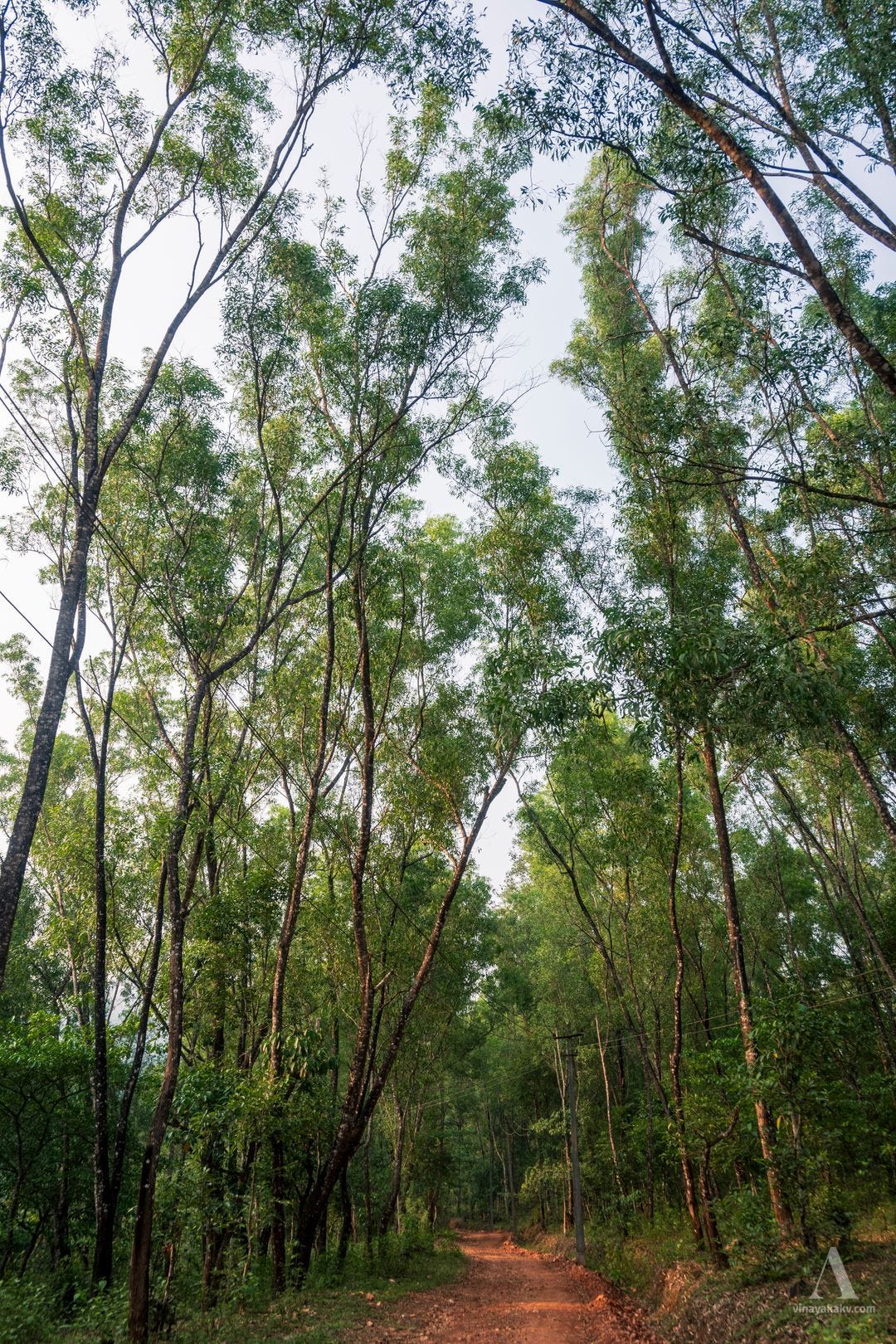
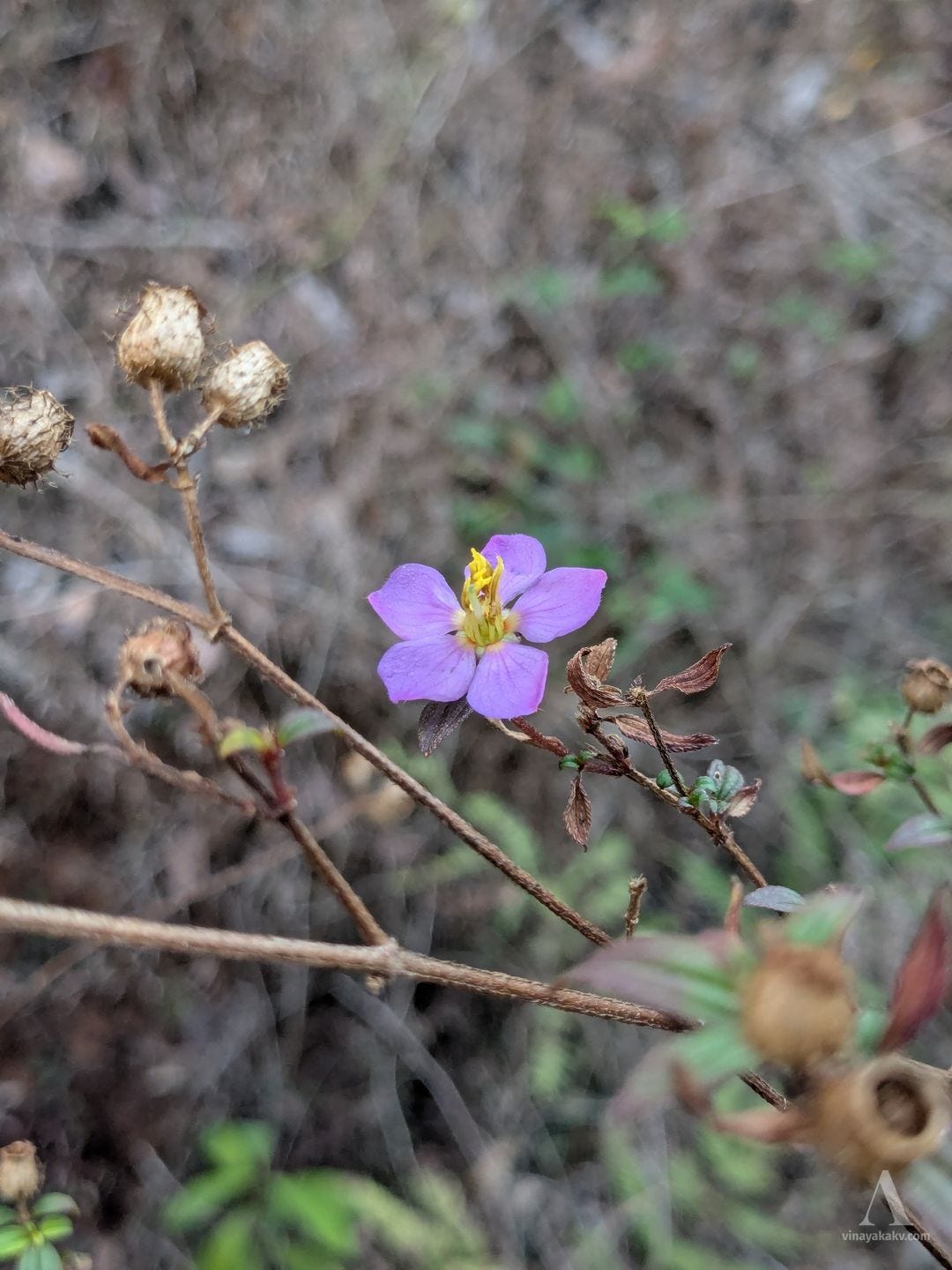
The sequence of succession starts with trees and shrubs of pioneer species, nurturing the seedlings of the native forest trees. Once the native trees gain a foothold, they will shade these pioneer trees, forcing them out. The shrub Melastoma malabathricum is one such pioneer, and puts up attractive pink flowers during summer.
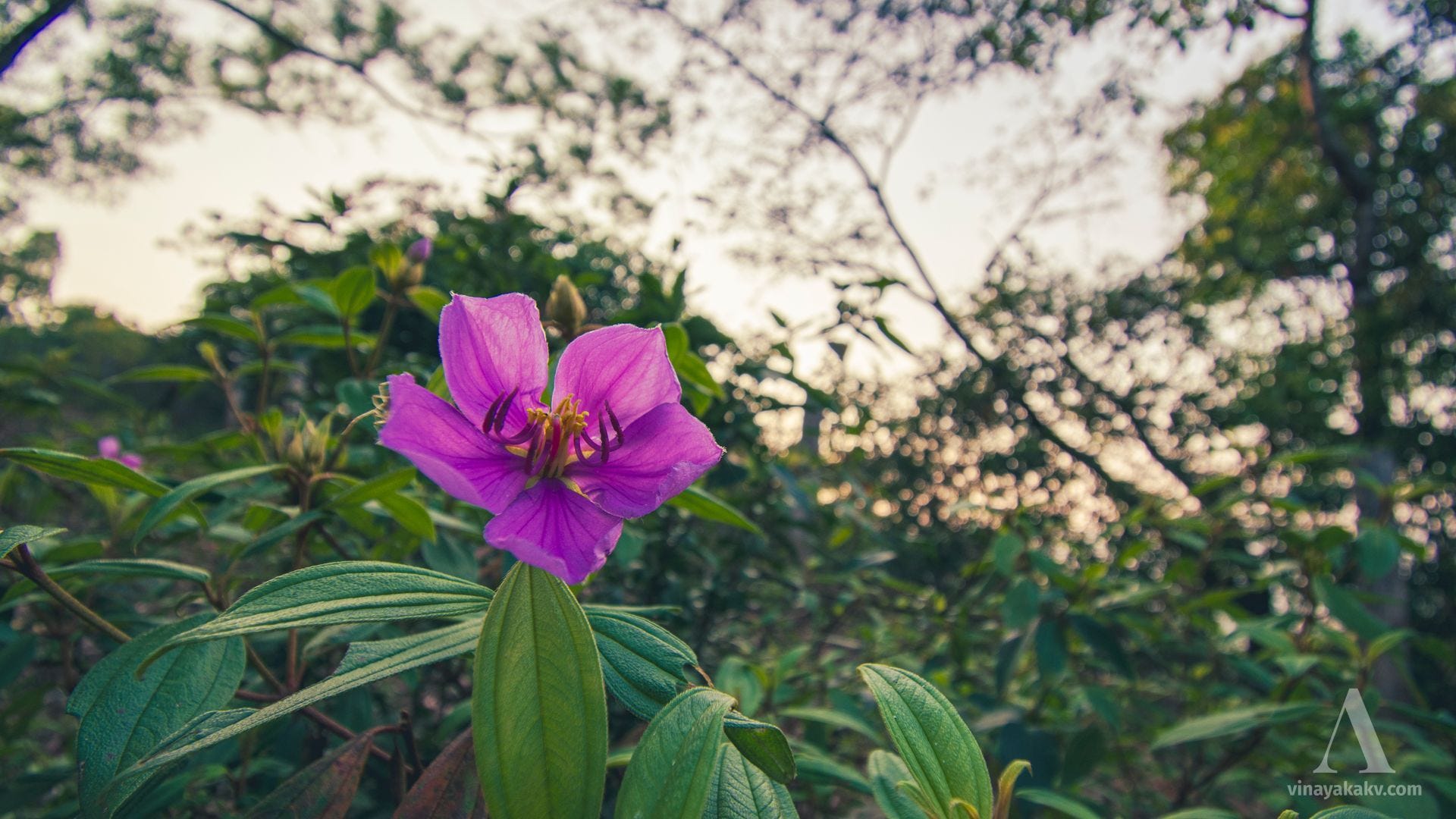
A miniature version of these flowers, of the plant Osbeckia aspera, belonging to the same family is also found during the summer. The plant is not as shrubby as the earlier mentioned Melastoma malabathricum.
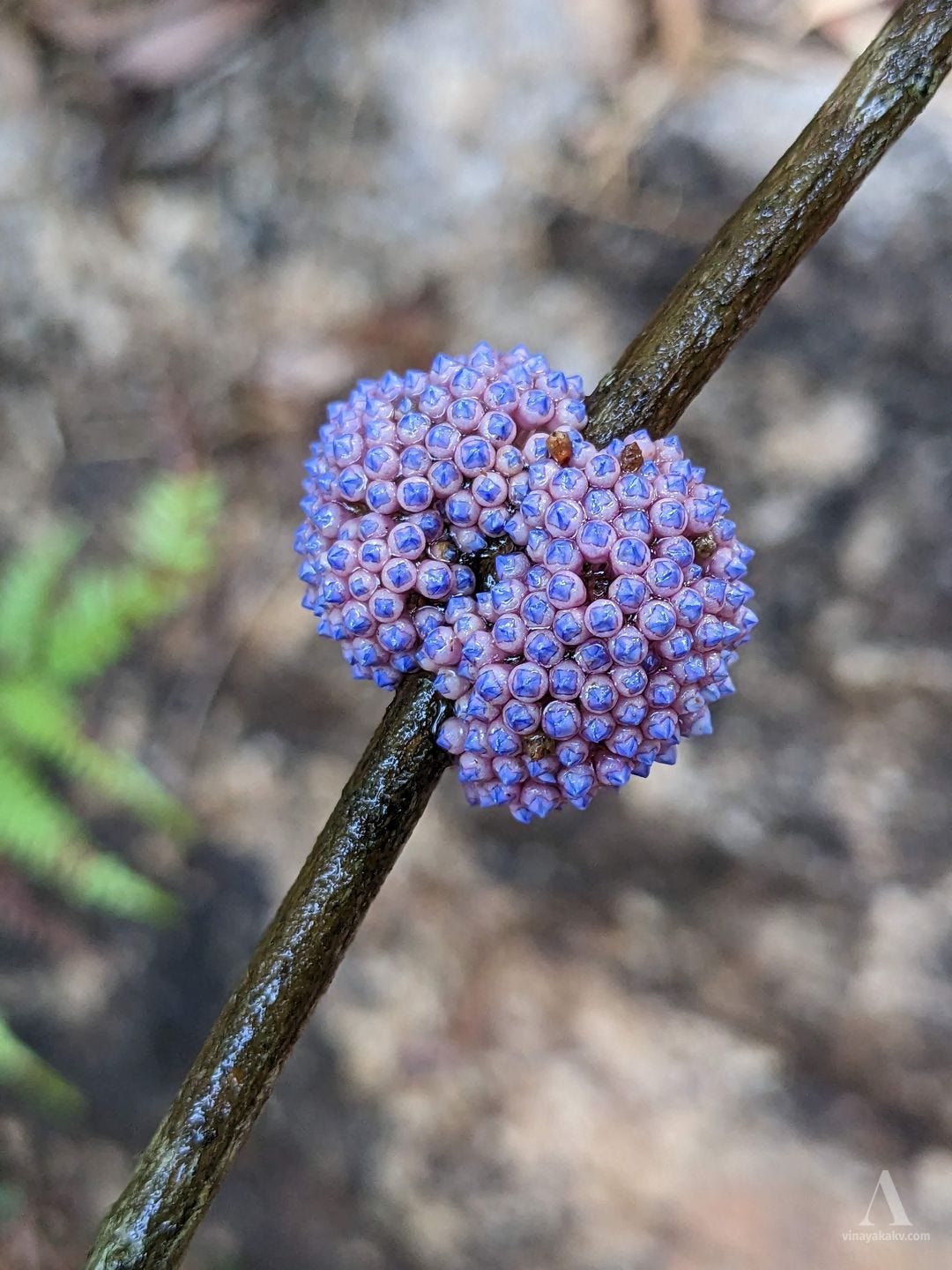
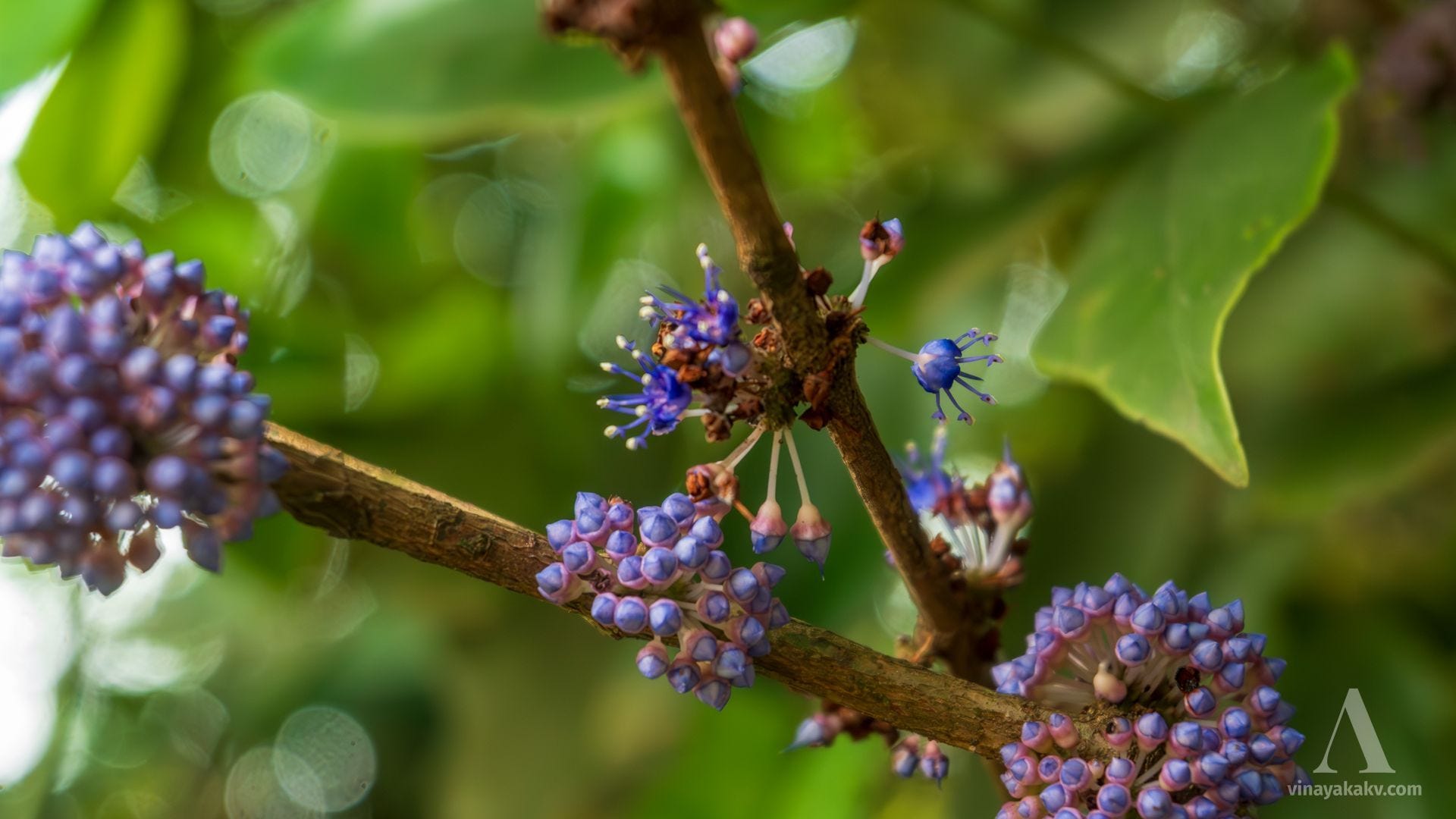
There is a member of Melastomataceae, Memecylon umbellatum that has a completely different look from the plants that we saw earlier. Its small flowers completely cover its stem with shades of blue, making it very pleasant to look at. If you zoom in closely, you can see some flower buds closed, some open. In the below video, you can see its flowers covering the middle story of the forest.
The adaptive nature of the many members of Melastomataceae can make them successful invaders outside their native habitat. While researching for this article, I came across the plant Miconia calvescens, a native of Mexico, with its beautiful big velvet leaves, which has become an invasive species across the tropical forests of Hawaii, Australia and even Sri Lanka! I found a video of its eradication efforts in Queensland, Australia.
The Thorny Invader
While we are on the topic of invasive plant species, we cannot ignore the species Lantana camara, a native of the American tropics. Originally prized for their colorful and attractive flowers, they soon escaped from the gardens and spread to the wild elsewhere.
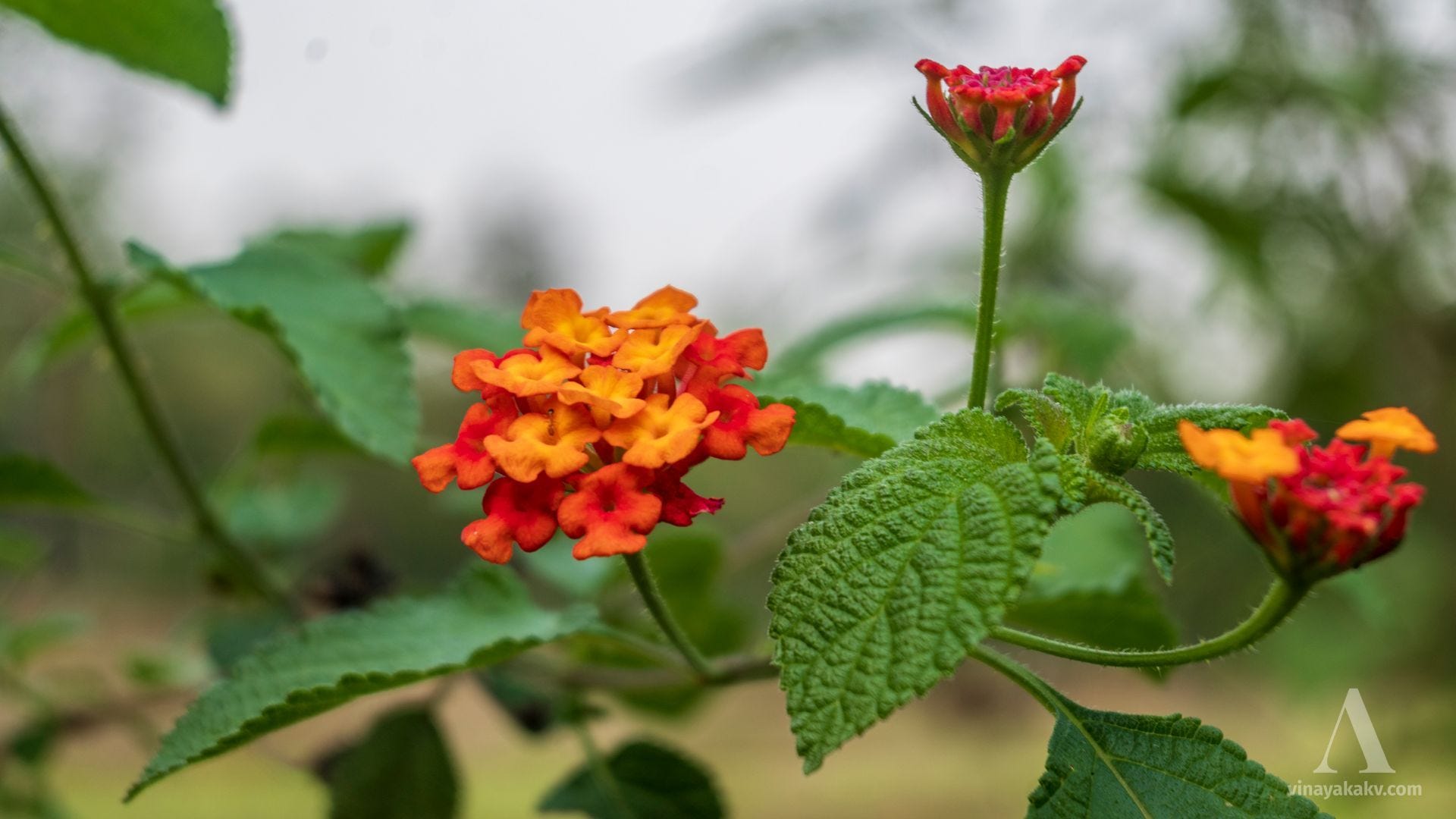
Today, they are found almost everywhere in the wild habitats of India, and have the potential to completely take over barren farmlands and grazing fields. There are several initiatives that encourage the locals to use this plant as firewood and as a raw material for furniture, arts, and crafts.
Wild Jasmines
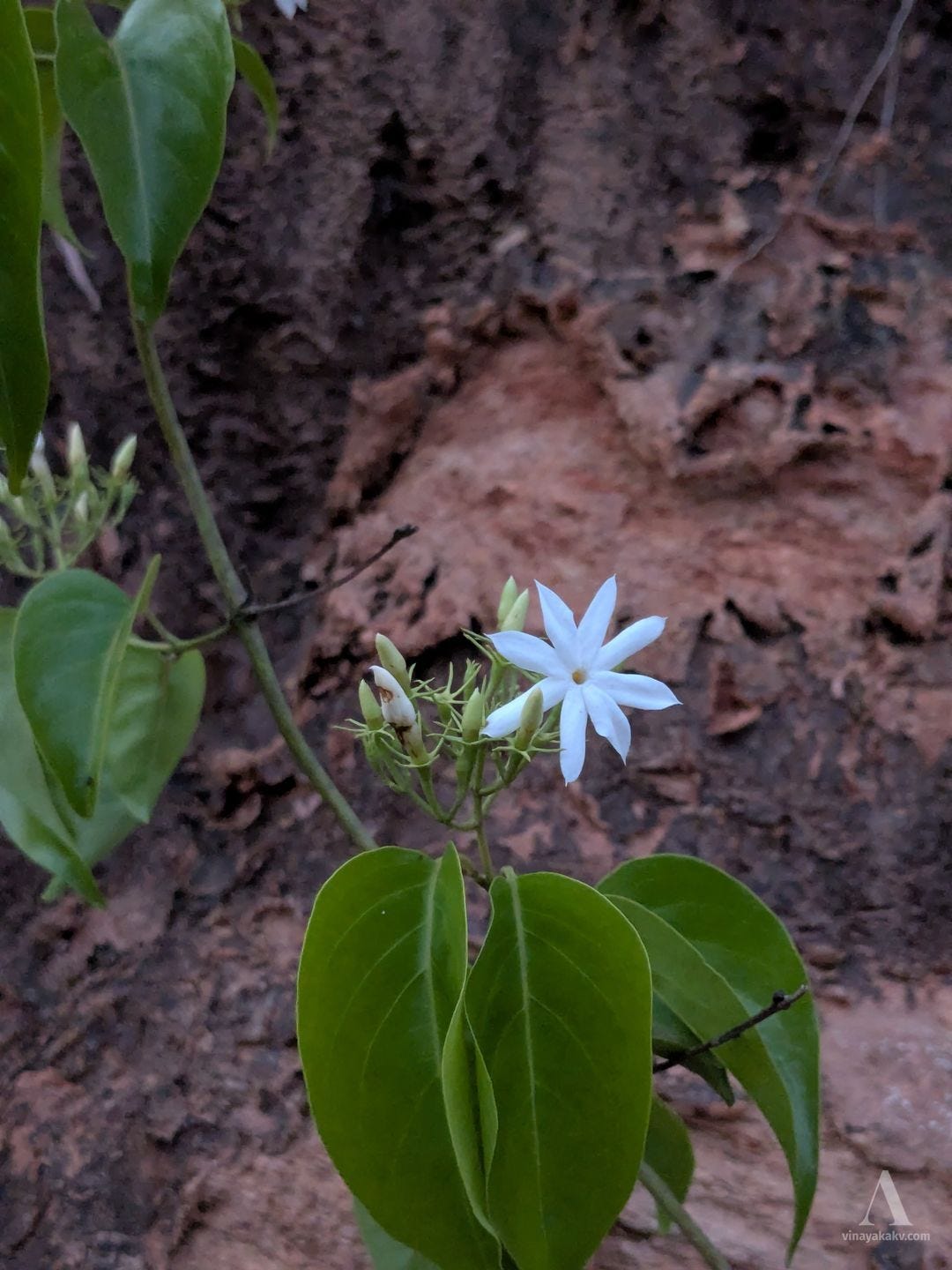
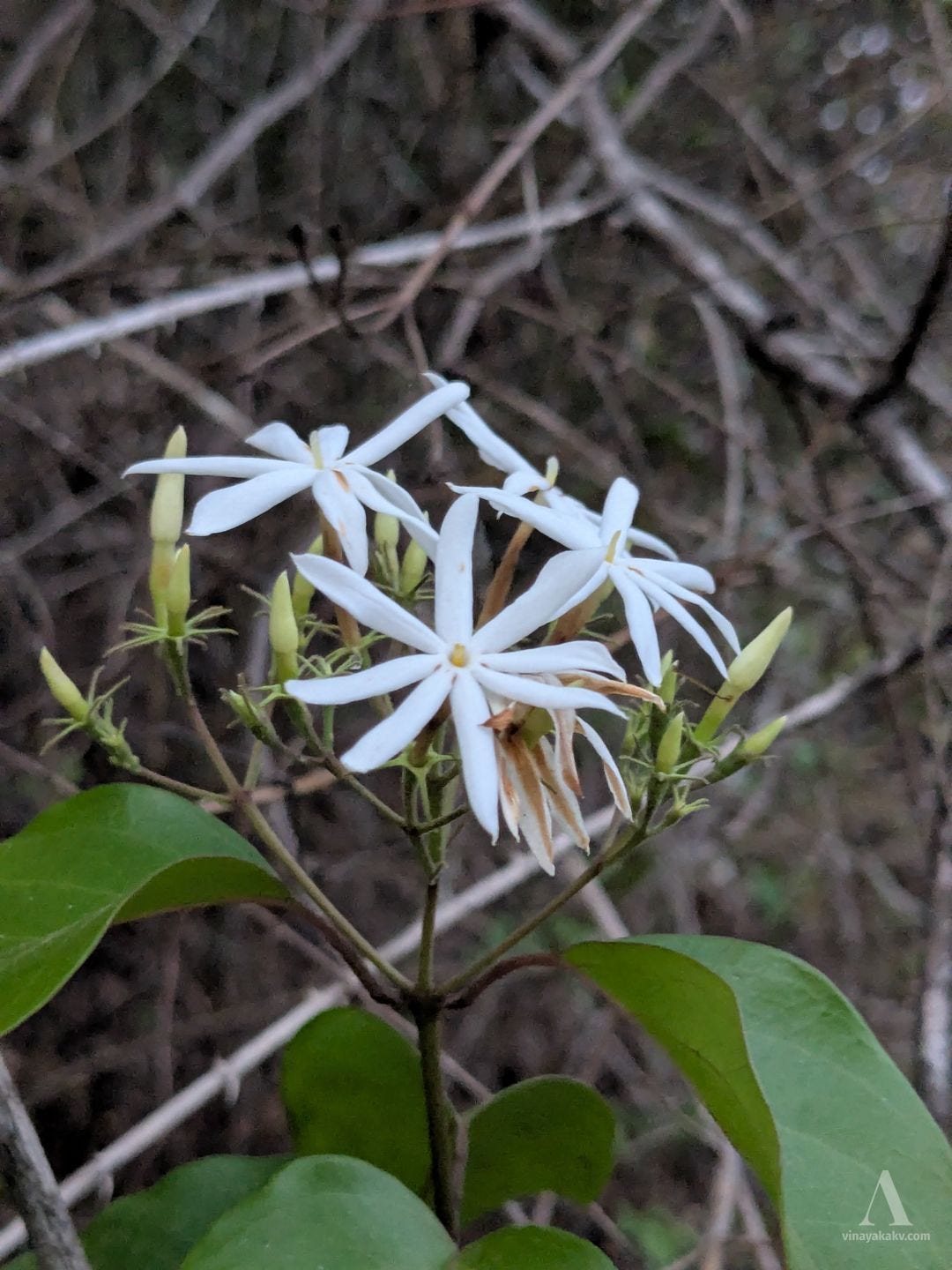
This is one of the flowers that stands out as white dots from the surrounding green foliage. The plant Jasminum malabaricum is blended with the surrounding vegetation otherwise. After the first rains, it rapidly climbs to tree tops and starts flowering. It flowers and fruits till monsoon, after which it dries and disappears until the next summer. Apparently, the fruits are edible as well, though I’ve not tried them yet.
While flowers, White Sap
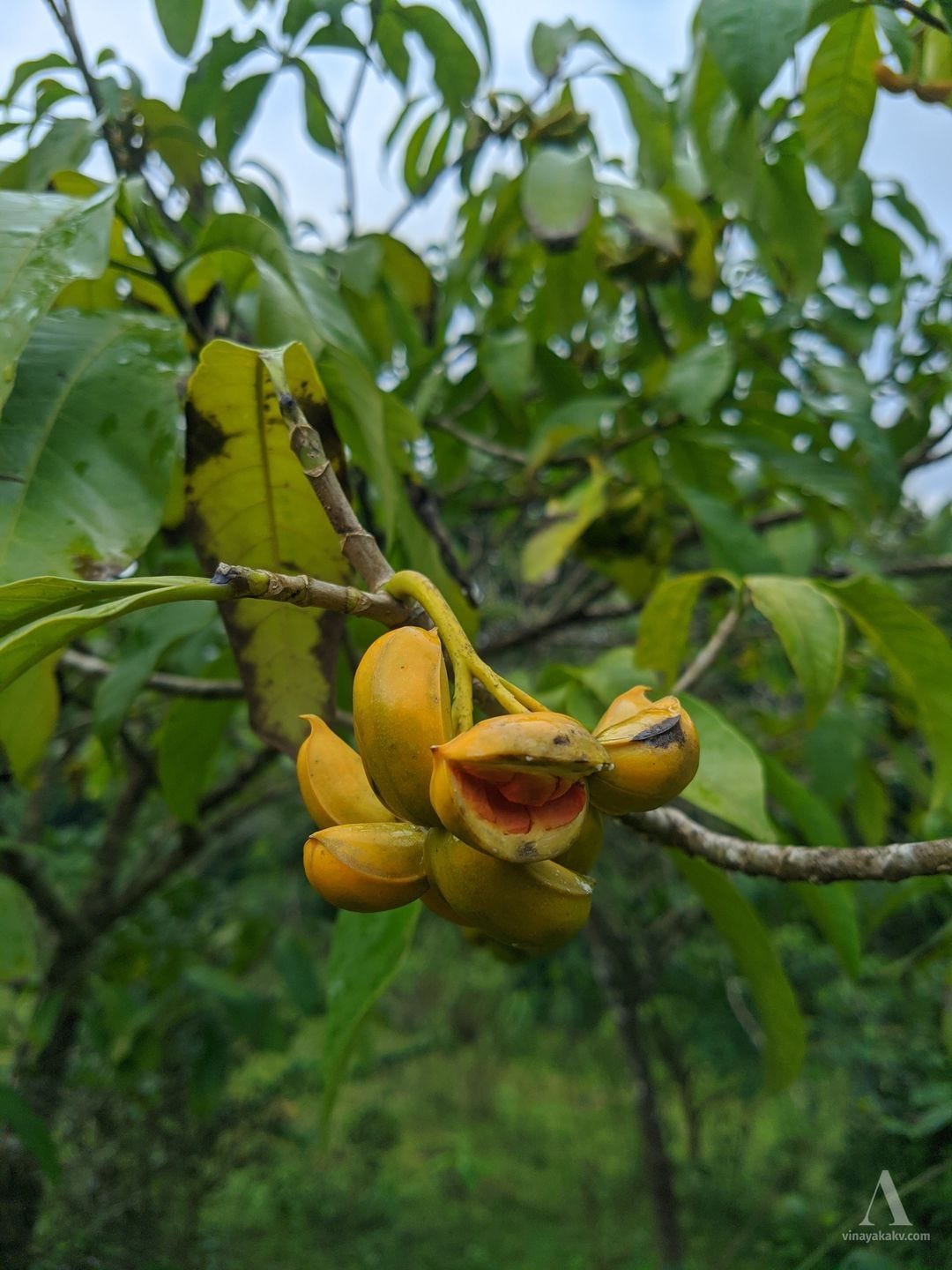
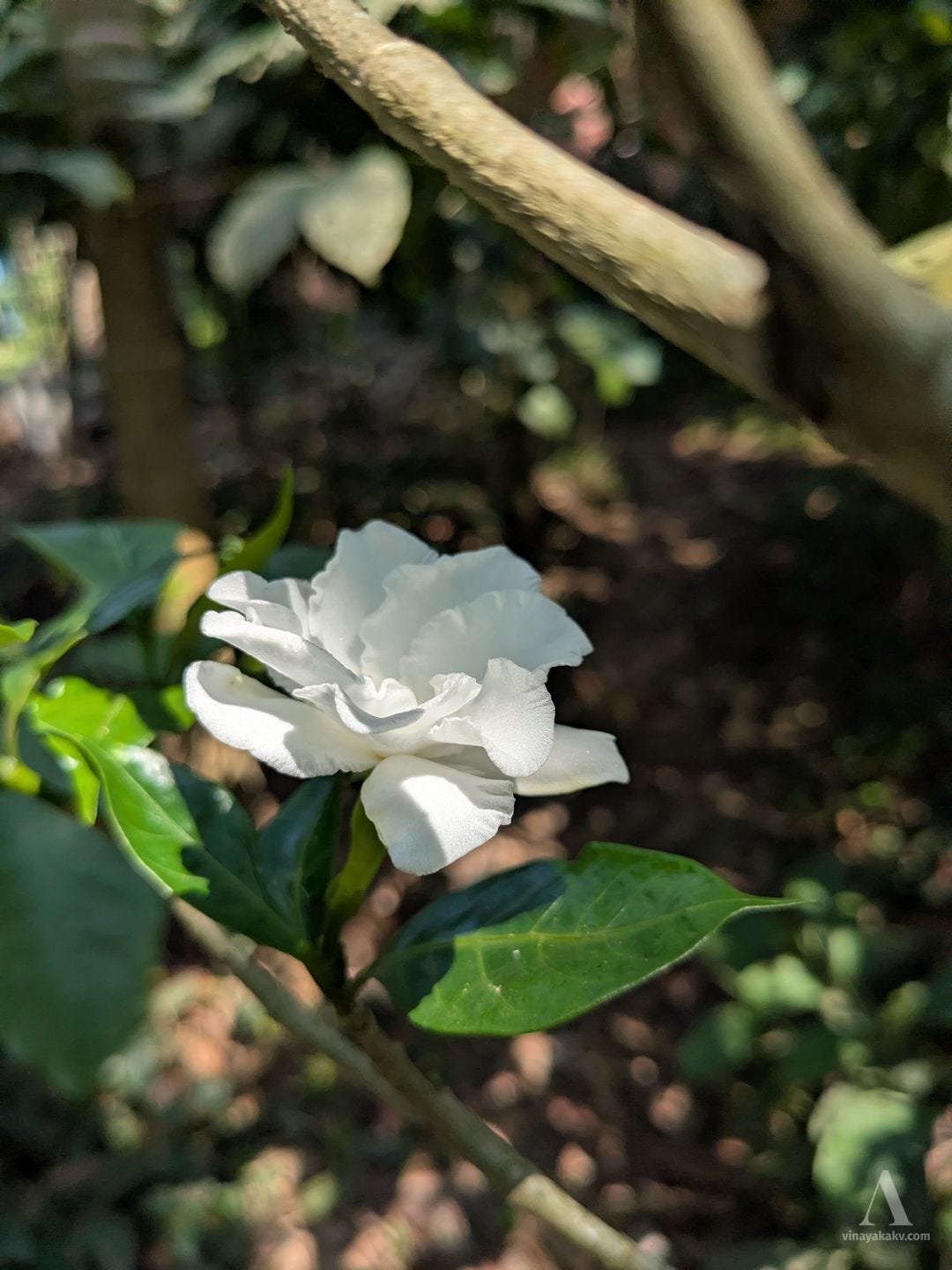
One of the attractive fruits during Monsoon is of Tabernaemontana alternifolia with the shape of a crescent moon, hanging from the branches, opening to reveal the red seeds inside.
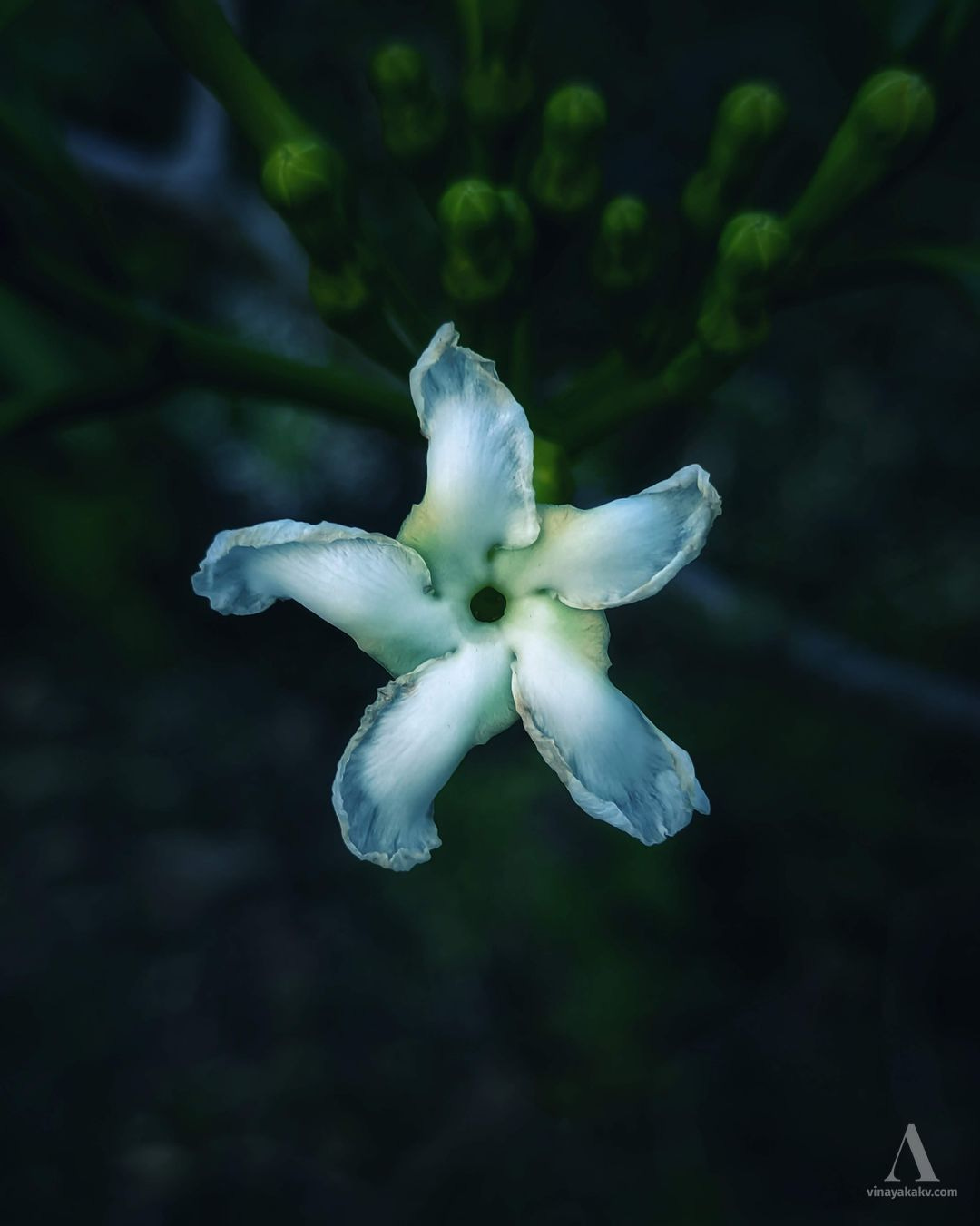
The flowers are equally attractive, with its five petals with one overlapping the other. The plant is locally known as “Madd-arasana-gida“, meaning the king of the medicines. All the parts of the plant exude a white sap when cut. The medicinal uses of it are quite forgotten now.
There is a relative of this plant, Tabernaemontana divaricata, that is popular in gardens prized for their showy flowers. They fruit rarely.
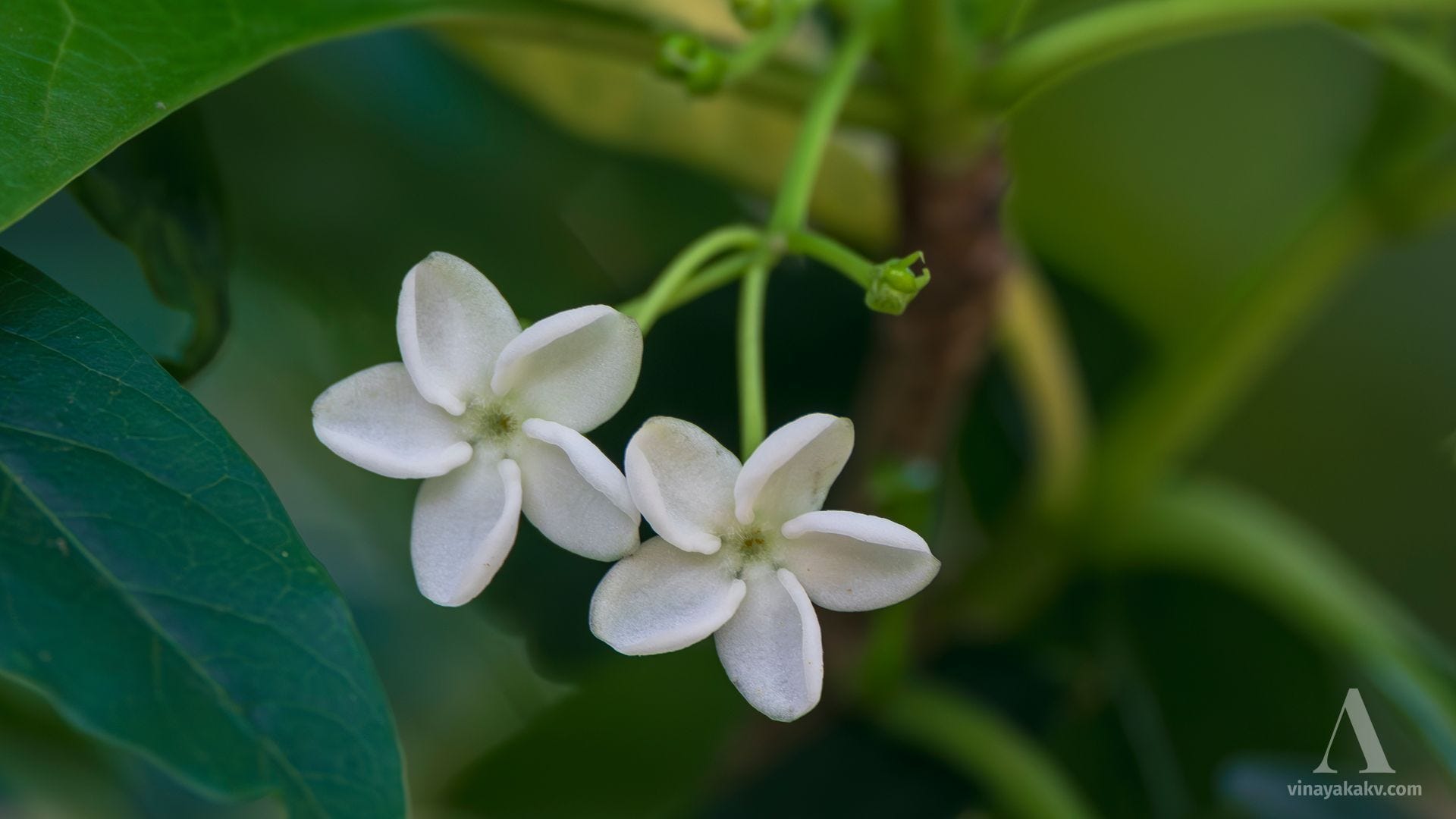
During my early days of acquaintance with this family, I confused another plant Rauvolfia verticillata with the Tabernaemontana alternifolia mentioned earlier, due to the similarity of their leaves and sap-exuding property. However, its flowers are much smaller and rounded, with the fruits being rounded as well
Little Dragons
You might be familiar with a house plant that is marketed as Lucky Bamboo or the Vastu Plant, Dracaena sanderiana, that is supposed to be placed in a certain direction of home to bring fortune. It is neither a bamboo, nor might it bring any fortune. However, the plant is quite attractive.
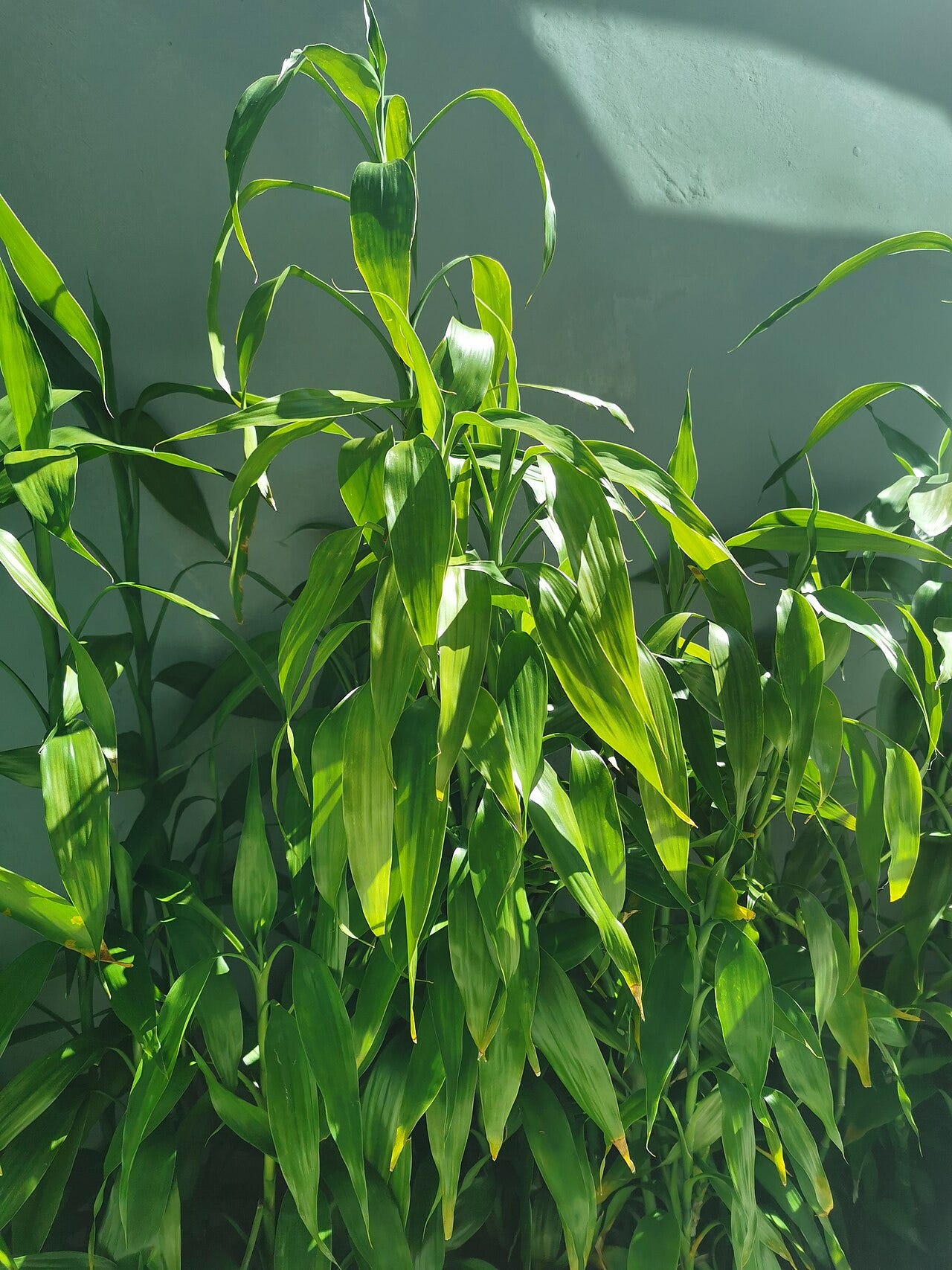
I was amazed to see a plant resembling this at the foothills of the Western Ghats alongside a riverbed. One of my friends noted that it should be the Lucky plant itself, however the stems were woody and it was definitely a different species. I found the same plant some years later, which I could closely observe.
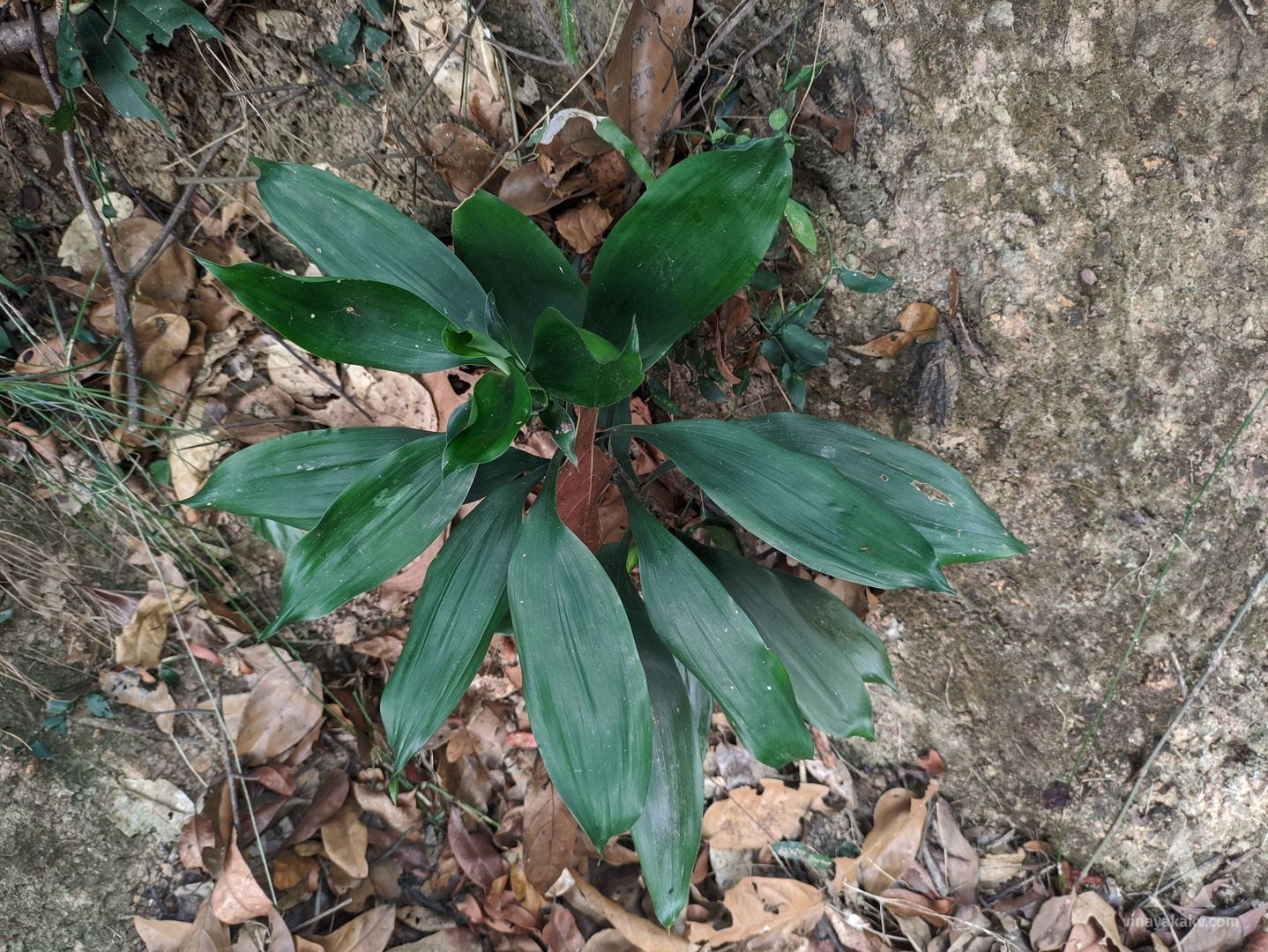
Much to my delight, I observed it preparing to flower one day, with ants visiting the flower buds. The flowers, when open, helped identify the plant as Dracaena terniflora, confirming that it belonged to the same genus as the Lucky Bamboo. The flowers are white, semi-transparent, tube-like and attractive. I’ve yet to observe the fruits.
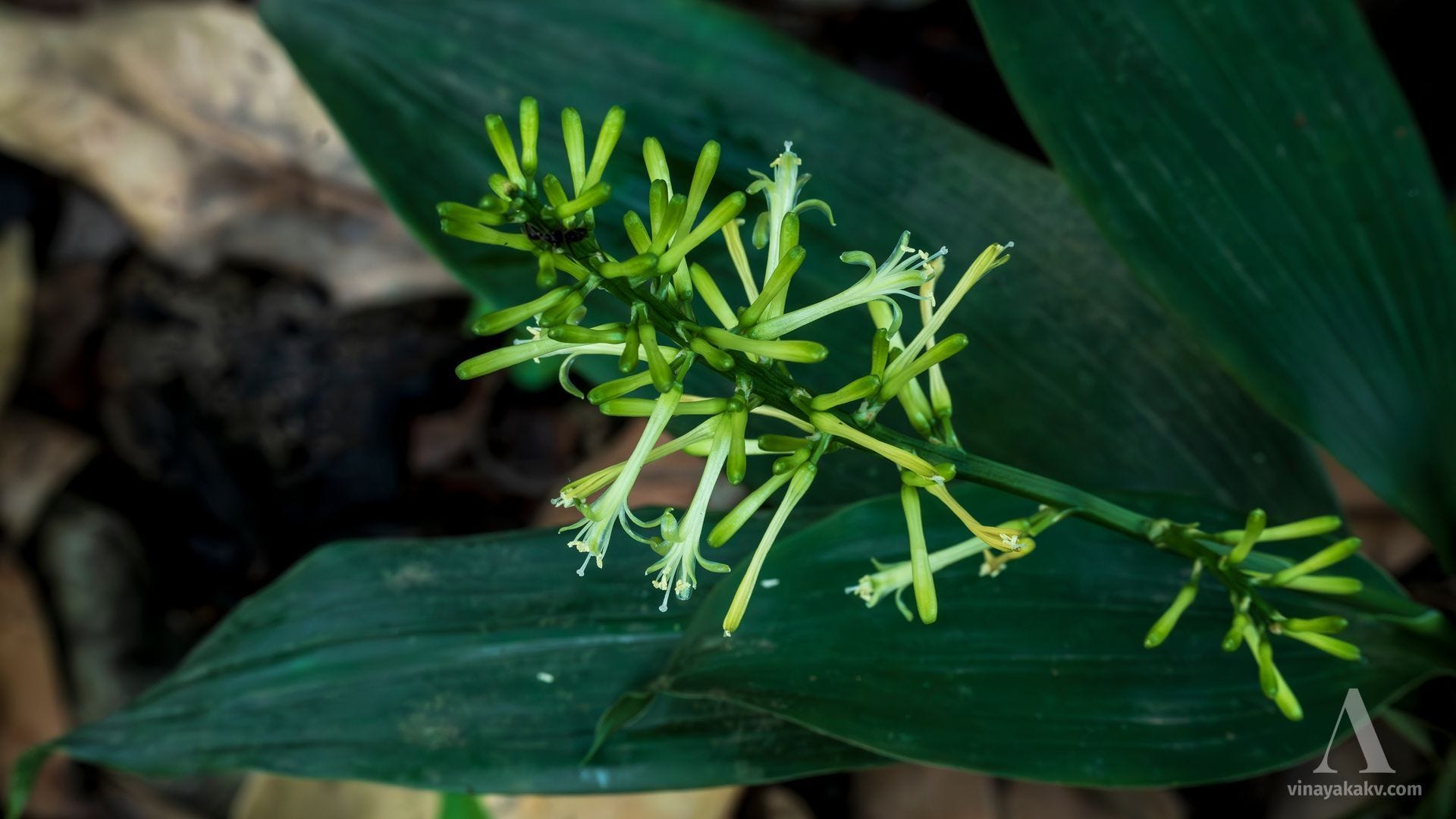
The genus is named Dracaena — the female dragon, as some of the species produce blood-red resin, being compared to dragon’s blood.
The Caffeinator and its family
Although Coffee plants are not native to India, they are also critically dependent on the pre-monsoon rains to flower. If the rains arrive too early, they fruit during the monsoon, causing them to rot. If the rains arrive too late, they might not flower to their full extent. When they are in flower, they blanket the entire plantations with their jasmine-white color and an intoxicating aroma.
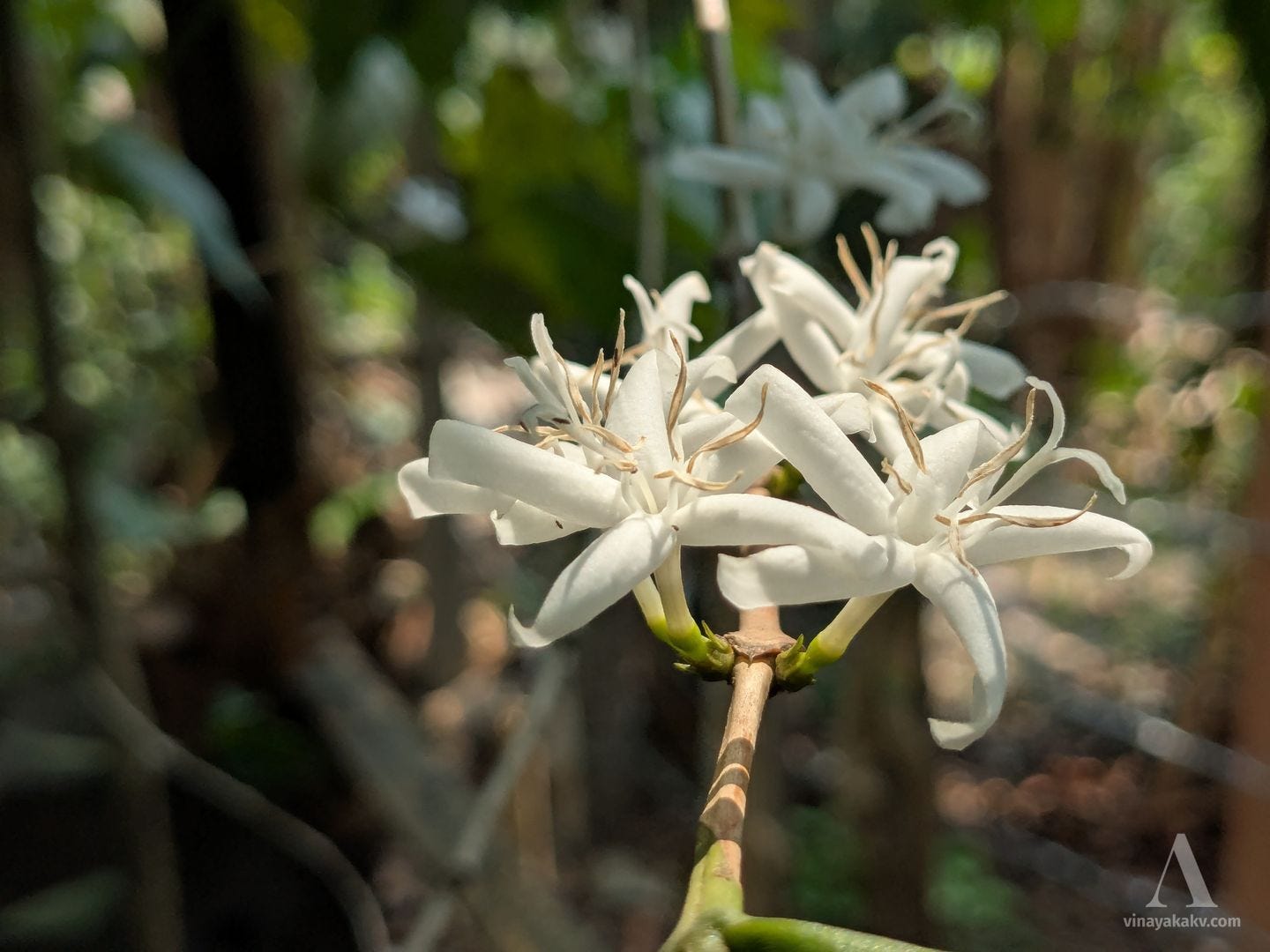
The mass blooming of the coffee plants is a feast for the pollinators, with bees being one of the important pollinators.
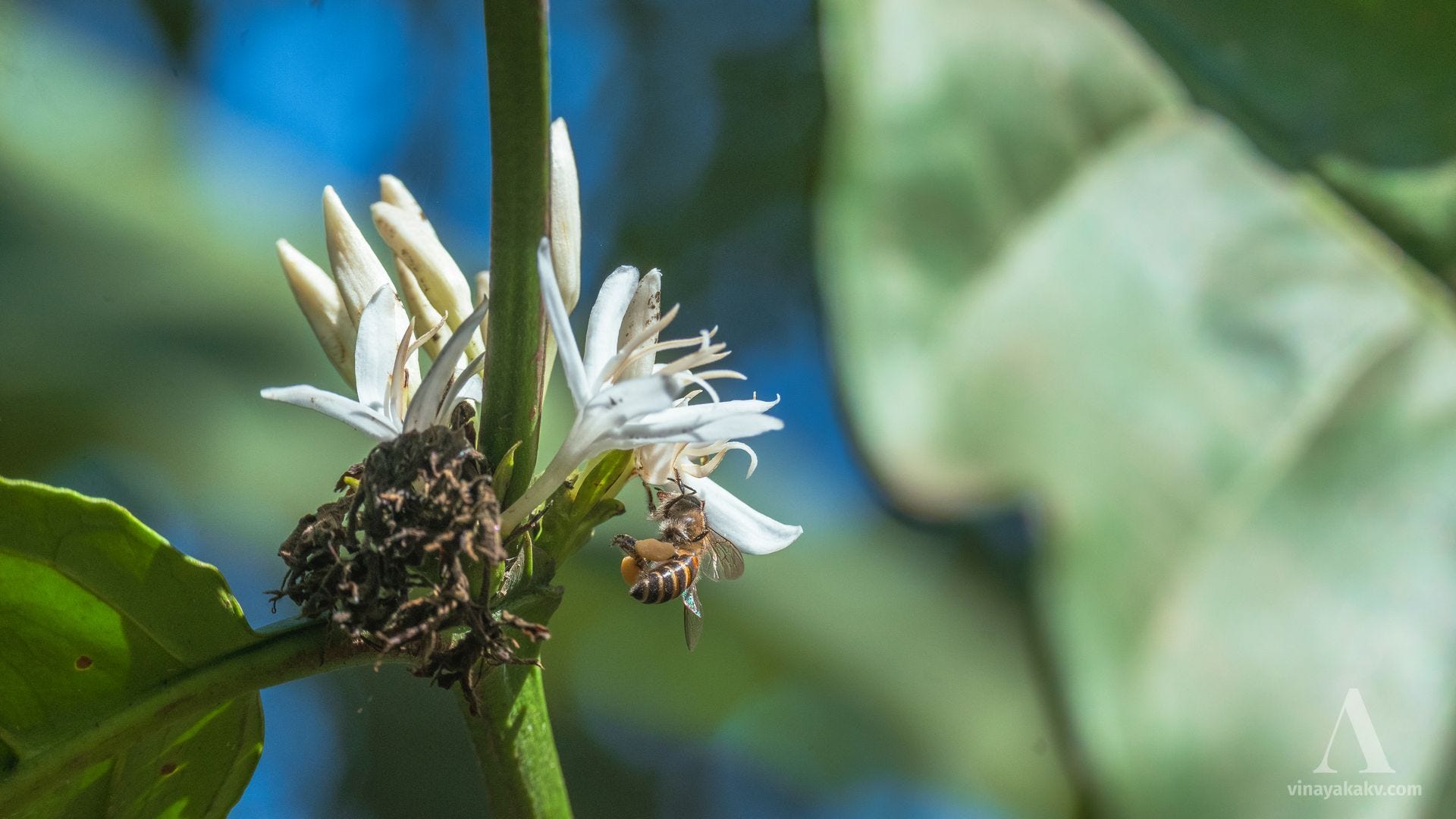
The pollinator abundance also attracts the predators, and it is a feast for them alike!
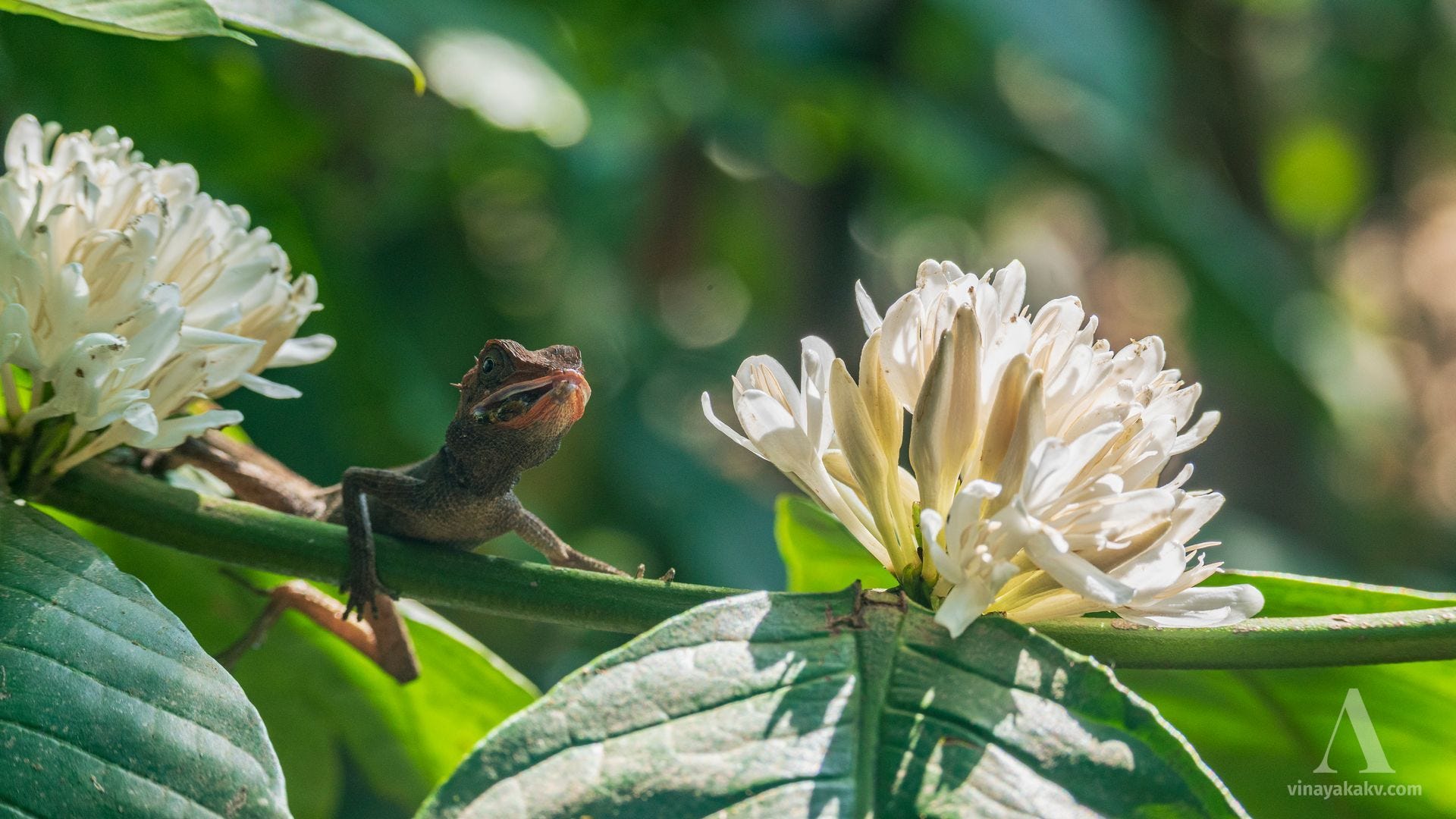
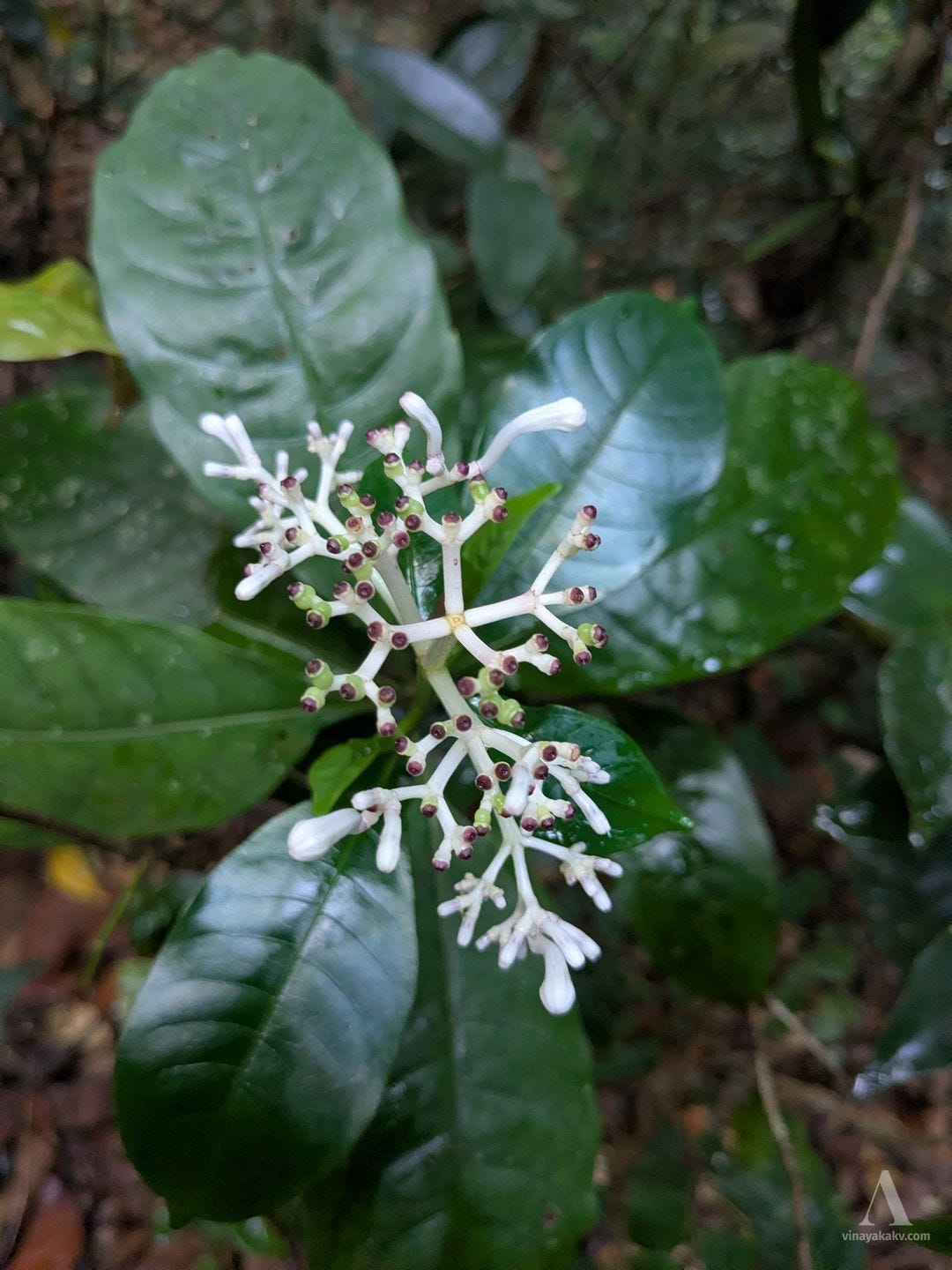
There are many plants that belong to the Coffee family that are native to India. Many of them flower at the same time as Coffee plants, but their fruiting schedules are different. One such plant, Chassalia curviflora, is attractive with its white flowers and their arrangement on the flower stalk.
The Semi-Parasites
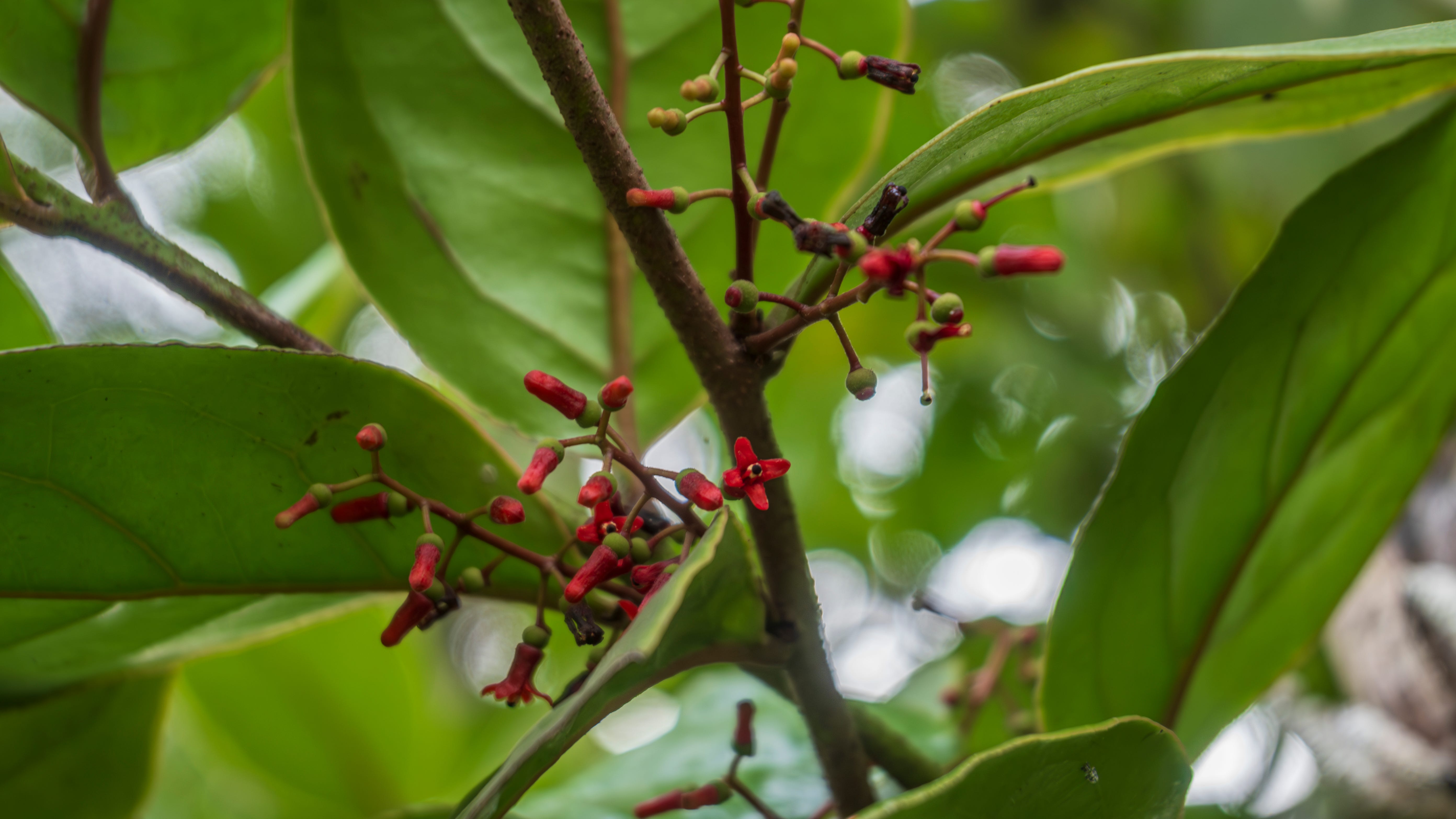
Once the trees reach a certain height, they become a habitat of their own — ranging from plants that use the tree as a support (epiphyte), such as orchids, to some who steal the nutrients from the tree for their survival. There are a few plants in the middle of the spectrum that steal water from the tree, but still photosynthesize themselves — semi-parasitic plants. The semi-parasitic plants of the family Loranthaceae put up showy flowers full of nectar to attract birds to aid their pollination. Their fruits are attractive as well, relying on the birds to help them spread to other tree tops.
Time to Stop
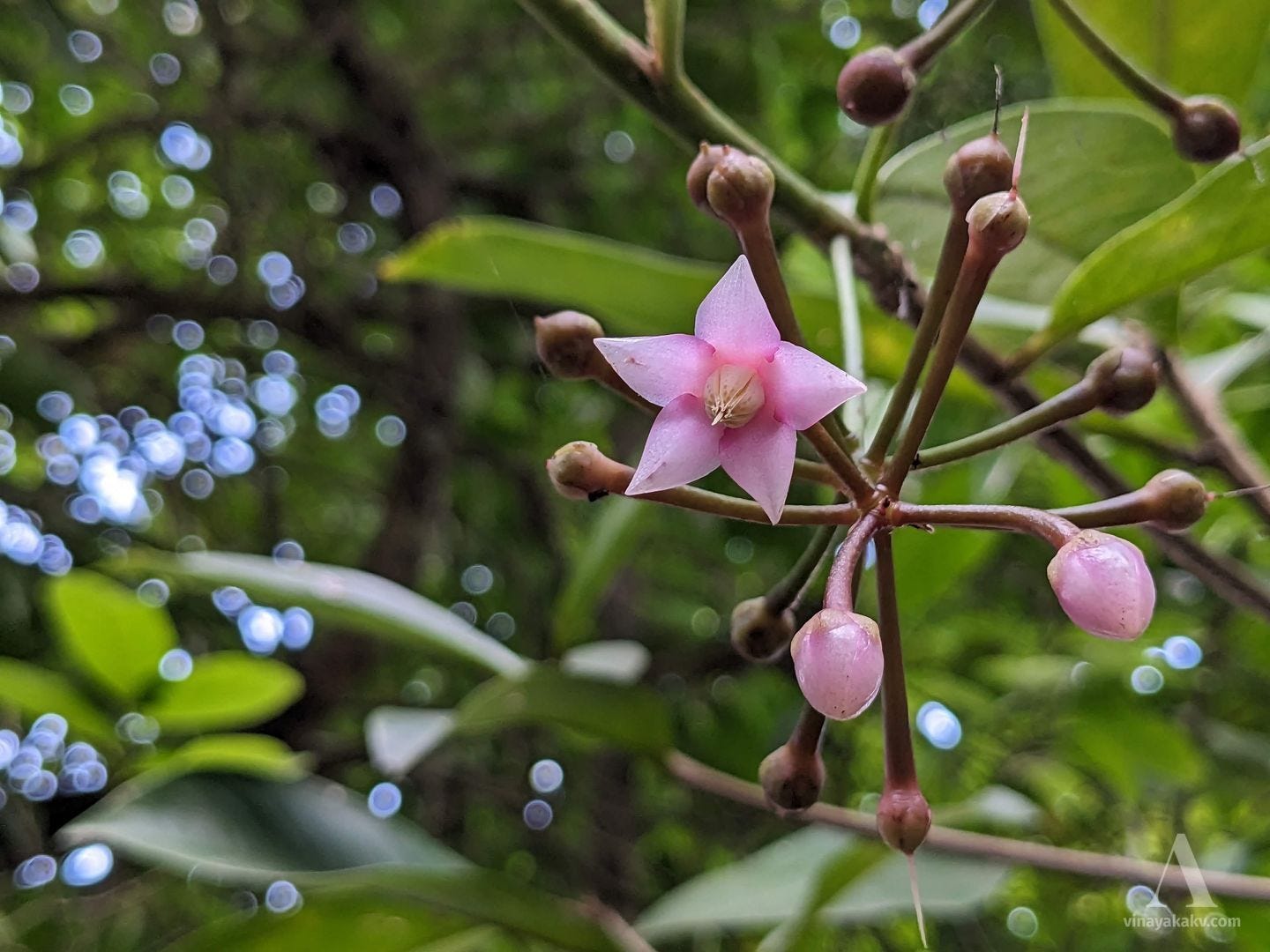
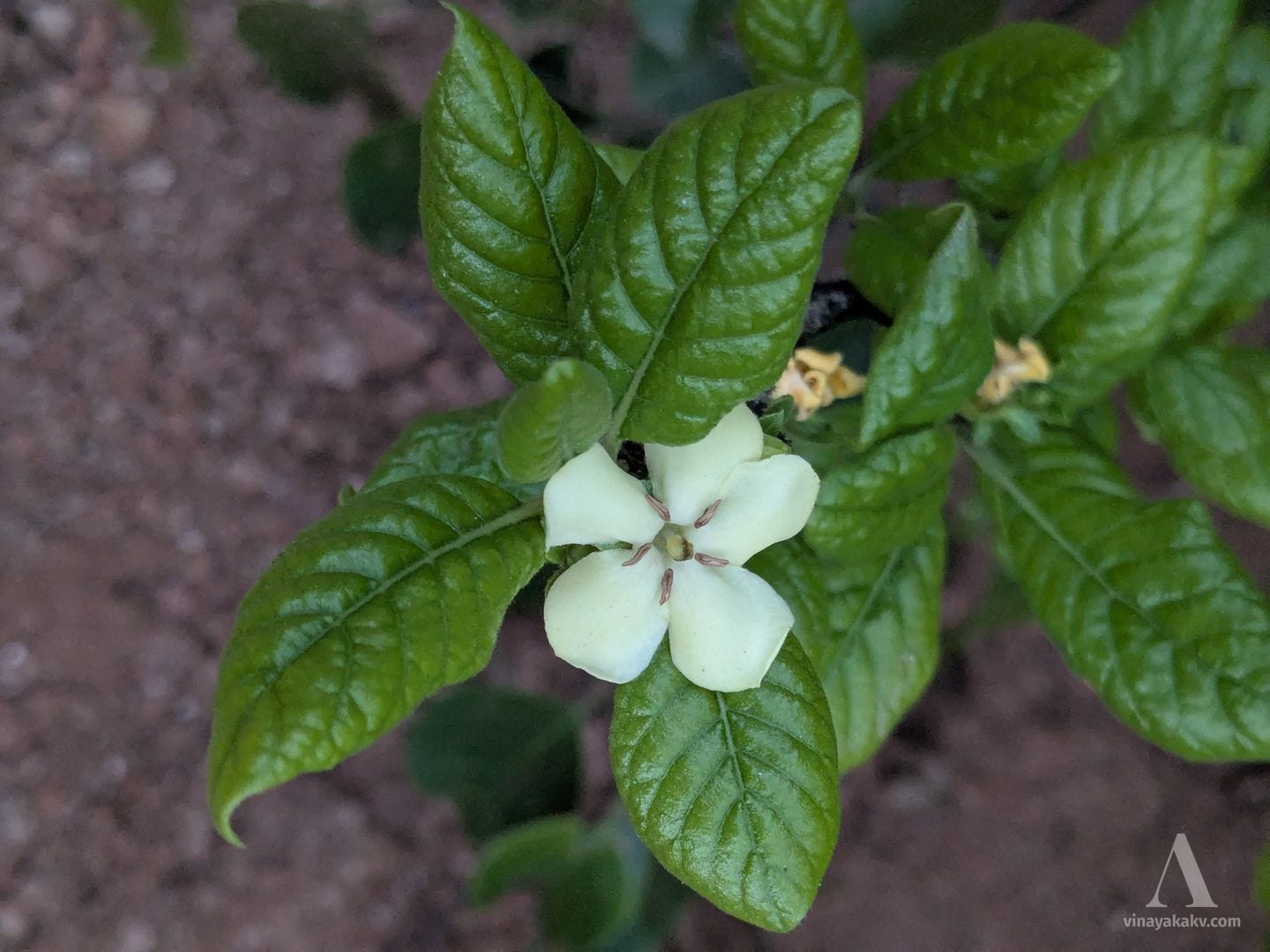
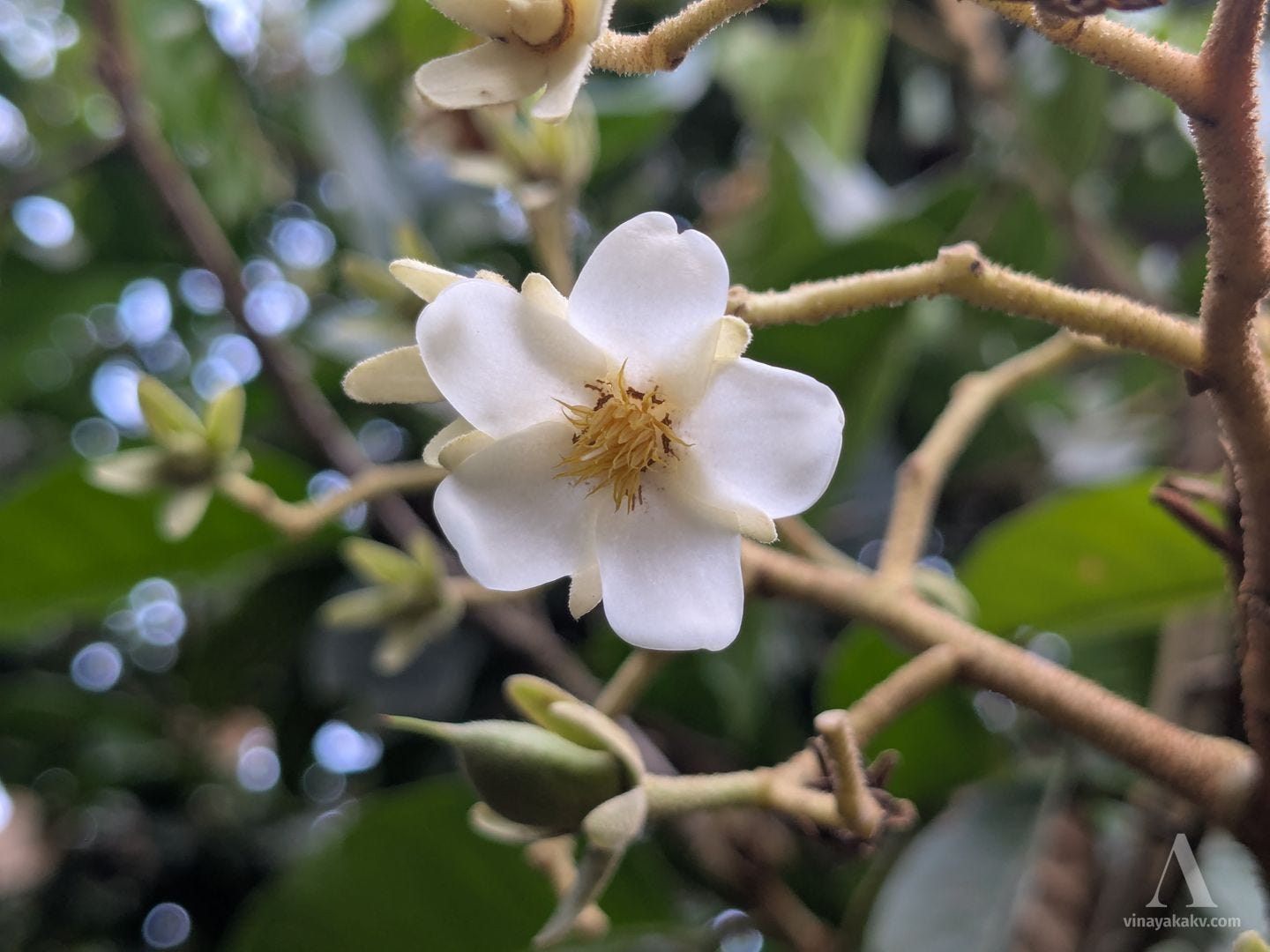
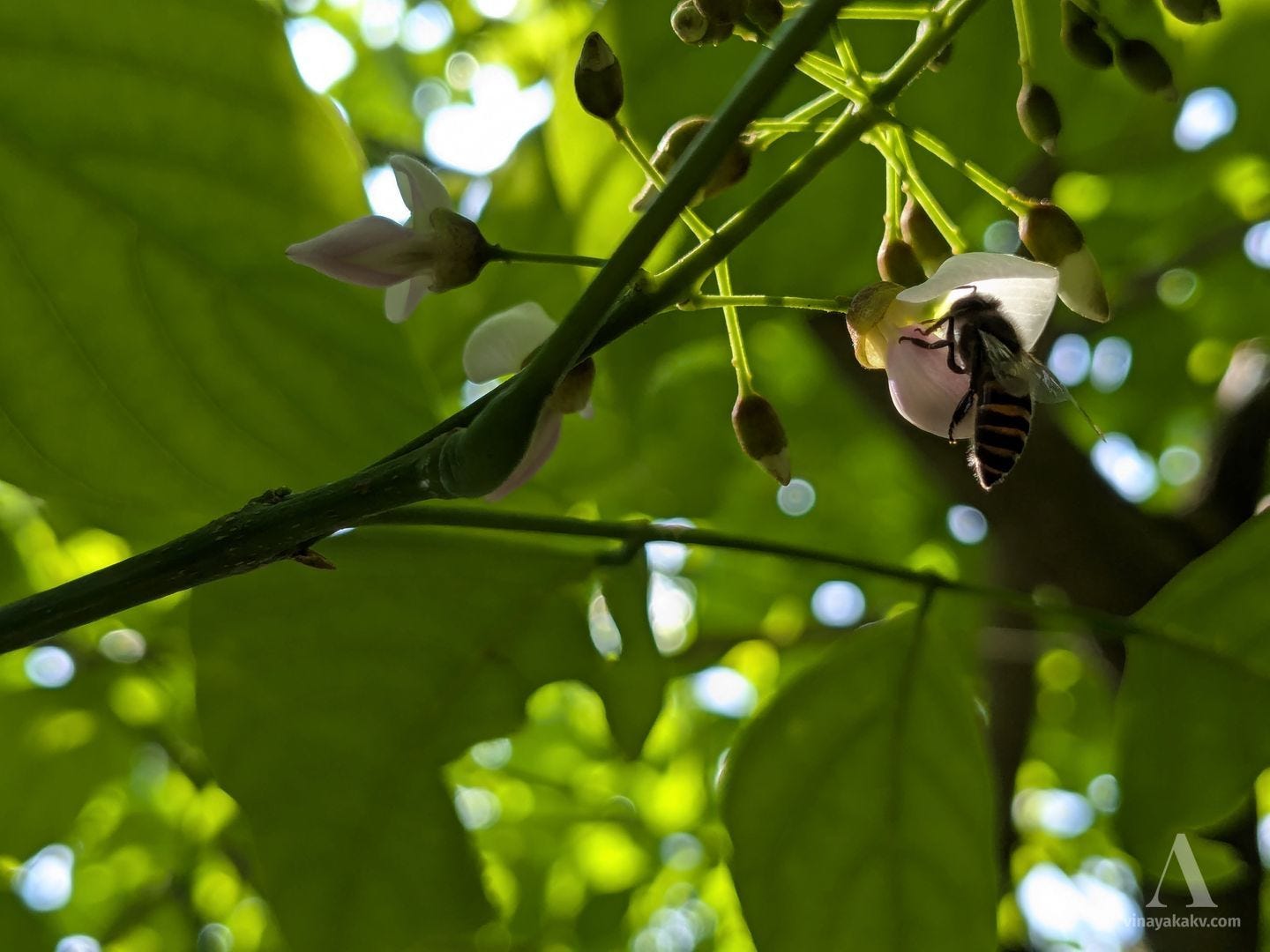
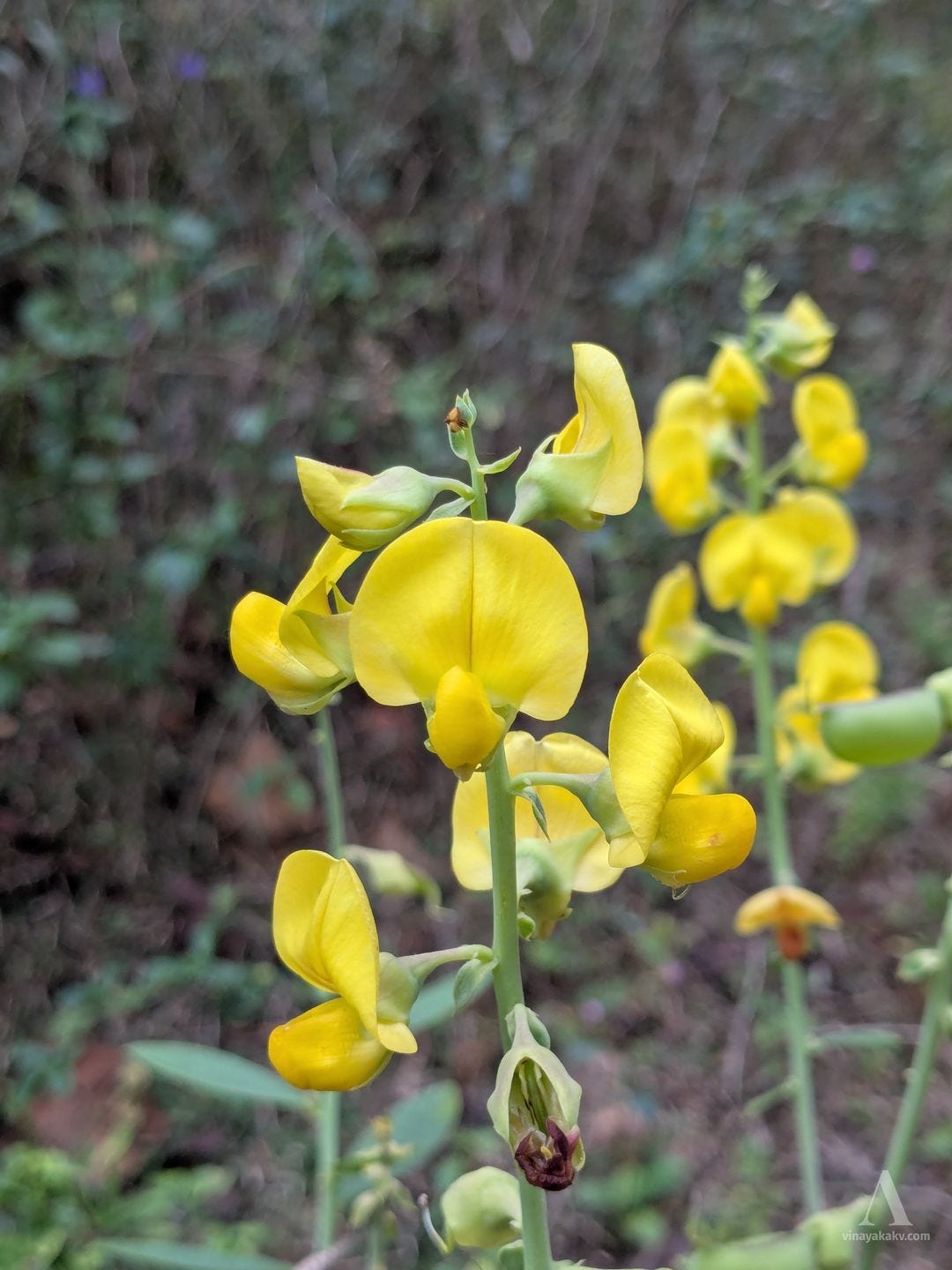
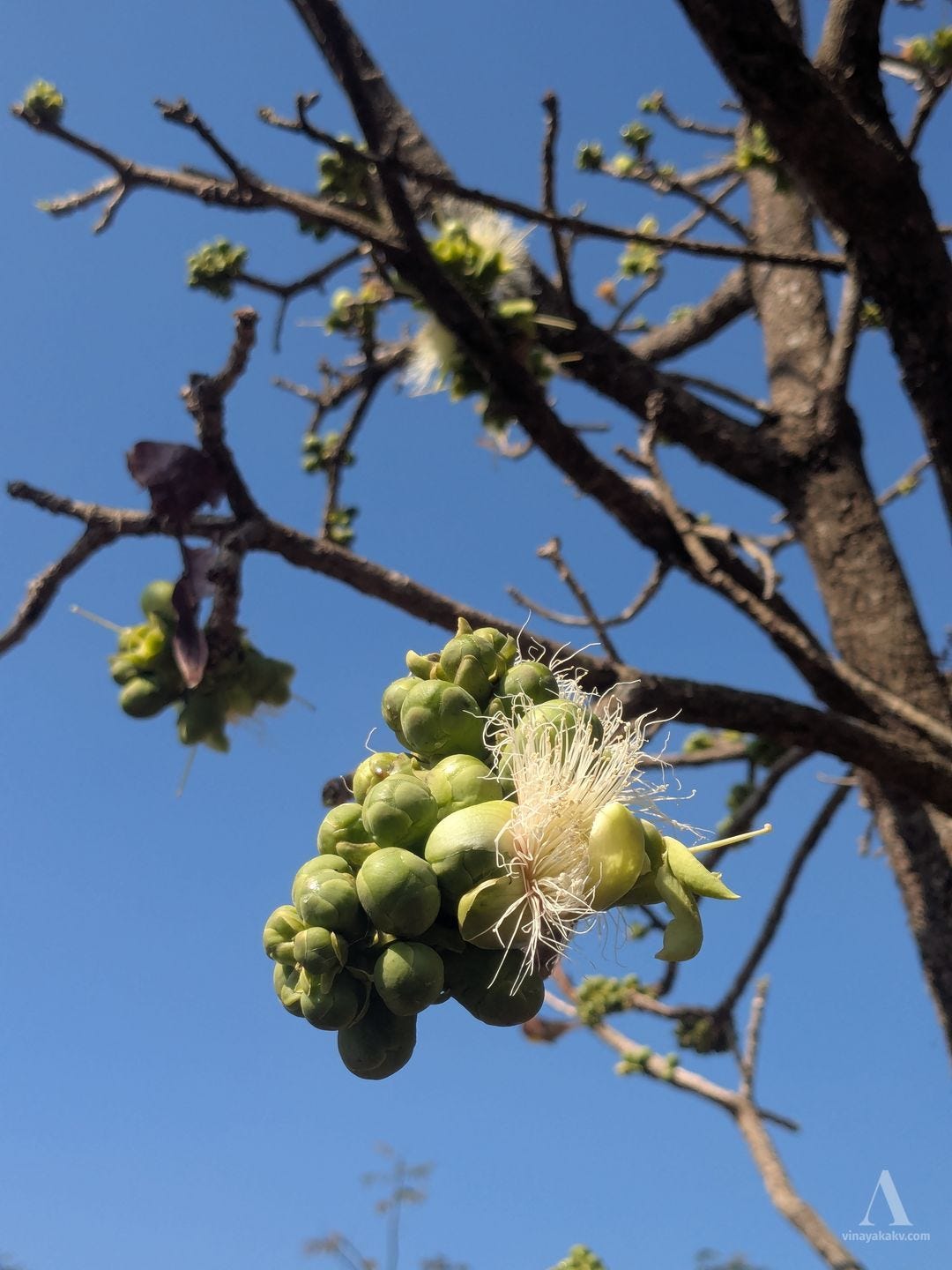
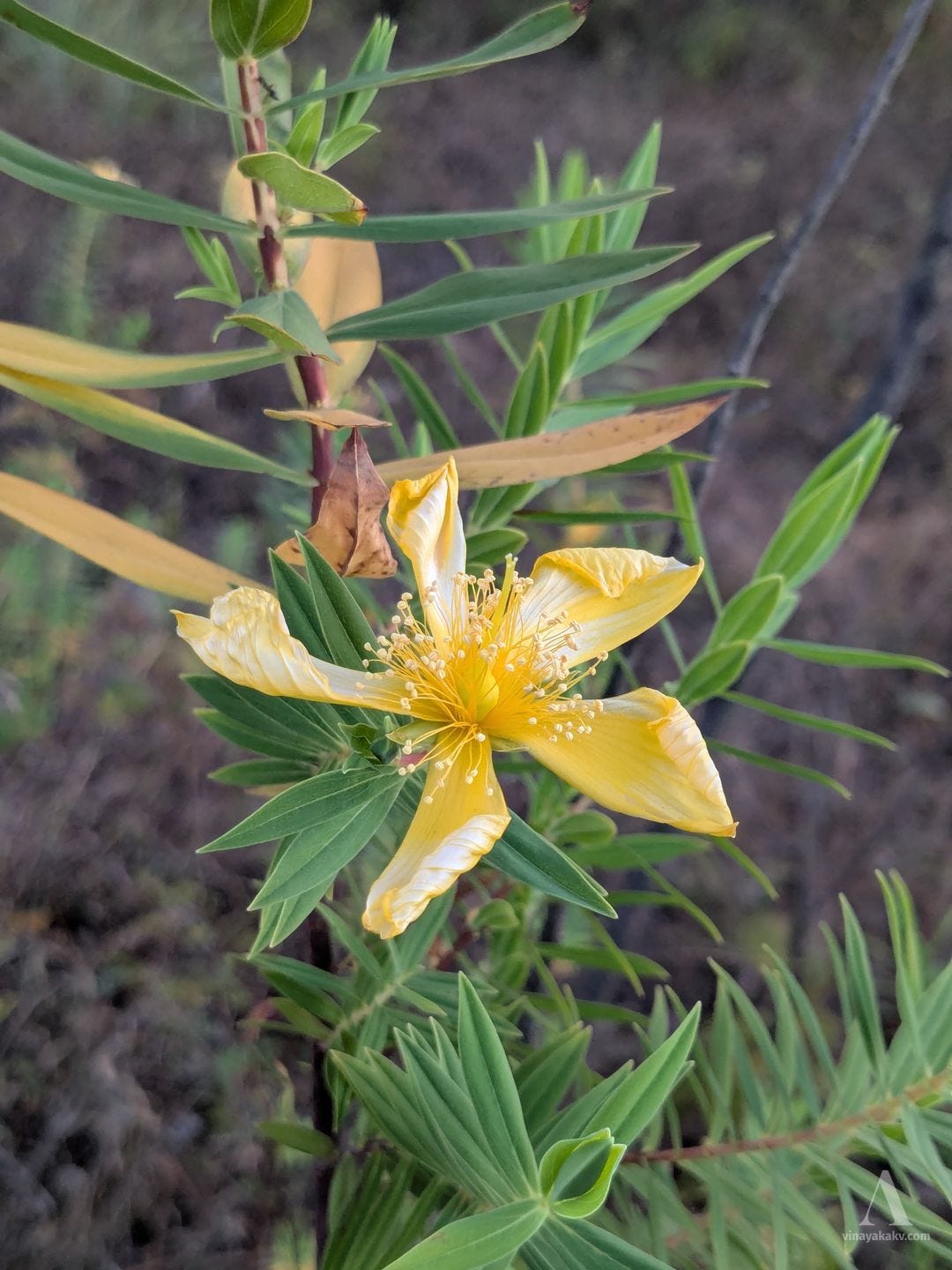
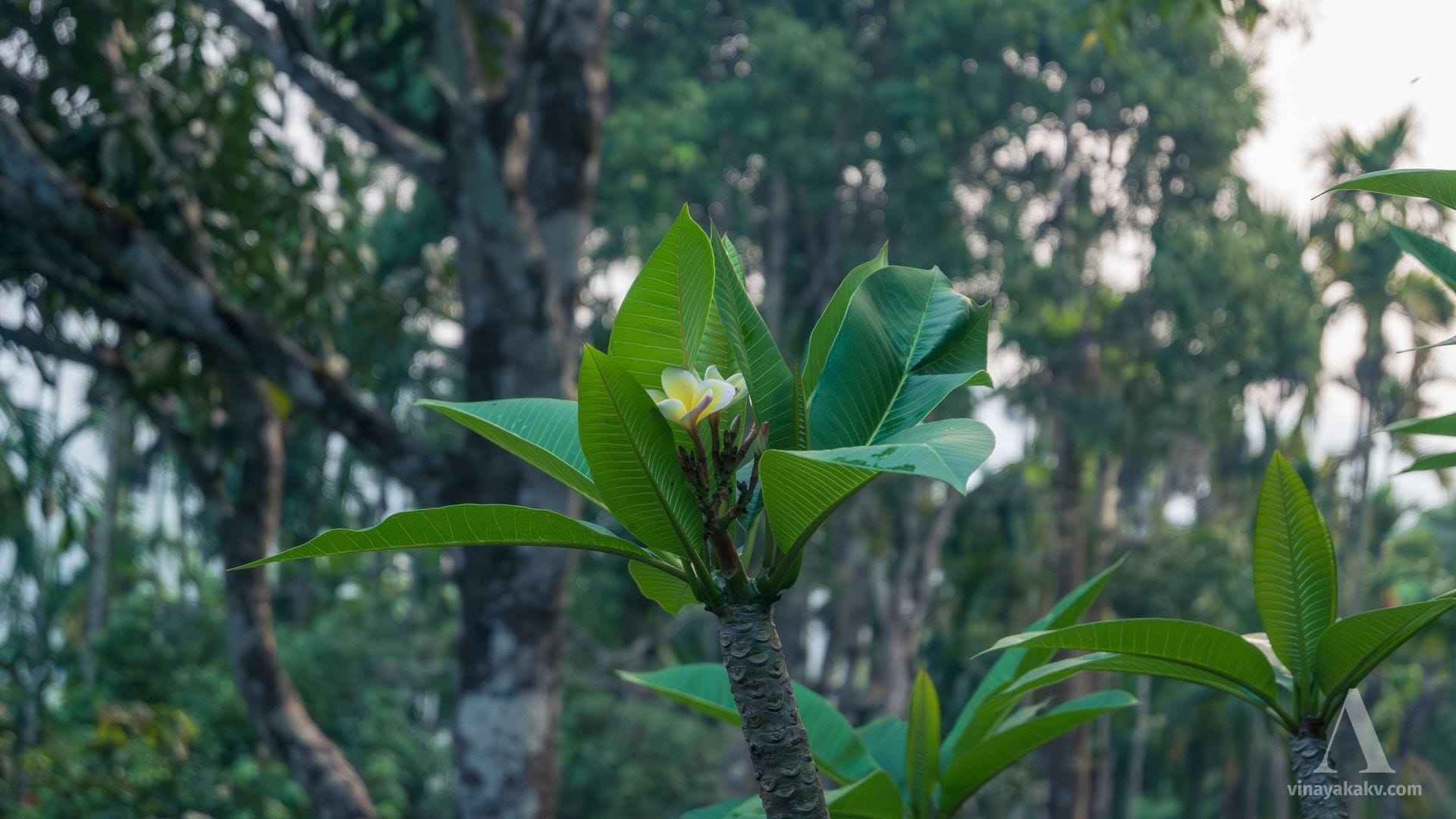
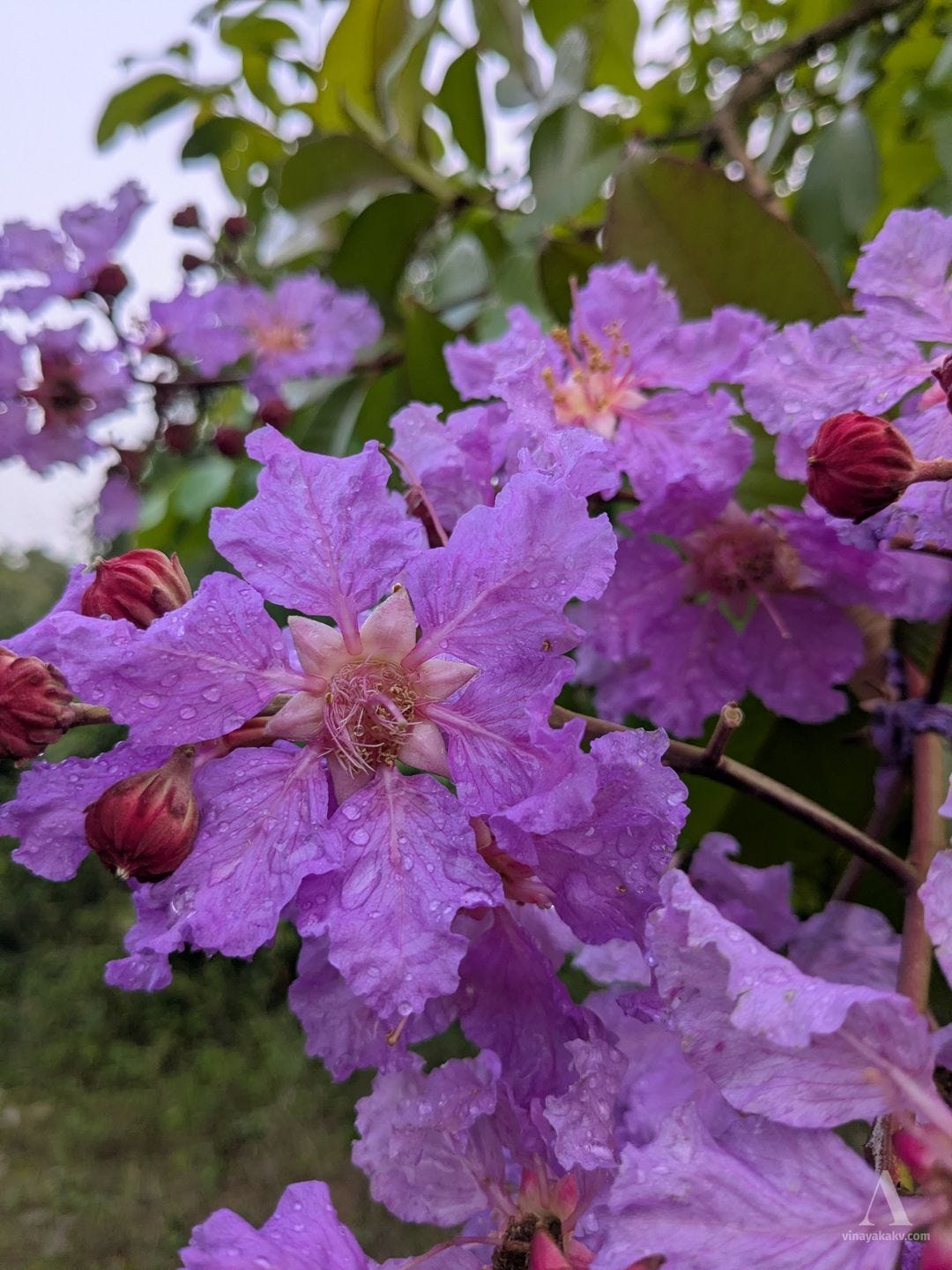
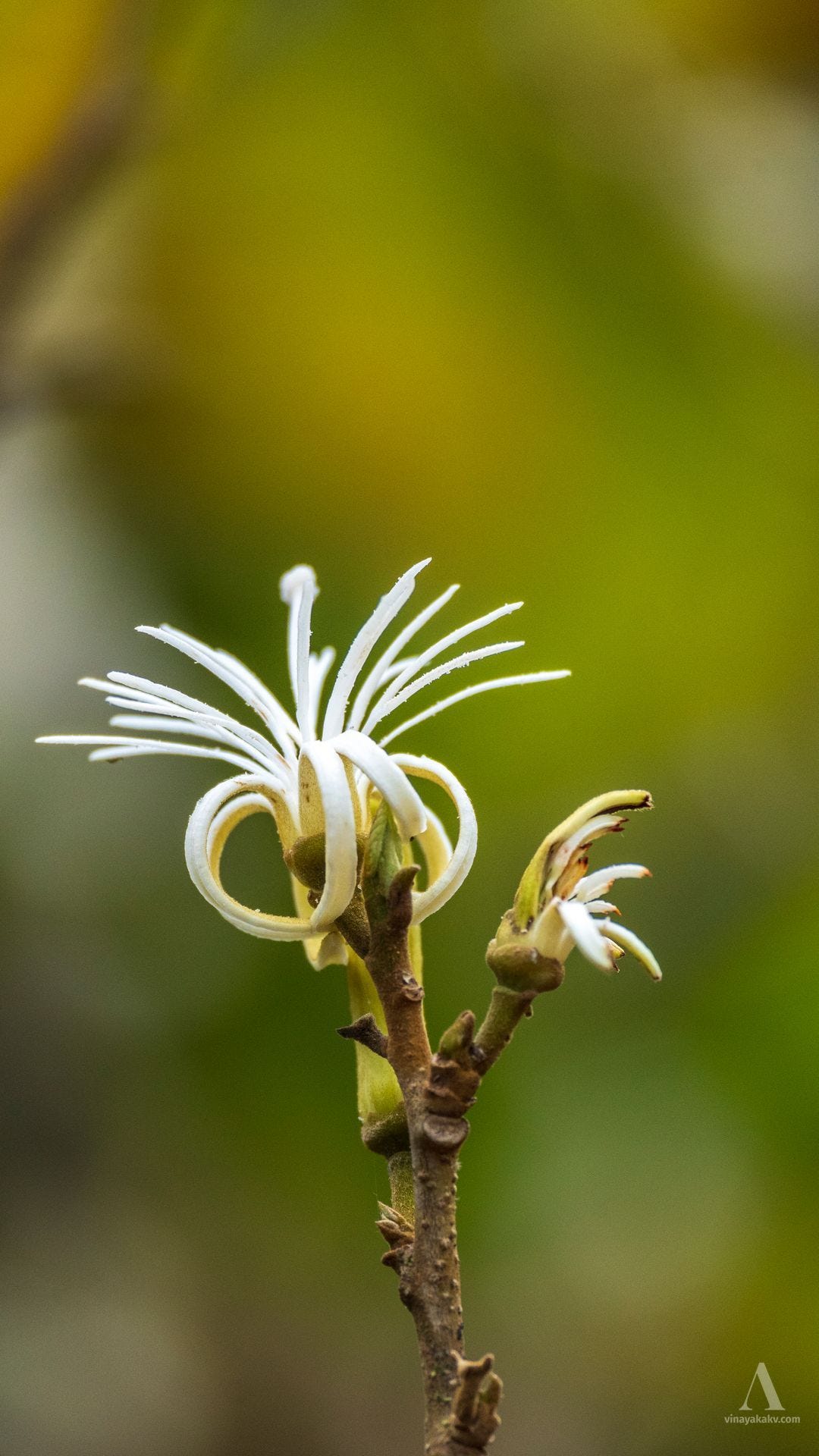
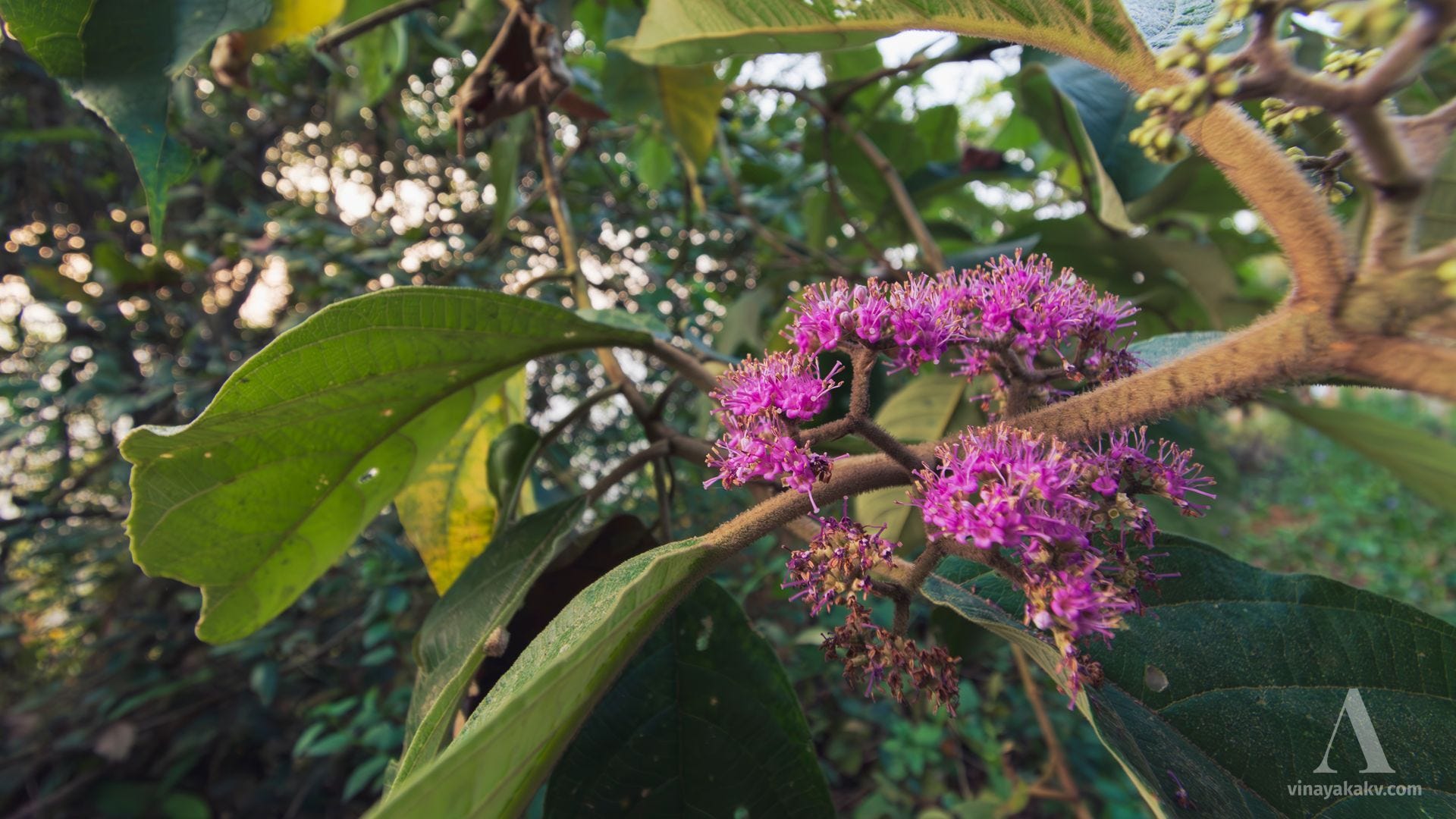
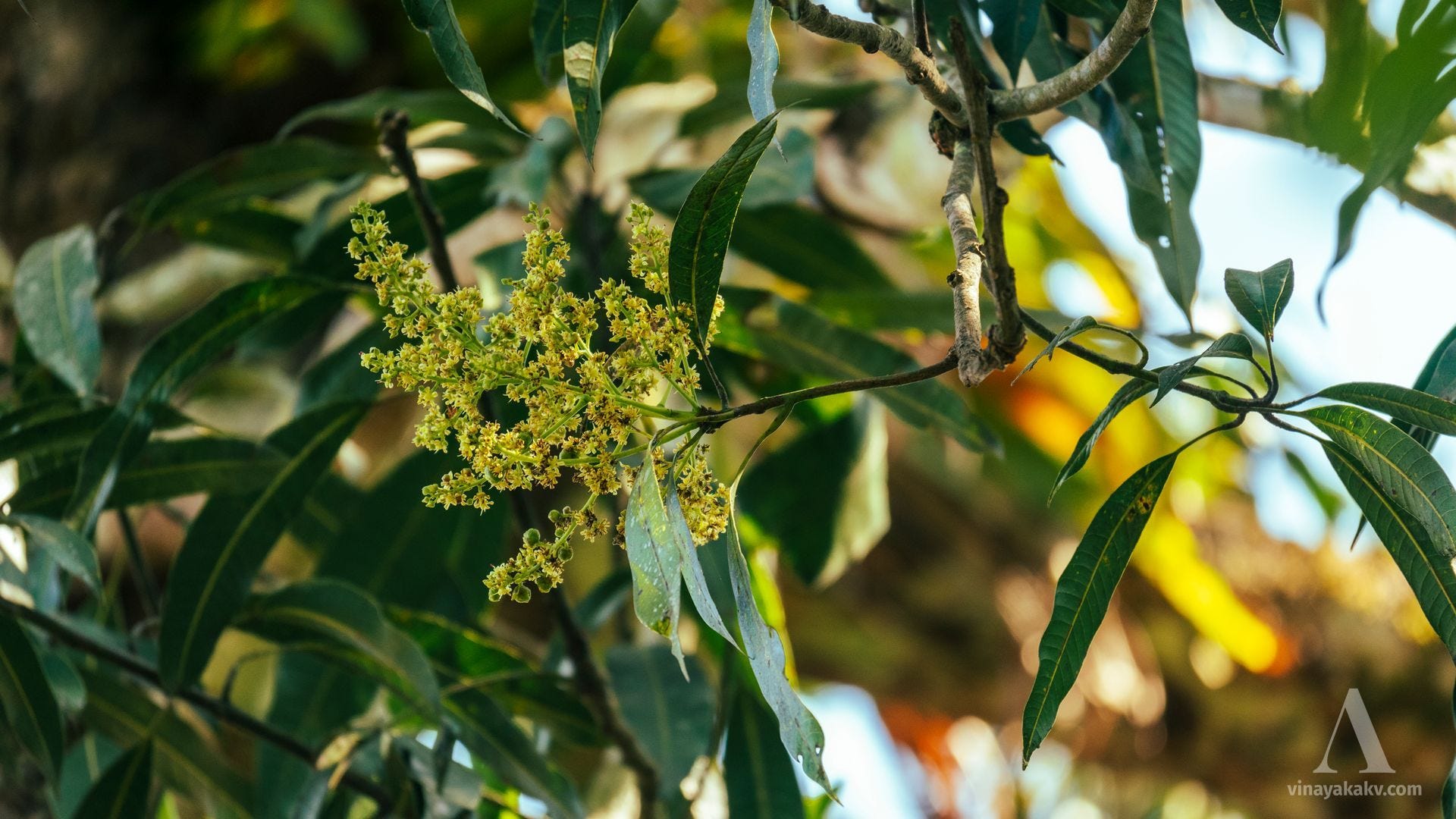
The flowers and plants that I covered here are a mere fraction of the biodiversity that exists. Even I could not cover all the flowers with their backstories here, or the article itself will run longer. Below are a few interesting flowers:
What’s Next?
As you might already know, the gift of a highly biodiverse environment comes with the threat of destruction, be it human intervention or the natural hazards.
The wildflowers are a world of their own, and the discovery starts with the observation. As a next natural step, you will be identifying them with the help of Google Lens or other AI tools — they have become so good that the cost of discovery is low. You might want to keep observing a few plants daily to observe their flowering, pollinators and fruiting behaviours. Then, you will start collecting the seeds, helping germinate them and conserve them.
Even when you have a small collection of plants that you observe, document and share, that is a good effort on its own. Do let me know if you are doing/planning to do anything like this — let’s connect and share our thoughts and initiatives!
Notable resources
Khandige Vikas Bhat’s Instagram Gallery — Although not active, a very good collection of photos of wild flowers of Karnataka
Khandige Vikas Bhat’s Daily Observations in YouTube — You will get to observe, understand and identify wild plants in their habitat
Ravichandra Hegde at Instagram — often posts about wild fruits and their uses that are not known to the broader audience.